Alaska Airlines baggage allowance includes one carry-on bag and one smaller personal item, even on Saver fares. The main bag must stay within 22 x 14 x 9 inches. The bigger planning traps are a swollen suitcase, a second large backpack, and checked bag prices quoted for the wrong ticket date.

For most travelers, a properly sized roller plus a modest backpack is the useful starting point. Pack the backpack so you can manage without the roller if cabin storage runs out.
Alaska Airlines baggage allowance at a glance
| Bag | Allowance or boundary | What to check |
|---|---|---|
| Main carry-on | One bag, up to 22 x 14 x 9 in | Measure the entire packed bag, including wheels and handles. |
| Personal item | One smaller item, planned for under the seat | No numerical personal item box is specified in the cabin section of the contract. |
| Cabin weight | No general pound or kilogram cap in that section | You must manage the bag yourself, with disability assistance exceptions. |
| Standard checked bag | Up to 50 lb and 62 linear in | Weight and size are separate tests; ticket benefits can change the allowance. |
Alaska’s Contract of Carriage, Rule 15, establishes those boundaries. For metric packing, 22 x 14 x 9 inches converts to about 55.9 x 35.6 x 22.9 cm. These are conversions, not a separate rounded allowance.
Check the shape, not just the total inches
A suitcase described as a 21 inch carry-on may use its shell height in the product name. What matters at the airport is the complete object. Measure from the lowest wheel to the highest fixed part, with the telescoping handle retracted.
Then check the widest side and the deepest point. Include bulging front pockets, protective feet and an expansion panel. A tape wrapped around the suitcase measures its circumference, which is not one of these tests.
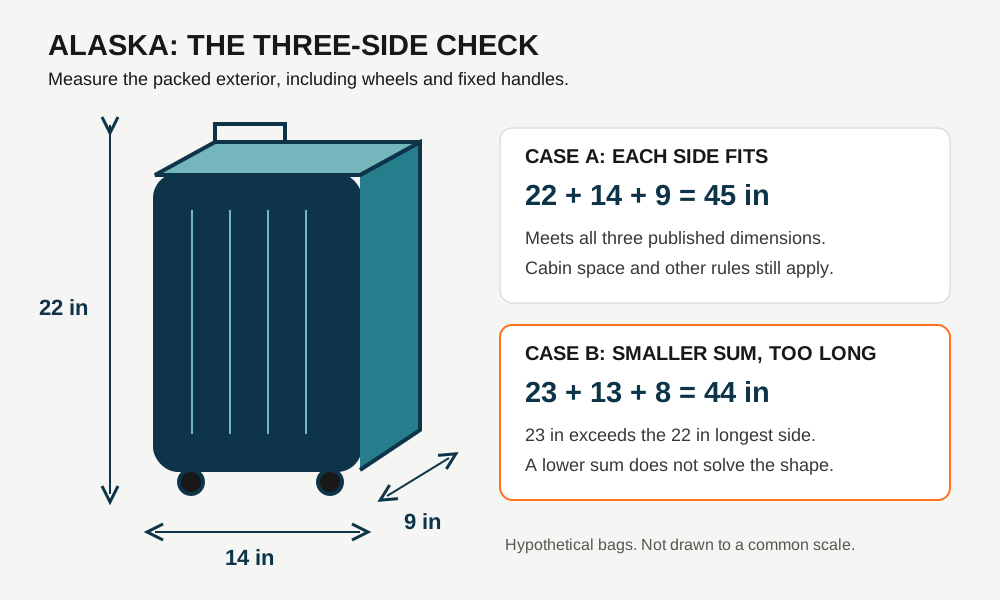
A bag can total less than 45 inches and still have the wrong shape
Hypothetical example: a 22 x 14 x 9 inch bag totals 45 linear inches. A 23 x 13 x 8 inch bag totals only 44, but its longest side exceeds the published 22 inch boundary. Use the three individual limits when choosing a case.
That distinction matters with camera cases and wide backpacks. Spare room in one direction doesn’t make a rigid protrusion disappear in another. If a bag needs a favorable interpretation to fit, choose another bag or ask Alaska before travel.
Our carry-on luggage comparisons distinguish listed case sizes from overall measurements. Keep the original packaging until you’ve measured a new suitcase fully packed.
Your personal item should do the essential work
A small backpack, purse or laptop case can fill the personal item role. Alaska’s own packing guidance says at least one cabin item should go under the seat. It also asks travelers to lift their own overhead bags.
Don’t treat the main carry-on dimensions as a second backpack allowance. Plan one smaller bag for your feet and one main bag for the bin. A large travel backpack can be your main carry-on, but adding a roller would create two main bags.
Alaska’s cabin contract gives examples of personal items without setting a numerical box. A precise size quoted elsewhere should not become your guarantee. Ask about your aircraft and seat when traveling with a rigid item that leaves little room.
For a flexible bag, test it with the laptop sleeve filled and every pocket loaded. Water bottles on both sides can change the width considerably. A zip that closes only under pressure is a useful sign to remove something.
Make the smaller bag your arrival kit. Put identification, essential medication, glasses, keys and a change of underwear there. A charger buried beneath three packing cubes is less useful when you’re suddenly handing over the roller.
Our underseat bag guide explains the differences between rigid rolling totes and flexible bags. No general buying list can promise a fit beneath every seat.
Saver keeps the bags, but boarding order matters
Alaska explicitly gives Saver the same cabin and checked baggage allowance as Main. Its Saver fare FAQ says ordinary Saver boarding is Group F, with bin space allocated as passengers board. A cabin entitlement does not reserve an empty compartment beside your seat.
There are important boarding exceptions. Eligible status travelers can board with their status, and purchased Premium or First Class seating can change the boarding group. Travelers needing extra time or disability assistance can still request preboarding on Saver.
For packing, separate two questions: whether the fare permits your bag and whether storage remains when you board. Paying more solely to bring a normal carry-on isn’t necessary on Alaska. Compare a higher fare for its actual seating and flexibility benefits.
If you choose Saver, make the roller easy to surrender. Keep a compact pouch of valuables near its opening. Carry an empty protective sleeve for a laptop if it normally travels inside the roller.
Checked bag fees changed in April 2026
Alaska’s April 9, 2026 fee notice applies to covered North American Alaska and Hawaiian flights ticketed on or after April 10, 2026. These are USD charges per applicable travel direction for ordinary bags without an exemption. They are not worldwide prices.
| Checked bag | Standard fee, USD |
|---|---|
| First | $45 |
| Second | $55 |
| Third and each later bag | $200 each |
The same notice removes the former prepayment discount. It preserves separate travel wholly within Hawaii prices of $30 for the first bag and $40 for the second. Status, eligible cards and qualifying resident programs can change what you pay.
The April 9 official fee notice sets out the ticket date and exceptions. Confirm the final calculation in your reservation and the checked baggage policy before paying, especially for an older ticket.
Compare a complete trip, not one bag in one direction
Calculated example: one traveler checking one standard bag on both directions of a qualifying North America trip pays $45 + $45 = $90. With two standard bags each way, the calculation is ($45 + $55) x 2 = $200. These examples assume no waiver, no extra charges and the same applicable fee on the return.
Use that total when comparing tickets. A cheaper airfare can still produce a more expensive trip once bags are included. For a family, write down the allowance beside each passenger rather than assuming one person’s benefit covers everyone.
Free bags and extra weight are different benefits
Alaska’s notice preserves Atmos status and eligible card benefits. It also lists Club 49 benefits as three free bags for qualifying travel wholly within Alaska, or two for qualifying travel to or from Alaska. Confirm membership, itinerary and companion conditions before relying on them.
Ask two separate questions when a bag is free: how many pieces are waived, and what weight each piece permits. A waived ordinary bag fee does not automatically remove charges for unusual weight or dimensions. Save the baggage line from your ticket rather than just the loyalty program name.
International itineraries need their own allowance
Alaska Airlines baggage allowance changes by route and cabin on international 787 travel. The airline’s current cabin comparison lists the following included checked bags. These rows describe the routes named, not every international destination.
| Named routes | Saver, Main and Premium | Suites |
|---|---|---|
| Rome and London | One bag, up to 50 lb | Two bags, up to 70 lb each |
| Japan and Korea | Two bags, up to 50 lb each | Two bags, up to 70 lb each |
The domestic comparison lists two free checked bags for First Class. Premium Class does not receive that same inclusion merely because it has extra legroom. Check the fare and baggage entry before treating a seat upgrade as a bag benefit.
Connections and codeshares: read both the ticket and the operating carrier
For cabin bags, identify who actually operates every flight. An Alaska flight number or purchase on Alaska’s website doesn’t explain another airline’s storage rules. Use our airline guide directory to compare the relevant carriers.
For checked bags on a combined ticket, use the allowance disclosed for that itinerary. Don’t simply add each airline’s standalone fee table. A domestic leg attached to an international ticket can need a different calculation from the same domestic flight bought separately.
With separate tickets, confirm both the bag fees and whether luggage can be transferred. Leave time to collect and present it again if required. Ask where the bag is tagged to, particularly when changing airports or clearing arrival formalities.
What if your bag is too heavy or too big?
For an ordinary checked bag, calculate linear inches by adding length, width and height. A hypothetical 28 x 20 x 12 inch suitcase totals 60 inches. It clears a 62 inch size boundary, but still needs a separate weight check.
A hypothetical 29 x 21 x 13 inch case totals 63 inches. Removing shoes can reduce weight without changing that rigid shell. To solve a size problem, you may need a different bag rather than a lighter packing list.
Alaska’s contract allows applicable fee categories to combine. An ordinary checked bag fee therefore may not settle the bill for an oversized or heavy case. Ask Alaska for a route specific quote with your actual packed measurements instead of budgeting for one assumed penalty.
Don’t assume you can pay to transport any size of bag. Limits can depend on route and aircraft, and unusual equipment needs its own rules. Give Alaska the packed weight, dimensions, contents and flight details before taking bulky gear to the airport.
If your carry-on is taken at the gate
A bag that meets the cabin rules can still need another storage arrangement when bins fill. This is different from presenting a bag outside your allowance. Ask the agent whether any charge applies and where you’ll collect it before handing it over.
Don’t assume every regional flight uses the same planeside collection procedure. Follow the instructions for that flight, whether it’s mainline Alaska or a regional operator. Read the tag and keep the claim receipt until the bag is back with you.
- Remove identification, money, medication, keys and fragile valuables.
- Remove spare lithium batteries and power banks; keep them in the cabin with protected terminals.
- Secure loose straps and close every compartment.
- Check the destination printed on the tag and photograph the bag’s exterior.
- Ask whether collection is at the aircraft door or baggage claim.
The battery step is required by the FAA’s spare battery guidance, including gate and planeside checks. Our power bank packing guide covers capacity and protection details.
Children, diaper bags and medical equipment
Alaska’s contract treats a diaper bag as a small personal item, rather than listing it among exempt items. Don’t count on an extra ordinary bag merely because it contains baby supplies. Plan the adult’s two bags before adding the stroller.
Car seats, baby carrier backpacks, strollers and assistive devices can be checked without the ordinary baggage service charge under Rule 15. The airline also describes free stroller and car seat gate checking in its baby travel guidance. Carrying an item into the cabin involves separate stowage and seat requirements.
For a lap infant, ask Alaska to confirm the specific cabin and checked allowance attached to that booking. A free equipment check is not the same as another suitcase allowance. Keep enough feeding and changing supplies in the cabin for delays.
Mobility and medical assistive devices have exceptions to the ordinary cabin piece limit in the contract. Tell Alaska what device you’re bringing, especially if it has a battery or needs onboard use. Ask for any required approval before departure, and keep ordinary clothing separate from medical equipment.
A useful check the night before departure
- Ticket: note the issue date, fare, route, included bags and any benefit used.
- Cabin: measure the fully packed main bag and make the smaller bag easy to stow.
- Connections: check each operator and the baggage details for the whole ticket.
- Checked bags: weigh each bag separately and add its three outer dimensions.
- Security: prepare your liquids for screening; airline size permission doesn’t settle checkpoint restrictions.
- Gate plan: keep essentials and spare batteries accessible if the roller has to leave the cabin.
When confirming Alaska Airlines baggage allowance with the airline, send the actual details. “Seattle to London, ticket issued on this date, this fare, one bag of these measurements” is answerable. “Is my suitcase fine?” leaves the information that decides the result unstated.
Common Alaska baggage questions
Does Alaska Saver include a carry-on?
Yes. Saver includes the same carry-on allowance as Main, plus one personal item. Ordinary Saver boarding is Group F, so an included bag does not guarantee available overhead space.
Can I bring a backpack and a carry-on suitcase?
Yes, if the backpack serves as your smaller personal item and the suitcase meets the main bag rules. Two large bags aren’t the same arrangement. Pack the backpack for underseat storage.
What is Alaska Airlines’ carry-on weight limit?
The cabin baggage section of Alaska’s contract states no general numerical weight cap. It requires bags to be manageable and safely stowable, with disability assistance exceptions. That does not mean any weight is acceptable.
Are Alaska checked bags still $35?
Don’t use $35 as a current general price. Alaska’s April 2026 notice lists $45 for the first standard bag on covered North America tickets issued from April 10, 2026. Older tickets, other routes and benefits need their own check.
Can I use 45 linear inches instead of checking each side?
Use the individual 22 x 14 x 9 inch boundaries. A bag can total less than 45 inches while exceeding one side. Our hypothetical 23 x 13 x 8 inch case illustrates that problem.