You can bring liquids on a plane, but ordinary liquids through US airport security need containers of 3.4 fluid ounces or 100 mL or less. Fit them together in one clear, resealable quart-size bag per passenger. That includes toothpaste, sunscreen, creams, gels and aerosols, not just drinks.

Necessary medicines and qualifying baby or toddler feeding supplies have separate screening exceptions. International airports can use different limits, even on the same trip. Check your connection and return airport before putting a large bottle in your cabin bag.
Liquids on a plane: the US rules at a glance
| What you are carrying | At a US TSA checkpoint | What to do |
|---|---|---|
| Ordinary liquids, creams, gels, pastes and sprays | Containers no larger than 100 mL or 3.4 fl oz | Put all of them in one quart-size liquids bag |
| A larger bottle with very little left | Still exceeds the ordinary container limit | Use a smaller container or checked baggage if the product is permitted there |
| Necessary liquid medicine | Reasonable quantities above the normal limit can qualify | Declare it before screening and present it separately |
| Formula, breast milk and qualifying child nourishment | Can exceed 100 mL and need not fit the liquids bag | Declare and remove for separate screening |
| Ordinary frozen liquids or gel packs | Must be completely frozen when screened to avoid the liquids limit | Slush or melted liquid brings the ordinary rule back |
| Large duty-free liquids on an inbound US connection | A specific sealed bag and receipt exception may apply | Keep the retailer’s security bag sealed and the receipt available |
The TSA liquids policy governs the US checkpoint. Your airline still controls cabin bag size, weight and the number of pieces. Use our airline guide directory to check that separate allowance.
What 3-1-1 actually limits
The three parts are a small container limit, one quart-size bag and one bag per passenger. A second cabin bag doesn’t create a second liquids allowance. Nor does paying for a premium seat make an ordinary large shampoo bottle acceptable at TSA.
Use the bottle’s capacity, not the amount remaining
A 200 mL sunscreen bottle with 40 mL left is still too large for the ordinary US cabin rule. Transfer an appropriate product into a container no larger than 100 mL before leaving home. Choose bottles with a clearly readable capacity marking.
For a simple example, three 100 mL bottles satisfy the individual size test. They still need to fit in your one liquids bag alongside toothpaste and everything else covered by the rule. Three compliant bottles don’t exempt a fourth 150 mL bottle.
The ounce limit refers to fluid capacity, not the weight of your entire toiletries pouch. If a package shows only ounces by weight, choose a clearly suitable travel size. Don’t try to settle an ambiguous label with a conversion calculation at the conveyor belt.
The bag must actually hold your collection
There isn’t a fixed TSA bottle count. Container shapes and caps take space, so a volume total alone won’t tell you whether everything fits. Use one clear quart-size resealable plastic bag and close it normally.
A large clear cosmetics case isn’t automatically compliant because a shop calls it travel approved. Put the items in a bag of the specified size. A gallon bag with one corner folded over doesn’t become a quart-size bag.
Check every pocket before you finish packing. A forgotten lip gloss, sample cream or hand sanitizer still belongs with your ordinary liquids. Keep dry toiletries elsewhere so they don’t waste space.
What counts as a liquid, including the surprising items
For packing purposes, think beyond what pours like water. A cream, paste or gel may need the same space as a drink. Packaging in a tube rather than a bottle doesn’t change that.
| Item or format | Ordinary US carry-on packing | Useful distinction |
|---|---|---|
| Shampoo, conditioner, shower gel and mouthwash | Small containers in the liquids bag | A mostly empty full-size bottle still fails the size test |
| Toothpaste, lotion and sunscreen | Small containers in the liquids bag | Thick products are included |
| Liquid makeup, mascara and lip gloss | Treat as liquids for packing | A tiny sample still uses bag space |
| Spray or liquid deodorant | Small containers in the liquids bag | Aerosol safety limits also apply |
| Solid stick deodorant | Outside the liquids bag | Gel deodorant is a different format |
| Water, coffee and ordinary juice | Normal container limit applies before security | Bring an empty bottle and refill after screening |
| Honey, yogurt, sauces and spreadable foods | Expect liquid or gel treatment | A snack label doesn’t create an exemption |
| Contact lens solution or necessary liquid medication | Check the medical screening route | Separate declaration may be needed |
A solid stick can free space that its liquid equivalent would use. Check the actual format rather than relying on a product’s name. The TSA item finder separates solid deodorant from liquid and aerosol versions.
Food needs the same attention to consistency. Our guide to bringing food on a plane explains the difference between security permission and destination food restrictions. Customs and agricultural rules remain relevant after a food passes security.
A packing decision you can make before the airport
Start with the type of product, then its screening route. This avoids squeezing necessary medicine into your shampoo bag or assuming every big bottle belongs in checked luggage.
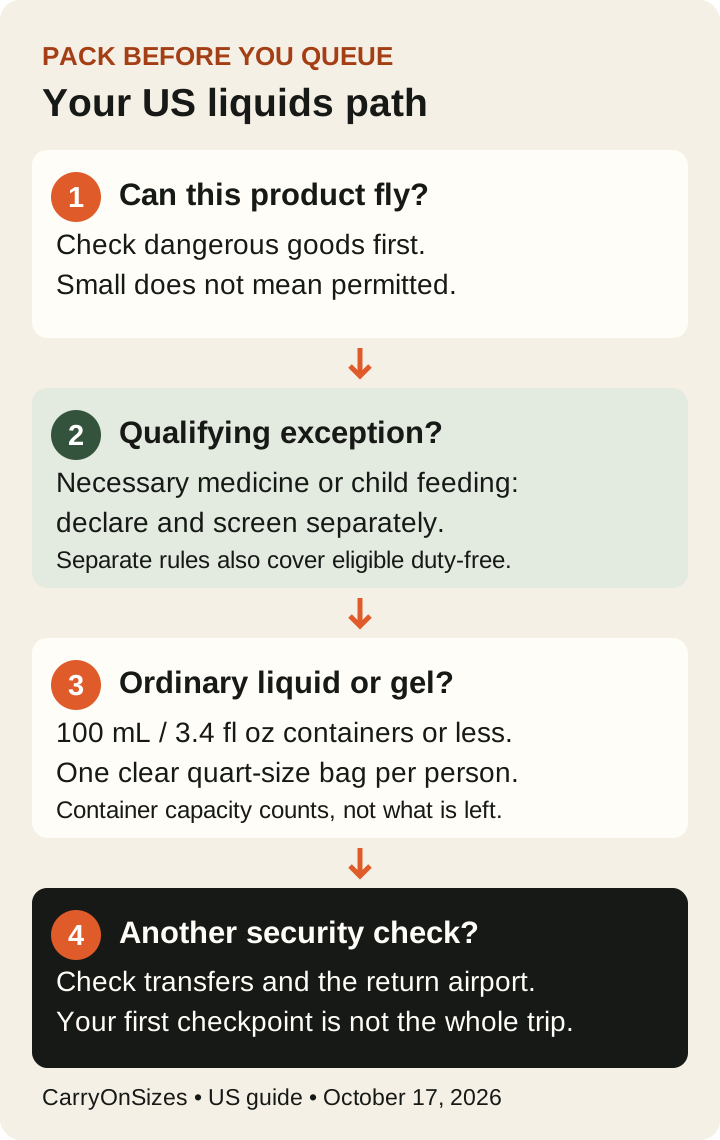
A worked toiletries example
Imagine a traveler packing 100 mL shampoo, 100 mL conditioner, 50 mL face wash and 75 mL toothpaste. Each container passes the individual size test. Whether the collection passes the bag test depends on its actual fit with the remaining cosmetics.
The same traveler has a solid deodorant stick and a medically necessary 150 mL liquid. The stick can stay outside the liquids bag. The medicine needs the exception and declaration process, rather than automatic disposal because its container is large.
These are packing examples, not approval guarantees. A compliant item can still need inspection. Keep its label readable and leave room to remove anything an officer wants to screen separately.
Liquid medicine and contact lens solution
TSA permits medically necessary liquids, gels and aerosols above the normal limit in reasonable quantities for the trip. Tell the officer at the start of screening. Keep them accessible and separate from ordinary toiletries.
Say what the item is and that it is medically necessary before your bag enters screening. An officer may need to inspect the container or use additional screening. Don’t bury an essential bottle beneath clothes that you’ll need to unpack in line.
Original labels can make an unfamiliar medicine easier to identify. TSA doesn’t generally require prescription bottles for checkpoint screening, but other medication and border requirements can differ. Keep suitable documents for the countries on your route.
Contact lens solution deserves extra planning. TSA warns that some solutions can alarm and may not clear screening, even under the medical exception. A small compliant bottle may simplify packing, but it doesn’t guarantee clearance.
Keep medication you need accessible during the journey. If an item raises a screening problem, explain the medical need and ask for a supervisor before deciding what to surrender. For assistance, use TSA’s medical screening guidance.
Breast milk, formula, toddler drinks and baby food
Qualifying feeding supplies can exceed 100 mL and don’t need to fit in the quart-size bag. That includes breast milk, formula, toddler drinks and baby or toddler food such as puree pouches. These have a screening procedure of their own.
Declare larger quantities at the start and remove them from your bag. Clear or translucent bottles can make screening easier when practical. Pouches may require another screening method, so allow extra time rather than repacking necessary food just for appearance.
TSA’s current family guidance allows breast milk and cooling accessories even when your child isn’t traveling with you. Cooling packs don’t have to stay completely frozen under the ordinary rule. Partially frozen or slushy packs use the special screening process.
If you don’t want a feeding supply opened or X-rayed, tell the officer before screening. Additional screening of you and other belongings may be needed. TSA says screening won’t involve putting anything into the medically necessary liquid.
Read the current child feeding and screening instructions when arranging a complicated journey. A US exemption doesn’t settle the process at your overseas return airport.
Frozen liquids: solid at screening means solid
For ordinary US screening, frozen liquids and gel packs can pass when completely frozen. If an item has melted liquid, slush or liquid at the bottom, it must meet the normal liquids rule. Its condition when you packed it at home doesn’t decide the result.
A frozen bottle that thaws during a long airport queue can become a problem. Bringing an empty drinking bottle is usually simpler than relying on ice staying solid. Fill it after security where drinking water is available.
Medically necessary cooling packs have a separate exception, including when melted or slushy. Tell the officer what they are for. Don’t apply that exception to an ordinary cooler just because it contains snacks.
This is also a place where international advice diverges. UK government guidance prohibits frozen liquids in hand luggage. Freezing a drink to use the US rule isn’t a general solution for a trip abroad.
Duty-free bottles and connecting flights
A bottle bought after one security checkpoint may meet another checkpoint later. The words duty-free concern the sale; they don’t guarantee cabin acceptance for the rest of your trip.
For an international purchase on an inbound US journey with a connecting flight, TSA has an exception for larger liquids. The retailer must seal the liquids in a transparent security bag that shows no tampering. You need the original receipt, and the purchase must be within 48 hours.
Keep the security bag closed through the connection. The item must still be screened and cleared. A bottle that alarms or cannot be screened won’t be permitted in your cabin bag.
If you collect and recheck a suitcase before the next security checkpoint, packing an eligible bottle there can simplify the connection. Check the bottle’s dangerous goods limits, wrapping and bag weight first. Don’t open the security bag until you know which route you’ll use.
Before buying a large bottle, tell the retailer your connection airport and destination. Then check that airport’s official transfer guidance. An ordinary shopping bag or an opened security seal doesn’t meet the US exception.
International airports: the 100 mL rule is not universal
As checked on October 17, 2026, Heathrow allows liquid containers up to 2 liters at Terminals 2, 3, 4 and 5. Liquids can stay in your cabin bag there. Reusable metal or insulated bottles must be empty before screening.
Heathrow also lists a specific restriction for flights to Australia: liquids in containers over 100 mL cannot be taken. Read the destination conditions on the Heathrow liquids page, as well as its general headline allowance.
That larger allowance doesn’t carry over to a TSA checkpoint in the US. A 500 mL shampoo bottle accepted outbound can fail the ordinary US return rule. The airline printed on the ticket doesn’t resolve that mismatch.
UK government guidance tells passengers to check departure, transfer and return airports separately. Some airports retain 100 mL limits. Others have different preparation instructions or larger container allowances.
Write down every place you may be screened, including a connection where you collect baggage. Check the airport’s current security page and any destination exception. If the route is uncertain, small containers and an appropriate clear bag make ordinary toiletries easier to manage.
For a Heathrow departure, also check the British Airways baggage guide if that is your carrier. Airport screening permission doesn’t increase its cabin allowance. Large liquids can quickly use the space and weight you planned for clothes.
Checked liquids: bigger doesn’t mean unrestricted
Ordinary nonhazardous shampoo and similar toiletries can generally travel in checked baggage without the TSA cabin container rule. Protect caps, contain possible leaks and cushion breakable packaging. Checking a bag doesn’t make every liquid safe to fly.
The FAA’s medicinal and toiletry exception covers specified personal products, including aerosols and perfume. Its combined limit is 2 kg or 2 liters per person. Each container must not exceed 0.5 kg or 500 mL, and aerosol nozzles need protection against accidental release.
These are dangerous goods conditions, separate from TSA’s 100 mL cabin screening limit. Don’t apply the 2 liter total to every harmless beverage or assume it permits cleaning chemicals. Check the exact substance and your airline’s restrictions.
Alcohol has its own rules. Beverages above 24% and no higher than 70% alcohol by volume need unopened retail packaging, with a 5 liter total per passenger. Alcohol above 70% is prohibited in cabin and checked baggage; the ordinary TSA liquid limit still applies at the checkpoint.
A bottle of perfume isn’t governed by the beverage allowance simply because it contains alcohol. Use the relevant product category in the FAA PackSafe guidance. Fuels and flammable solvents can be prohibited even in tiny amounts.
A final packing check that takes five minutes
- Gather every ordinary liquid, gel, cream, paste and spray from every pocket.
- Check each container’s capacity and put suitable small containers in one quart-size bag for TSA.
- Separate qualifying medicine and feeding supplies so you can declare them promptly.
- Empty your reusable drinking bottle unless a verified local allowance covers it.
- Check transfer and return screening rules, then check dangerous goods and airline baggage limits.
When packing liquids on a plane, place the pouch where you can reach it without unpacking the whole suitcase. Our travel backpack guide explains why access and loaded dimensions matter. A convenient pocket doesn’t create an extra baggage piece.
Keep other restricted items in the same final check. A toiletries pouch can share space with electronics, but their packing rules differ. Read the power bank flight guide before handing a cabin bag over for gate checking.
Questions about liquids on a plane
Can I take a 4 ounce bottle if it is half empty?
No, not under the ordinary US cabin liquids rule. The container must be no larger than 3.4 fluid ounces or 100 mL. A smaller amount left inside doesn’t reduce the bottle’s capacity.
How many 100 mL bottles can I bring?
TSA doesn’t set a fixed bottle count. All your ordinary liquid containers must fit in one clear, resealable quart-size bag per passenger. Bottle shapes and other toiletries affect how many fit.
Does TSA PreCheck allow larger liquids?
No. TSA PreCheck can let you leave your compliant liquids bag inside your carry-on during screening. It doesn’t raise the ordinary 100 mL container limit or provide a second liquids bag.
Can I bring toothpaste outside the liquids bag?
Ordinary toothpaste is a paste covered by the US liquids rule. Put a container no larger than 100 mL or 3.4 ounces in your liquids bag. The fact that it isn’t runny doesn’t exempt it.
Are medically necessary liquids limited to 100 mL?
No. TSA permits larger medically necessary liquids in reasonable quantities for the trip. Declare them at the beginning of screening and present them separately for inspection.
Can I take large liquids through Heathrow and then through US security?
Heathrow currently permits containers up to 2 liters, with container and destination conditions. TSA’s ordinary US rule still limits containers to 100 mL. Check each checkpoint and any applicable medical, feeding or duty-free exception separately.
Can a permitted liquid still need extra screening?
Yes. Meeting the size rule doesn’t remove security screening. Liquids that alarm can need additional checks, and the TSA officer makes the final checkpoint decision.