Delta Air Lines carry-on size is 22 x 14 x 9 inches (56 x 35 x 23 cm), including wheels and handles. You get one cabin bag and one personal item free, including with Delta Main Basic. The personal item needs to fit beneath the seat ahead.

The part worth planning around is the aircraft. A suitcase can meet every measurement and still travel in the hold when cabin storage runs out. Pack your smaller bag so you can surrender the roller without surrendering your essentials.
Delta Air Lines carry-on size and allowance at a glance
| Bag or check | Rule | Packing implication |
|---|---|---|
| Main cabin bag | 22 x 14 x 9 in; 56 x 35 x 23 cm | Measure the complete exterior, not just the shell. |
| Combined dimensions | 45 linear in; 114 cm | Add length, width and depth. Each individual limit also applies. |
| Personal item | Fits under the seat; no universal numerical maximum published | A small backpack or laptop bag needs to work as packed. |
| Cabin weight | No general numerical limit stated in the current cabin policy | Keep the bag manageable and check any partner flight separately. |
Use Delta’s cabin baggage policy to confirm the allowance before departure. Treat a luggage seller’s “airline approved” label as a starting point, not approval for your itinerary.
Measure the bag you will actually take
A suitcase advertised as 21 inches may describe its packing compartment. Its wheels can push the overall height beyond the cabin limit. Conversely, a smaller shell doesn’t help if a stuffed front pocket makes the bag too deep.
- Pack the suitcase, including anything going in its outer pockets.
- Close the expansion section and retract the telescopic handle.
- Measure between the farthest points on each side, including fixed handles and wheels.
- Compare all three measurements with the limit, then add them together.
For a curved case, two books or other straight edges make the widest points easier to locate. Don’t stretch a tape around the curve. You need the distance a rigid baggage sizer would have to accommodate.
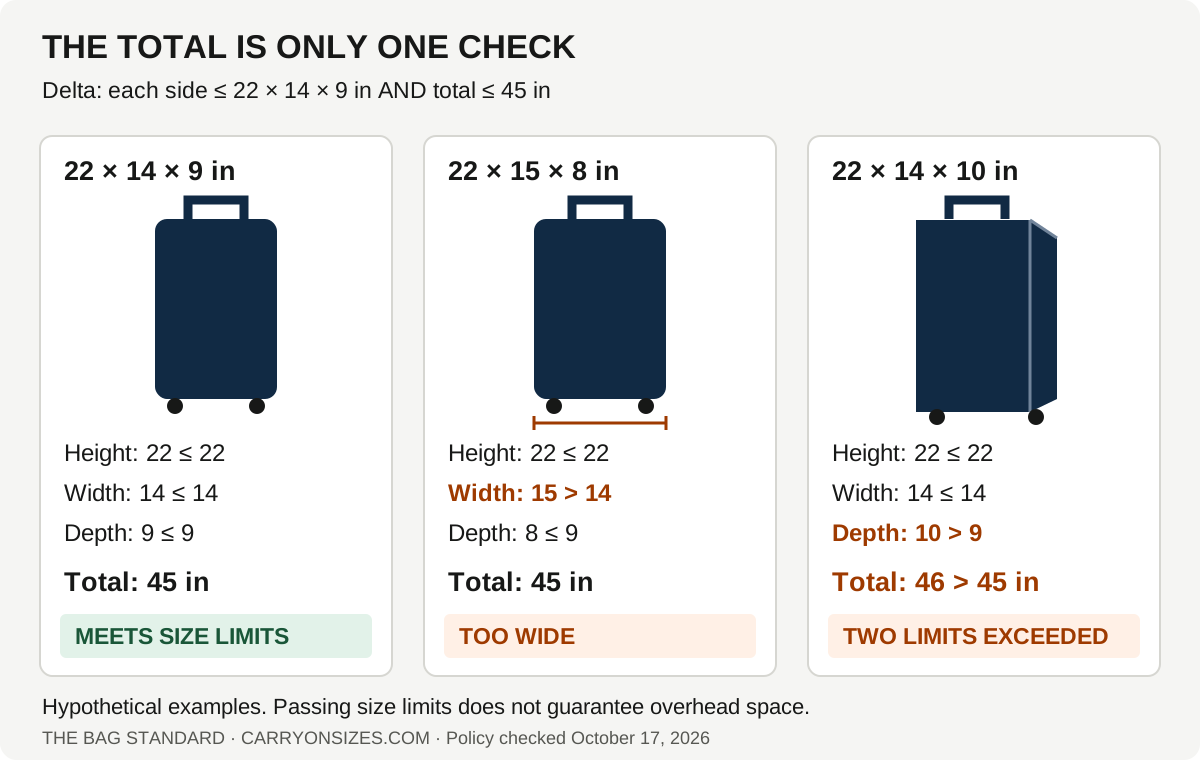
| Packed dimensions | Total | Result against the published size limits |
|---|---|---|
| 22 x 14 x 9 in | 45 in | Meets the numerical limits; cabin space still matters. |
| 22 x 15 x 8 in | 45 in | Too wide by 1 inch. |
| 22 x 14 x 10 in | 46 in | Too deep by 1 inch and above the combined limit. |
The second example is the easy mistake. Moving an inch from depth to width keeps the total unchanged, but it doesn’t make the bag compliant. Rotating a bag can change how it enters a bin; it cannot shrink the bag.
Use the published inch figures when measuring in inches and the published centimeter figures when measuring in centimeters. Airline conversions are rounded. Don’t create an extra tolerance by repeatedly converting the numbers.
If you’re buying luggage, our carry-on luggage guide explains how to compare exterior dimensions. For Delta Air Lines carry-on size, an expansion zipper deserves special attention: check both the normal and expanded figures.
A backpack can be your personal item, but a second purse is another bag
Think of the personal item as your essential bag for the space beneath the seat. Choose its shape around what it must carry: laptop, medication, documents and anything fragile. A rigid boxy bag leaves less room to adjust than a lightly packed fabric backpack.
Don’t borrow an 18 x 14 x 8 inch limit from another airline and call it Delta’s rule. There is no single published numerical personal item maximum in the general policy. The space beneath your assigned seat is the real constraint.
Count separate bags before leaving home. Roller plus backpack plus purse is three pieces, even if the purse is small. Put the purse inside the backpack if you’re relying on the standard two piece allowance.
A useful packing exercise is to lay your personal item flat and check its fullest section. A water bottle in an exterior pocket or a bulging shoe compartment can change the fit. Our underseat bag comparisons flag why advertised capacity alone isn’t a fit test.
Delta lists certain extras separately, including a jacket, umbrella and food purchased beyond security. That doesn’t turn another ordinary shopping tote into an unlimited baggage allowance. Leave enough space to consolidate incidental purchases.
Main Basic includes a cabin bag
Delta Main Basic is the current name for Basic Economy. Its restrictions don’t remove the standard carry-on entitlement. However, the Main Basic fare conditions exclude priority boarding.
Separate permission to bring a bag from access to an empty bin. A later boarding position gives you less control over where your roller ends up. Buying a higher fare just to keep a particular suitcase beside you still doesn’t remove aircraft storage limits.
Choose the fare for the complete trip: flexibility, seat needs and any included checked baggage. If cabin access to expensive equipment matters, build the packing plan around a smaller essential bag. Don’t make the whole plan depend on finding an overhead slot.
Delta Connection: plan for a handover at the gate
On Delta Connection aircraft with 50 seats or fewer, larger cabin bags go in the cargo compartment. The smaller personal item stays with you. A compliant roller can also be taken on a fuller or storage limited flight.
There are two questions to ask before handing it over: Where will I collect it, and at which airport? These answers matter more than the casual phrase “gate checked.” A bag returned beside the aircraft follows a different collection plan from one tagged to baggage claim.
Delta’s baggage FAQ describes the pink Gate Claim/Planeside process for smaller Connection flights. Those bags are returned when passengers leave the aircraft. Follow the actual tag and staff instructions for your bag rather than assuming every gate handover works that way.
- Ask whether you need to wait beside the aircraft after landing.
- For a connection, confirm whether you collect the roller at the intermediate airport.
- Keep the bag receipt until collection and check the destination printed on any routing tag.
- Remove valuables, essential medication and items that cannot travel in the hold before the bag leaves you.
Delta describes free gate checking when cabin space is limited. Don’t treat that as a promise that an oversized or extra bag escapes normal baggage rules. If you already know the roller is too large, resolve it at check-in instead of gambling at boarding.
Don’t apply Delta’s cabin rules to a partner’s aircraft
Read the “operated by” line for every flight, including the return. A Delta flight number or a ticket bought on delta.com doesn’t establish the cabin allowance on another airline’s aircraft.
For example, a hypothetical Atlanta to Paris journey could include a later flight operated by Air France. Compare the Air France baggage guide before buying a bag for that trip. Do the same with the KLM allowance if KLM operates a segment.
For checked luggage, Delta distinguishes one international itinerary from a separately ticketed domestic flight. International baggage rules apply when the flights share the itinerary. A separate onward domestic ticket can bring domestic baggage rules into play.
Save both confirmations if you book separately. Ask about baggage collection and any new check-in requirement at the connection. Don’t treat a shared airport or alliance as proof that the two tickets share one allowance.
Write down each operator’s size, weight and piece limits in separate columns. Then pack for the restrictive combination across the actual journey. A suitcase that works on the first flight may still need checking on the next.
If you check luggage, calculate the whole trip
For ordinary United States domestic travel, the current standard Delta Main and Delta Comfort fees are USD 45 for the first checked bag. A second standard bag is USD 55 each way. These prices assume no qualifying status, card or military exemption.
The standard checked size is 62 linear inches (157 cm). Delta Main, Comfort and Premium Select normally use 50 lb (23 kg) per piece; Delta First and Delta One use 70 lb (32 kg). Your reservation determines the included number of bags and any applicable exception.
Start with the baggage estimate and current fee conditions. The domestic figures above aren’t a worldwide fee table. International route, fare, purchase date and departure currency can change the result.
The domestic increases took effect for tickets purchased from April 8, 2026. Earlier tickets can retain the previous USD 35 first bag and USD 45 second bag prices. Match an older booking against the previous fee schedule rather than assuming the purchase date is irrelevant.
| Plan | Calculation | Total baggage charge |
|---|---|---|
| One standard checked bag both directions | USD 45 + USD 45 | USD 90 |
| Two standard checked bags both directions | (USD 45 + USD 55) x 2 | USD 200 |
| One bag outbound, two returning | USD 45 + USD 45 + USD 55 | USD 145 |
These examples assume tickets purchased from April 8, 2026, no exemptions, and bags within standard size and weight. Compare that total with the fare difference before upgrading for baggage. Also budget for anything you plan to buy while away.
Card benefits need a passenger check, not just a card check
Eligible primary Delta SkyMiles Gold, Platinum and Reserve American Express cardholders can receive a first standard bag waiver. Up to eight companions on the same reservation can share that first bag benefit. Booking, loyalty number and flight eligibility conditions apply.
From June 4, 2026, eligible primary cardholders also receive a second standard bag waiver on qualifying domestic Delta itineraries. Ordinary companions don’t automatically receive that second bag benefit. “Basic Card Member” here means the primary cardholder, not a passenger holding a Main Basic fare.
Check the card baggage benefit terms for every traveler. Don’t add status and card allowances together yourself. Let the reservation establish the applicable benefit before you pack a second bag.
Overweight and oversized are separate checks
A bag can be within the weight limit and still be oversized. It can also exceed both limits. Delta applies separate charges for additional pieces, excess weight and excess size, subject to route restrictions.
For current standard United States domestic travel, a 51 to 70 lb bag carries a USD 100 overweight charge each way. A 63 to 80 linear inch bag carries a USD 200 oversize charge each way. These are extra charges, not replacements for the normal bag fee.
Confirm the route in the excess baggage schedule, especially for international travel. An excess charge doesn’t mean every heavy bag is accepted. Some routes impose lower maximum weights or additional baggage restrictions.
Families and medical equipment need a separate packing count
Strollers and child restraint seats can be checked free and don’t consume the ordinary bag allowance. That doesn’t make every baby item exempt. A portable crib, playpen or wagon counts toward checked baggage.
A child traveling free has no separate ordinary baggage allowance. Breast pumps and associated cooler bags have specific additional item treatment. For international infant tickets, fare type can change the allowance, including a Main Basic exception on transatlantic and Latin America journeys.
Check the children and infant baggage rules before counting the baby’s suitcase as another free piece. Put each planned item on a list beside the adult or child entitlement it uses. This catches the difference between a free stroller and a normal checked suitcase.
Required medical equipment can travel as an additional item without charge, subject to applicable conditions. However, a larger bag mixing medical supplies with unrelated belongings isn’t automatically exempt. Keep the equipment’s purpose clear when organizing your bags.
For a wheelchair, battery equipment or a device needing special handling, use the medical supplies and wheelchair guidance. Discuss the exact equipment and aircraft with Delta before departure. The ordinary roller measurement isn’t a complete accessibility plan.
The power bank belongs in your smaller bag
Delta’s current power bank rule permits no more than two per person, each no greater than 100 Wh. They must stay accessible, not in overhead storage. Don’t recharge a power bank on board or use one to charge a device during taxi, takeoff or landing.
If your roller goes to the hold, remove power banks and spare lithium batteries first. Protect battery terminals from contact with metal. A suitcase with a nonremovable lithium battery is prohibited under Delta’s smart bag policy.
The battery policy distinguishes power banks from other lithium batteries. Don’t assume the broader 160 Wh battery provision authorizes a 160 Wh portable charger. Our power bank packing guide explains the security side of that check.
A bag can pass airline dimensions while its contents fail security rules. Handle toiletries separately using the liquids packing guide. Keep the battery pouch and anything needed for screening easy to reach.
Before you leave: a five minute baggage check
- Read the operators. Check each flight rather than just the airline selling the ticket.
- Measure and weigh. Use packed exterior dimensions and the checked allowance on your booking.
- Count loose bags. Consolidate purses, laptop sleeves and incidental totes where necessary.
- Prepare for the hold. Keep documents, medication, valuables and cabin only batteries in your personal item.
- Save the allowance. Keep the booking’s baggage details and any paid bag receipt available offline.
Delta Air Lines carry-on size: common questions
Will a 24-inch suitcase work as Delta carry-on luggage?
A suitcase measuring 24 inches overall exceeds Delta’s 22-inch limit. Check whether the advertised number describes the shell or the full exterior. If the packed exterior exceeds the allowance, plan to check it.
Can I bring a backpack and a roller on Delta Main Basic?
Yes, if the roller meets the cabin rules and the backpack fits beneath the seat as your personal item. Main Basic includes the standard allowance. Aircraft storage can still require the roller to travel in the hold.
Is a 40-liter backpack a personal item?
Liters measure capacity, not exterior shape. Check the packed dimensions and whether it fits beneath your seat without obstructing the space. A 40-liter label alone cannot establish personal item eligibility.
Can I rely on 45 linear inches if one side is oversized?
No. The combined allowance doesn’t cancel the individual side limits. A hypothetical 22 x 15 x 8 inch bag totals 45 inches but is still too wide.
Will my gate checked bag come back beside the plane?
Ask before handing it over. Delta’s pink Gate Claim/Planeside process returns the bag when you leave the aircraft. A bag routed to baggage claim can have a different collection point, so follow its tag and the agent’s instructions.