The best carry-on luggage for most travelers starts with a fairly unglamorous requirement: it must fit the flights you actually book. Our research pick for a light, reasonably priced roller is the Travelpro Maxlite 5 Compact Carry-On Spinner. For frequent travel, a heavier case with strong repair support can make more sense.

A good suitcase can still be a bad purchase for your ticket. An overhead roller is no substitute for a free personal item. A bag that fits one airline can exceed another’s limit before you put anything inside.
Affiliate disclosure: we may earn a commission from qualifying purchases through shopping links. Read our commercial disclosure. These recommendations compare manufacturer specifications and customer feedback; we have not tested these bags ourselves.
Best carry-on luggage: our shortlist by travel need
| Choose it for | Exact model | Overall size, unexpanded | Empty weight | Main compromise |
|---|---|---|---|---|
| Light weight and value | Travelpro Maxlite 5 Compact Carry-On Spinner | 22 x 14 x 9 in | 5.1 lb | Smaller packing body; no spare room in a strict 22 x 14 x 9 box |
| Frequent travel and repair support | Briggs & Riley Baseline Essential 22 Carry-On Expandable Spinner | 22 x 14 x 9 in | 10 lb; manufacturer also lists 4.6 kg | High initial cost and a heavy empty case |
| A hard shell on a more generous airline | Away The Carry-On, Classic model | 22 x 14.4 x 9.1 in in its main specification | 7.5 lb | Width exceeds a 14 inch limit; conflicting smaller FAQ dimensions |
| More space with a larger allowance | Travelpro Maxlite 5 21 inch Carry-On Spinner | 23 x 14.5 x 9 in | 5.4 lb | Too tall and wide for a published 22 x 14 x 9 limit |
All dimensions above describe the exterior, including wheels and handles. These are four wheel spinners. The recommendations assume your ticket includes an overhead bag and your packed bag meets the applicable weight limit.
The first two have the most conservative shape here for common US limits. None is a universal international recommendation. For a strict 55 x 40 x 20 cm allowance, even a 9 inch deep case is too deep.
How we chose these bags
We put airline compatibility ahead of advertised packing capacity. Then we considered empty weight, access to belongings, repair terms and recurring owner concerns. A large advertised capacity means little if the case needs checking on your usual route.
These are recommendations for different needs, rather than scores from an invented laboratory test. Customer comments help reveal frustrations worth investigating. They cannot establish a failure rate or guarantee that the next bag will behave the same way.
- Fit first: compare each exterior side, not just the sum or the size in the product name.
- Weight next: subtract the empty bag before allocating space to clothing and electronics.
- Ownership: consider repair access, shipping costs and time without the case.
- Everyday use: choose a layout that opens comfortably in the rooms and transport you use.
- Value: buy the least expensive option that meets your real requirements, rather than paying for unused features.
The Compact and regular Maxlite are different purchases. Check the full model name and dimensions before buying, even when a retailer groups similar versions together.
Travelpro Maxlite 5 Compact: best for light weight and value
Choose it if: you want a light fabric spinner with an exterior that matches a 22 x 14 x 9 inch allowance. Skip it if: your airline limits depth to 20 cm or your regular load requires a larger case.
The Compact model’s specification lists a 19.5 inch packing body and 22 inch overall height. Empty weight is 5.1 lb, about 2.3 kg. The distinction between body and overall size is the main reason this version earns our general recommendation.
It also has exterior pockets and a lid that opens across the top of the packing compartment. That arrangement is worth considering when floor space is tight. You do not need to spread two equal suitcase halves across the room to reach a jacket.
The practical compromise is packing space. Travelpro lists 38 liters, compared with 46 for the larger regular spinner. That is not a reason to buy the larger bag if its exterior exceeds your airline’s limit.
Customer reviews repeatedly praise the low weight and easy movement. Broader owner discussions also raise wheel, handle and repair concerns across Travelpro models. Those concerns justify checking the exact model’s return and repair arrangements; they do not establish a defect rate for this Compact version.
Keep its expansion closed for strict sizing. The advertised extra depth provides packing flexibility, not additional airline permission. Front pockets can also bulge when filled, so measure the bag as you intend to fly.
Our verdict: this is the best carry-on luggage starting point here for an occasional traveler who wants wheels without sacrificing much weight. The exact word Compact is essential when shopping. The 21 inch regular spinner is a different size.
Briggs & Riley Baseline Essential 22: best for repair priorities
Choose it if: you travel frequently, value accessible repairs and can comfortably lift a heavier packed case. Skip it if: you usually face a tight cabin weight limit or only fly a few times a year.
The Baseline’s published exterior is 22 x 14 x 9 inches when compressed. Its expansion reaches 11.5 inches deep. At 10 lb empty, it is almost twice the Compact’s stated weight.
The attraction is the combination of a compression system, garment organization and a strong repair proposition. Compressing the case can help restore its exterior dimensions after packing. It cannot make a heavy load compliant with a weight cap.
Owner feedback is consistent about the central tradeoff: useful organization and construction come with substantial weight. Some owners praise the compression system; others find it less helpful than expected. Wheel feel and accessory straps also attract individual complaints.
Do not buy this bag on the assumption that premium means indestructible. Buy it because the size, layout and support arrangements suit repeated use. Test the fully packed lift during the return period, rather than discovering that problem at boarding.
The lifetime guarantee covers functional repairs, including airline damage. Cosmetic wear, cleaning and lost or stolen bags are excluded. Shipping the case to the company can be your responsibility, so check local service options before buying.
A repaired suitcase is useful only after it comes back. Frequent travelers should consider access to a spare bag and turnaround time. Paying more can improve the repair proposition without eliminating inconvenience.
Away The Carry-On Classic: a conditional hard shell pick
Choose it if: you want a divided hard shell and your airline allows its full exterior. Skip it if: you need strict compliance with a 14 inch width or want a clear, universal international size.
Away’s Classic product page currently has inconsistent dimensions. Its main specification lists 22 x 14.4 x 9.1 inches, including wheels and handles. Its FAQ gives the smaller 21.7 x 14.4 x 9 inch measurement.
Use the larger specification for purchase planning and confirm the exact version with the seller. Both descriptions exceed a strict 14 inch width. Neither supports a blanket claim that this case fits every major airline.
The divided interior suits travelers who like separating two groups of belongings. Customer comments praise its compression and rolling feel. A rigid split case still needs room to open, and the shell cannot be squeezed narrower to erase a published size mismatch.
At 7.5 lb, the Classic also uses more of your weight allowance than the Compact. That may be an acceptable trade when organization matters more than minimum weight. It is harder to justify when every kilogram counts.
Be especially careful about generations. Away also sells Series 3, Flex and Bigger models with different specifications. A review of an older Classic does not verify the size, weight or layout of those versions.
Our recommendation is deliberately conditional. This is a sensible hard shell option for a traveler with sufficient allowance, rather than our default strict US fit pick. Confirm the physical case during the return window before taking it on a flight.
Travelpro Maxlite 5 regular spinner: more space, more fit risk
Choose it if: your normal airline permits its 23 x 14.5 x 9 inch exterior and you want more packing space. Skip it if: your purchase depends on a 22 x 14 x 9 inch limit.
The regular 21 inch spinner weighs 5.4 lb. The 21 inch name describes the case body. Its wheels and handles bring the overall height to 23 inches.
This is a useful lightweight option in the right allowance, which is why it remains on the shortlist. It is also an easy shopping mistake. The small weight difference from the Compact hides a meaningful increase in exterior size.
Owners often like its low weight and roomy interior. Other accounts mention handles, wheels or delays obtaining repair parts. Treat successful flights with an oversized bag as personal experiences, rather than permission to ignore the published limit.
The best carry-on luggage for a mostly Southwest traveler can therefore differ from a Delta traveler’s choice. Paying for extra volume makes sense only when you can use it. Measure the fully packed front pockets as well as the basic case.
Which of these fit your airline?
| Published overhead box | Shortlist comparison | What still needs checking |
|---|---|---|
| Delta: 22 x 14 x 9 in | Compact and compressed Baseline match; regular Maxlite exceeds height and width; Away exceeds width and depth using its larger specification | Aircraft storage, packed dimensions and any route weight rules |
| Southwest: 24 x 16 x 10 in | All four listed unexpanded exteriors are within this box | Expansion, aircraft storage and ability to stow the bag safely |
| Ryanair paid overhead bag: 55 x 40 x 20 cm, 10 kg | None is a clean published fit; every listed depth exceeds 20 cm | Purchase of the overhead allowance; the free small bag is a different category |
Use our Delta size and aircraft guide for its full limits. The Southwest cabin baggage guide explains the more generous exterior box. For European low cost tickets, check Ryanair’s free bag and paid overhead allowance before choosing a roller.
These comparisons concern dimensions, not guaranteed overhead space. A compliant case can still be checked when storage is unavailable. An extra bag purchase cannot make an oversized case compliant.
The weight budget that changes the recommendation
Imagine an airline that allows one cabin bag up to 7 kg. This is a hypothetical comparison, not a claim that every airline uses that limit. Convert the published empty weights, then subtract them from the same cap.
| Model | Approximate empty weight | Space in a hypothetical 7 kg weight budget |
|---|---|---|
| Maxlite 5 Compact | 2.3 kg | 4.7 kg for contents |
| Maxlite 5 regular | 2.4 kg | 4.6 kg for contents |
| Away Classic | 3.4 kg | 3.6 kg for contents |
| Baseline Essential 22 | 4.6 kg, using the manufacturer’s stated metric figure | 2.4 kg for contents |
Figures are rounded, so weigh your own case. This calculation does not establish size compliance. The regular Maxlite still fails the narrower boxes even though its empty weight looks appealing.
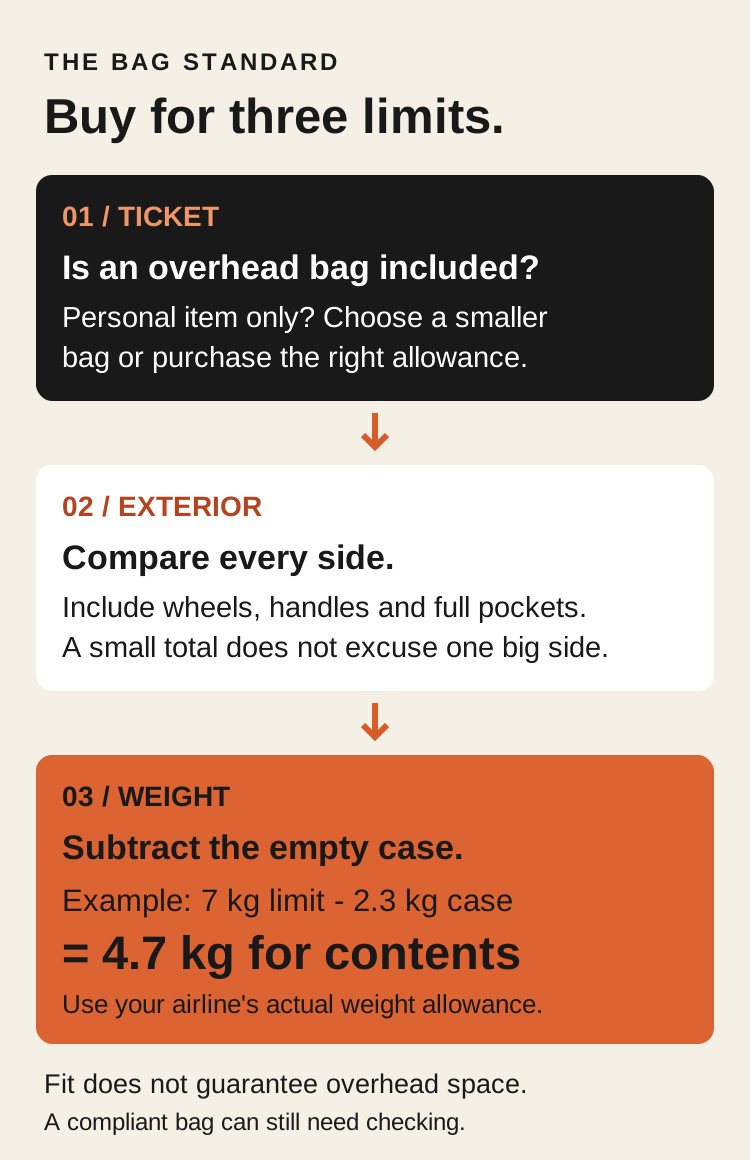
If your airline combines the main bag and personal item into one weight allowance, subtract both empty bags. Add the laptop, charger and toiletries before counting how many outfits fit. Compression changes volume, not mass.
Soft fabric, hard shell or a backpack?
Soft fabric makes exterior access convenient, but stuffed pockets can change the measurements. Hard shells hold their shape, which helps reveal a size mismatch before departure. Neither material guarantees airline acceptance or protection from every impact.
Think about your destination as much as the airport. Spinners are convenient on smooth floors. Stairs and long stretches of broken pavement can make carrying a suitcase more important than rolling it.
If walking dominates your trip, compare our travel backpack recommendations. If your ticket only includes something under the seat, use the underseat bag shortlist instead. Buying a bigger case and hoping for an exception is an expensive workaround.
Read the warranty before paying the premium
Check what failed, what caused it, who bought the bag and where a repair happens. Those details can matter more than the word lifetime. A repair promise also does not necessarily pay for a replacement suitcase during your trip.
Travelpro’s Maxlite warranty covers functional manufacturing defects for the original purchaser or gift recipient. Its normal exclusions include wear and carrier damage. Additional registered coverage has separate conditions.
The product pages describe the airline damage enhancement as applying during the first year after timely registration. The general warranty page uses broader wording. Get confirmation for your exact purchase before treating that benefit as permanent carrier damage cover.
Keep receipts and the model number. If buying through a marketplace, establish who the seller is and which country’s warranty applies. Check return shipping and whether using the case affects your right to return it.
Before removing the tags
- Check the product name and model: Compact, regular, Classic and newer generations are different purchases.
- Pack a realistic load: include shoes, electronics, toiletries and the pockets you plan to use.
- Measure all three sides: count wheels, handles, side feet and packed bulges with the handle retracted.
- Weigh and lift it: use your actual airline limit and confirm you can manage the load.
- Try the layout: open it in a small room and retrieve a jacket without unpacking everything.
- Check service access: identify the seller, return conditions and practical repair route.
The best carry-on luggage is the one that survives these checks with your real packing list. If a suitcase only works when you leave the essentials behind, choose a different bag or a different baggage allowance.
Frequently asked questions
What is the safest carry-on size to buy?
There is no universal size. A 22 x 14 x 9 inch exterior matches several US limits, but a 55 x 40 x 20 cm airline box is shallower. Compare the full exterior against every flight you plan to take.
Is a 21 inch suitcase always smaller than a 22 inch one?
No. Product names can describe the packing body rather than the full exterior. The regular Maxlite 5 21 inch spinner is 23 inches tall overall, while its Compact sibling is 22 inches overall.
Is expensive luggage worth it for occasional travel?
Not automatically. Fit, manageable weight and a usable layout matter first. A premium repair proposition becomes more useful when you travel often and can access the repair service.
Can I expand my carry-on before boarding?
Only if the packed exterior remains within your allowance. Expansion can make an otherwise compliant case too deep. Recheck the dimensions after closing the case and filling its pockets.
Does buying carry-on luggage include an overhead bag allowance?
No. Your ticket and any baggage purchase determine that allowance. If your fare includes only a small personal item, an overhead suitcase can require an additional purchase even when its size is compliant.
Why is there no single overall winner?
The lightest suitable case and the strongest repair proposition serve different travelers. Airline dimensions, weight rules and your ticket can eliminate a bag before its other features matter. Choose the category that matches your trips.