The best underseat bags depend on the smallest personal item allowance you actually buy. Our first pick for a strict 40 x 30 x 20 cm box is the CabinZero Classic 28L. For more generous allowances, consider the Osprey Daylite 26+6 or a simple soft tote.

A wheeled bag deserves extra scrutiny. Its wheels cannot compress, and the word “underseat” does not grant a free baggage allowance. Some popular small rollers exceed the personal item limits of the very airlines you might buy them for.
Commercial disclosure: we may earn a commission through shopping links. Read our affiliate disclosure. These recommendations are based on research using manufacturer specifications and customer feedback, not hands-on tests.
Our shortlist of the best underseat bags
| Bag and best use | Published exterior size | Empty weight | Main reservation |
|---|---|---|---|
| CabinZero Classic 28L: strict small bag allowances | 39 x 29.5 x 20 cm | 600 g / about 1.3 lb | Almost no spare depth; simple carrying system |
| Osprey Daylite Expandable Travel Pack 26+6: flexible backpack | 43 x 33 x 16 cm, unexpanded | 840 g / 1.85 lb | Too large for a 40 x 30 cm footprint; stock varies |
| Travelpro Maxlite 5 Soft Tote: companion to a suitcase | 16 x 11 x 8 in overall | 1.6 lb / about 726 g | Eight inches exceeds a strict 20 cm depth |
| Travelpro Maxlite 5 Carry-On Rolling Tote: conditional wheeled option | 16.25 x 15.5 x 8.5 in overall, reordered longest first | 5.4 lb / about 2.45 kg | Fails every smaller item box in our comparison below |
Sizes and availability were checked October 17, 2026. We use full outside measurements, including the rolling tote’s wheels and handles. Published capacity is not a substitute for those measurements.
Fast choice: choose the CabinZero for an uncompressed match to Ryanair’s small bag box. Choose the Osprey for easyJet or American, with expansion closed. Choose the Soft Tote when your trip includes a roller and an allowance that accepts its full packed size.
Skip our wheeled option if avoiding personal item fees is the main objective. It can still be useful with an overhead entitlement or a separately verified larger allowance. That is a different purchase from a universally free underseat bag.
Why these bags made the shortlist
We screened for useful outside dimensions, manageable empty weight, an understandable layout and a clear reason to choose each format. Customer accounts helped identify awkward access, carrying discomfort and confusing model names. Airline policies determine entitlement; customer success stories do not.
The categories are deliberately different. A backpack earns its place by keeping your hands free. A tote suits someone already pulling a suitcase, while wheels may matter more than weight for someone avoiding shoulder carrying.
We did not award numerical scores or invent durability results. Material claims and advertised capacities come from the makers. Fit judgments below are our comparisons of published dimensions, with the limitations shown rather than hidden.
CabinZero Classic 28L: the clearest strict box option
The Classic 28L’s current specifications list 39 x 29.5 x 20 cm and a 600 g empty weight. That puts it inside a 40 x 30 x 20 cm box on paper. It leaves only 1 cm in height, 0.5 cm in width and no spare depth.
This is the sensible starting point for someone who wants clothes in a small backpack rather than a specialized rolling case. Side compression straps and a broad opening help manage a simple load. The light empty weight also leaves more of your allowance for belongings.
The main tradeoff is carrying comfort. Owners of the Classic describe useful packing space, but some find a dense load uncomfortable over long walks. Treat it as a travel pack to fit to your own shoulders, rather than assuming a hiking harness.
Choose it for a light weekend wardrobe, a modest tech load and a route with a matching small bag allowance. Skip it if your priority is carrying a heavy computer and several days of belongings around a city. A compact bag can still feel surprisingly heavy.
Keep the front pocket from bulging. The advertised depth already uses the full 20 cm allowance. A stuffed charger pouch at the front can undo the neat match in the size table.
Check that the listing says Classic 28L. Classic Tech, Military and larger Classic sizes are separate products. Similar capacity labels do not mean identical dimensions or pocket layouts.
Osprey Daylite 26+6: useful flexibility, with expansion controlled
The Daylite Expandable Travel Pack 26+6 measures 43 x 33 x 16 cm unexpanded and weighs 840 g. It has an expansion section adding 6 liters, a suitcase opening and a trolley sleeve. The stock display varies by color; confirm availability before relying on it for an approaching trip.
This is our more flexible backpack choice when the airline allows its footprint. The shallow unexpanded depth offers useful room for packing variation under a 20 cm limit. It also makes sense beside a roller when you want backpack straps after leaving the airport.
The expansion is not a free extra allowance. Adding the maker’s approximately 5 cm expansion to the published depth gives roughly 21 cm. That calculated depth would exceed easyJet’s 20 cm small bag limit, even before an overfilled outer pocket.
Owner feedback includes enthusiasm for its packing flexibility and complaints about comfort when carried full all day. Those are compatible observations. A bag can organize a short trip well and still be the wrong load to wear through hours of sightseeing.
Choose it for American or easyJet when your packed measurements match. Do not choose it as an uncompressed match for Ryanair’s 40 x 30 x 20 cm allowance. It is 3 cm over on both of the first two axes.
Some travelers compress larger soft bags successfully. That is a packing judgment you must verify, not a fit promise we can transfer from someone else’s trip. A rigid laptop may prevent the compression that clothes would allow.
Travelpro Maxlite 5 Soft Tote: best beside a roller
The Maxlite 5 Soft Tote lists 16 x 11 x 8 inches overall and weighs 1.6 pounds. Its rear sleeve fits over a suitcase handle. This is the wheel free tote, not the similarly named Rolling Tote or Rolling Underseat Carry-On.
The useful combination is a suitcase for clothes and a tote for things you need during the flight. Customer reviews repeatedly praise the pockets and how it rides on a roller. Some reports also raise fabric, zipper or stitching concerns, so inspect your own bag before departure.
Choose it if you already use a suitcase and prefer a broad opening to a backpack’s shape. It fits American’s 18 x 14 x 8 inch personal item box on published dimensions. There is no spare depth once you reach the stated 8 inches.
Skip it for long walks without the roller if carrying weight on one side bothers you. More importantly, do not assume 8 inches and 20 cm are interchangeable. Eight inches is 20.32 cm, which is slightly over a strict 20 cm rule.
That is only about 3 mm, but it still prevents an unconditional fit verdict for easyJet. A softer, lightly loaded tote may measure less when packed. Check it at home instead of treating a rounded conversion as permission.
Travelpro Maxlite 5 Rolling Tote: useful wheels, awkward personal item dimensions
The Rolling Tote’s overall dimensions are 15.5 x 16.25 x 8.5 inches, including wheels and handles. Its case alone is smaller. The 5.4 pound empty weight is substantial beside a soft backpack.
Choose it for short trips when rolling is your priority and your actual entitlement accommodates it. Customers praise the interior space and easy pulling; complaints include a tight outer pocket and awkward aisle handling. A two wheel tote needs tilting, rather than moving sideways like a spinner.
It is a poor purchase for someone whose main goal is avoiding a larger cabin bag charge. Even reordered to suit the box, it exceeds American’s 14 inch middle dimension and 8 inch depth. It also exceeds the other small item boxes in our matrix.
We include it because people searching for the best underseat bags often want wheels. The honest recommendation is conditional: verify the entitlement first, then the space available beneath your assigned seat. Some readers will be better served by an overhead bag.
Watch the name particularly closely. Travelpro also sells a separate Rolling Underseat Carry-On, with different dimensions. Shopping pages may abbreviate both names to “Maxlite underseat,” which is not enough to identify the bag.
Which bags match the airline’s smaller allowance?
This table compares published outside dimensions, allowing the bag to rotate. “Yes” means a dimensional match before extra packing bulge. It does not promise usable seat space, waive a weight cap or add a bag to your fare.
| Bag | American: 18 x 14 x 8 in | easyJet: 45 x 36 x 20 cm | Ryanair: 40 x 30 x 20 cm | BA smaller bag: 40 x 30 x 15 cm |
|---|---|---|---|---|
| Classic 28L | Yes | Yes | Yes, little margin | No: 20 cm depth |
| Daylite 26+6, unexpanded | Yes | Yes | No: 43 x 33 cm footprint | No: footprint and depth |
| Maxlite 5 Soft Tote | Yes, no depth margin | No: 20.32 cm depth | No: 40.64 cm length and 20.32 cm depth | No: length and depth |
| Maxlite 5 Rolling Tote | No: width and depth | No: width and depth | No | No |
The current American personal item rule uses 18 x 14 x 8 inches. easyJet’s small bag is 45 x 36 x 20 cm, up to 15 kg. Ryanair’s included bag is 40 x 30 x 20 cm.
There is deliberately no winner in the BA column. Its smaller item has a particularly shallow allowance. See our British Airways baggage guide before shopping; a bag can qualify for its larger cabin allowance while failing the smaller one.
For fare entitlements and exceptions, use the full American guide, easyJet guide or Ryanair guide. A bag that fits a seat is not automatically the extra bag your booking permits.
Use three checks before you keep a new bag
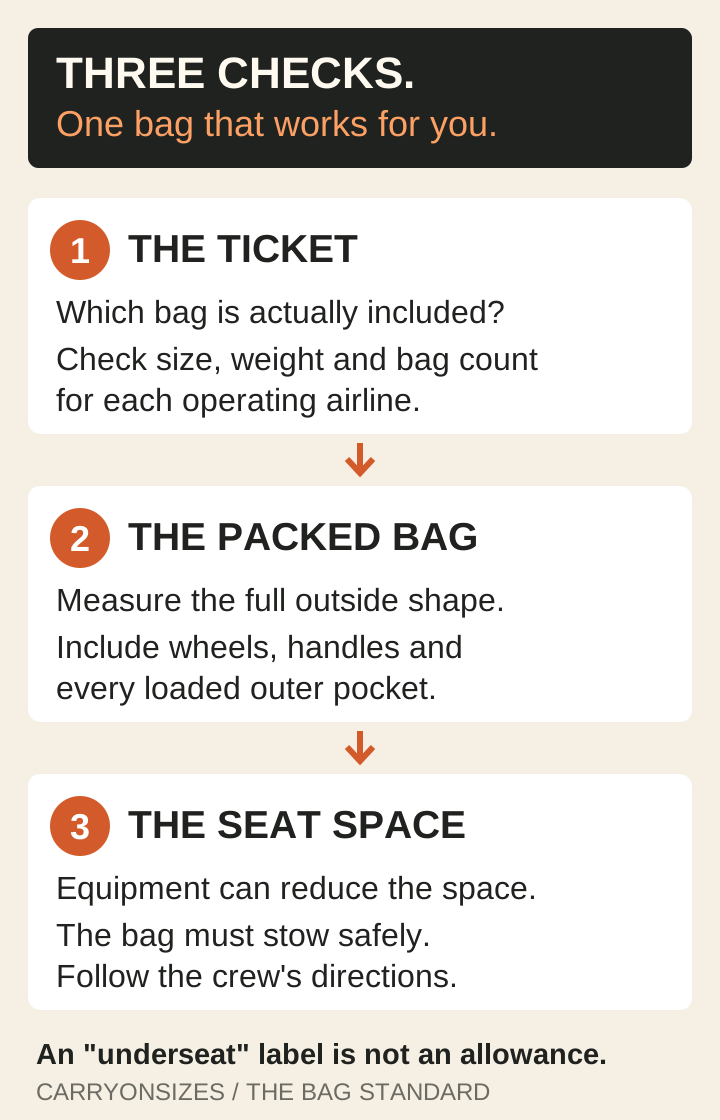
- Read the ticket. Find the smaller cabin item allowance for every operating airline. Record the dimensions, weight cap and number of bags.
- Measure the packed bag. Include filled pockets, rigid handles and wheels. Measure with your laptop and charger inside, not with an empty fabric shell.
- Check practical stowage. A compliant bag still needs to fit safely beneath the seat. An equipment box or unusual seat layout can reduce usable space.
Pack your usual flight kit before the return window closes. Walk with it, use the zippers and retrieve your documents. If the return terms require an unused bag, keep this a clean indoor inspection.
A tape measure is more useful than a seller’s claimed liters. Place the bag beside flat walls or boards without squeezing it. Measure its widest points, including the place where a full front pocket sticks out.
For a hypothetical two night trip, start with a change of clothes, toiletries, chargers and your actual computer. Then add the things that are easy to forget: a sweater, glasses case and return trip purchases. If those make it exceed the box, reduce the load or buy more allowance.
Keep a small essentials pouch accessible inside the main bag. That can save unpacking the entire bag to reach medication or charging cables. It does not create permission to carry a second separate pouch onto the aircraft.
Capacity, weight and the cost of choosing wheels
Empty weight matters most when the airline weighs the smaller bag or combines cabin items. Using the published weights, the Rolling Tote is about 1.85 kg heavier than the Classic 28L. That difference is calculated from 5.4 pounds minus 600 grams.
Under a hypothetical 7 kg total limit, the Classic would leave about 6.4 kg for contents. The Rolling Tote would leave about 4.55 kg. This compares empty weight only; it does not make the larger roller eligible for that airline’s allowance.
Someone avoiding shoulder strain may gladly accept heavier luggage with wheels. Someone climbing stairs or changing trains may prefer a backpack. Choose for the part of your journey that is hardest, rather than maximizing an advertised liter figure.
If your packing list simply exceeds a small bag, compare the cost of the correct allowance before buying specialized luggage. Our carry-on luggage guide covers larger rollers. Our travel backpack comparison covers larger packs and carrying tradeoffs.
Questions about the best underseat bags
What size bag fits under every airline seat?
There is no universal size. The airline’s personal item allowance and the space beneath your particular seat are separate constraints. Choose a bag within every relevant allowance, then follow the crew’s stowage directions.
Is a backpack better than an underseat roller?
A backpack usually saves empty weight and keeps your hands free. A roller reduces shoulder carrying but adds rigid hardware and weight. Choose the format after checking the full outside dimensions against your ticket.
Can I use the Osprey Daylite 26+6 on Ryanair?
Its published unexpanded size is 43 x 33 x 16 cm. That exceeds Ryanair’s 40 x 30 x 20 cm small bag allowance in two dimensions. Do not assume a full bag qualifies because another traveler boarded with one.
Does an 8 inch deep bag meet a 20 cm allowance?
Not exactly. Eight inches equals 20.32 cm, so a bag actually measuring that depth exceeds 20 cm. A soft bag might measure less with a lighter load, but you need to check its packed size.
Can I take a handbag as well as my underseat bag?
Only if your booking allows that additional item or an applicable exception covers it. An underseat bag often uses the personal item entitlement itself. Put a separate handbag inside it when the ticket allows only one small cabin bag.