The best travel backpacks fit both your airline allowance and your body when loaded. Our research shortlist favors four different needs: supported carrying, divided packing, a smaller tech bag, and lower empty weight. None earns a universal promise that it will pass as a free personal item.

Affiliate disclosure: we may earn a commission through shopping links, at no extra cost to you. Read our affiliate disclosure. This is a research comparison, not a hands-on product test.
Best travel backpacks: the shortlist by travel style
| Backpack and reference version | Best reason to shortlist it | Published outer size | Empty weight | Main reason to pass |
|---|---|---|---|---|
| Osprey Farpoint 40, standard S26 | Adjustable harness and framed support for a loaded main bag | 55 x 35 x 23 cm | 1.48 kg | Too large for small free bag fares; not the lightest choice |
| Cotopaxi Allpa 35L, redesigned version | Divided compartments for travelers who unpack like a suitcase | 56 x 30 x 25 cm | 1.33 kg | 25 cm depth can fail a tighter overhead limit |
| Patagonia Black Hole Mini MLC 30L, style 49266 | A smaller clothing compartment with separate tech storage | 20 x 12 x 7 in, about 50.8 x 30.5 x 17.8 cm | 1.29 kg | Still too tall for many free underseat allowances |
| Osprey Daylite Expandable Travel Pack 26+6, current F24 reference | Less empty weight and a smaller closed footprint | 43 x 33 x 16 cm, unexpanded | 0.84 kg | Less carrying support; expansion changes the fit |
These are manufacturer specifications, not our measurements of fully packed bags. The reference versions matter: older generations can have different fabrics, weights, pockets and harnesses. Match the seller’s exact model before comparing it with this table.
Shopping links can offer several colors or generations. Check their specification sheet, seller and return terms before paying. Availability varies by country and variant; a catalog listing alone doesn’t establish stock for your delivery address.
Choose the airline box before the backpack
A 35 liter label describes capacity, not permission to board. Your ticket might include only a small bag under the seat. It might instead include a larger overhead bag, with a separate weight limit.
Start with the smallest allowance across your trip. Check the operating carrier on each flight, including connections. Then compare all three dimensions with the bag as you will actually carry it.
| Reference backpack | Ryanair free bag: 40 x 30 x 20 cm | easyJet free bag: 45 x 36 x 20 cm | easyJet large bag: 56 x 45 x 25 cm |
|---|---|---|---|
| Farpoint 40 S26 | Exceeds height, width and depth | Exceeds height and depth | Within published dimensions |
| Redesigned Allpa 35 | Exceeds height and depth | Exceeds height and depth | Within dimensions, with no height or depth margin |
| Mini MLC 30, style 49266 | Exceeds height and slightly exceeds width | Exceeds height | Within published dimensions |
| Daylite 26+6, unexpanded | Exceeds height and width | Within published dimensions | Within published dimensions |
This is a dimensional screen, not airline approval. The larger easyJet allowance needs the correct booking entitlement. Its current cabin bag rules also set a 15 kg limit per bag and require you to lift it yourself.
For the smaller budget fare, use our Ryanair baggage guide. Its Priority overhead allowance is 55 x 40 x 20 cm. At their published sizes, the Farpoint fails depth and the Allpa fails height and depth.
A lightly packed soft bag can sometimes compress. That doesn’t establish how much yours will shrink, especially around a laptop or frame. Buying an oversized backpack specifically to squeeze it through a smaller sizer makes your trip depend on an uncertain result.
If free small bag travel is the priority, start with our underseat bag buying guide. Moving to a smaller target can be cheaper than paying repeatedly for a larger allowance. It also leaves more space for your feet.
Osprey Farpoint 40: the first one to try for carrying support
Shortlist the Farpoint when your route includes stairs, longer station transfers or walks with everything you packed. Its standard S26 specification combines an adjustable torso with a peripheral frame and padded hipbelt. That makes supported carrying its strongest reason to investigate.
The adjustment matters more than the extra five liters beside an Allpa. A belt that sits in the wrong place cannot deliver the support you wanted. Try the pack with your actual load before deciding that its reputation will suit your body.
Owner discussions often favor the Farpoint family for loaded comfort. Others dislike the shape, fit or less divided interior. Those reports include earlier generations, so treat them as useful questions for your fitting rather than S26 test results.
The large front opening suits travelers who want to decide their own packing layout. Use existing pouches or cubes if you need divisions. Don’t buy a whole matching organizer set before discovering what actually needs separating.
Good fit: you prefer a supported main travel bag and accept an overhead allowance. You want some torso adjustment and a harness that stows away. You don’t need the bag to behave like a small city daypack.
Poor fit: you fly mostly on a 40 x 30 x 20 cm free bag fare. You want minimum empty weight or dislike a structured travel pack. Its listed 23 cm depth also rules out a straightforward paper fit in a 20 cm deep cabin allowance.
The S26 sleeve is specified for most laptops up to 16 inches. Check your computer’s actual width, depth and case thickness. A diagonal screen size cannot confirm that a bulky work laptop will slide in comfortably.
Cotopaxi Allpa 35: for travelers who like packing in sections
The redesigned Allpa suits someone who wants clothing separated when the bag opens. Its official redesigned model listing shows a divided suitcase opening, bottle pocket and trolley sleeve. The listed laptop compartment is for a 15 inch device.
Built-in sections make it easier to allocate clothes and smaller essentials before leaving home. They also commit you to that arrangement. A traveler carrying one bulky jacket may prefer a less divided main compartment.
Its 1.33 kg listed weight is lower than the current Farpoint reference. That doesn’t prove it will feel lighter on your shoulders with the same contents. Harness shape and how the weight sits against your back still matter.
Owner feedback is split on that point. Some value the organization and comfortable fit; others find the bag bulky or uncomfortable when loaded. Different generations appear in those discussions, so don’t treat all praise or complaints as describing the redesigned version.
Good fit: most of your carrying is between transport and accommodation. You like opening the bag fully and finding separate packing sections. Your actual cabin allowance accommodates its outer dimensions.
Poor fit: you expect one large bag to become your everyday sightseeing backpack. You dislike a fixed internal layout or need a 20 cm deep overhead bag. At 56 x 30 x 25 cm, this is a substantial travel pack despite the 35L name.
Pay particular attention to the last few centimeters of depth. Shoes, a tightly filled front pocket and a full bottle pocket can change the packed outline. A nominal fit with no margin deserves an actual measurement before departure.
Patagonia Mini MLC 30: a smaller option for clothes and tech
The Black Hole Mini MLC 30L, style 49266, is the middle option here. It has a large main compartment, separate tech storage and a bottle pocket. Its padded hipbelt also serves as a shoulder strap.
This suits a traveler who wants less volume than a 40L pack but still carries a computer. The manufacturer specifies most 15 inch laptops. Try the computer with its protective case, plus the charger and documents you normally carry.
The listed 20 x 12 x 7 inch shell is slimmer than the two larger options. That still doesn’t make it a reliable small free bag. Its roughly 50.8 cm height exceeds easyJet’s 45 cm free allowance before you add anything outside.
Good fit: you can pack a restrained clothing load and want dedicated space for work essentials. You sometimes use a shoulder strap for short transfers. You prefer buying one smaller travel pack over filling every available liter.
Poor fit: your packing depends on spare shoes, bulky winter clothing and generous souvenir room. You want a guaranteed budget airline personal item. You also need to try the straps if wider shoulder spacing or hipbelt fit has troubled you before.
Owners report useful capacity, but some describe uncomfortable straps or pressure from the packed bag. A smaller pack doesn’t automatically solve a fit problem. Pack hard objects carefully and check whether anything presses through the back while walking.
Osprey Daylite 26+6: for reducing the weight you start with
The Daylite Expandable Travel Pack 26+6 starts at a listed 0.84 kg. The unexpanded 43 x 33 x 16 cm reference size is the smallest here. It offers a simple laptop sleeve, two bottle pockets and a suitcase opening.
This is the option to investigate when empty bag weight keeps consuming your allowance. The difference from the Farpoint reference is 640 grams. That saving comes before you change a single item of clothing.
Good fit: your packed load is modest and you can do laundry during longer trips. You don’t need a substantial load transfer system. You can keep the expansion closed when the allowance requires it.
Poor fit: you need a padded load carrying hipbelt or expect the straps to solve a heavy load. Some owners report uncomfortable shoulder pressure even without a very heavy pack. Others travel happily with it, which makes a loaded fitting especially useful.
The expansion adds six liters of space. It doesn’t add permission to use that space on your ticket. Measure again after expanding, rather than applying the closed dimensions to the larger bag.
Do not confuse this model with another pack carrying a similar 26+6 name. Check the exact Daylite version and specification sheet. Its 33 cm published width already exceeds Ryanair’s 30 cm free bag width.
The 7 kg calculation that capacity labels hide
A bigger backpack can hold more than you are allowed to carry. The following is a calculated example using a hypothetical 7 kg total allowance. It reserves 1.5 kg for a laptop and 0.3 kg for its charger.
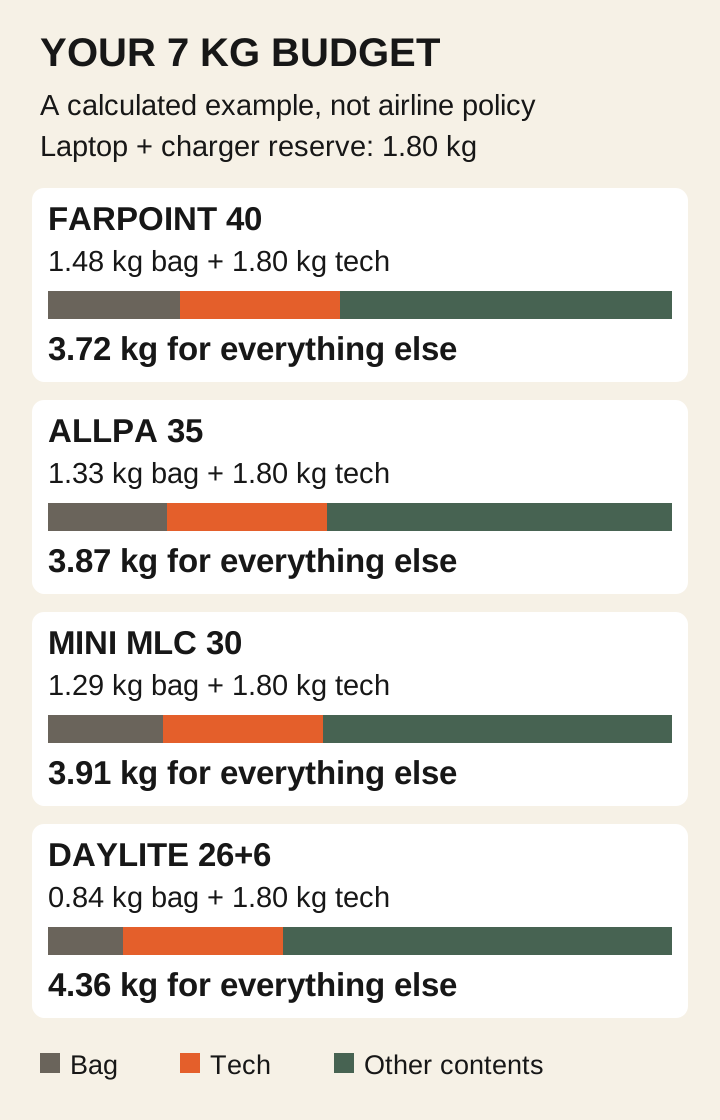
| Reference backpack | After empty bag only | After bag, 1.5 kg laptop and 0.3 kg charger |
|---|---|---|
| Farpoint 40 | 5.52 kg | 3.72 kg |
| Allpa 35 | 5.67 kg | 3.87 kg |
| Mini MLC 30 | 5.71 kg | 3.91 kg |
| Daylite 26+6 | 6.16 kg | 4.36 kg |
The formula is simple: allowance minus empty bag minus everything you add. Contents include cubes, toiletries, cables, a bottle and snacks. If your carrier combines the main bag and personal item, count the second bag too.
This isn’t an instruction to choose the lightest harness regardless of comfort. A heavier pack may carry your particular load better. Compare both the scale reading and how the bag feels after a realistic walk.
Don’t use compression to solve a weight problem. Flattening clothing changes volume, not mass. It can also encourage you to fill the saved space with more items.
How we selected the best travel backpacks for this guide
We compared current manufacturer sheets with the questions and recurring complaints in owner discussions. We screened for distinct use cases instead of inventing an overall score. Airline fit, empty weight, harness design, packing access and limitations determined the shortlist.
That method has limits. Owner posts may describe an older version, an unusual load or a different body shape. We haven’t independently measured these bags, tested their durability or flown with them.
Commercial links do not determine which backpack suits your trip. We explain limitations beside the recommendation. We also leave out star ratings that cannot tell you whether a particular harness will fit.
Price only matters beside the problem you need to solve. Keep an existing backpack if it passes the size, weight and loaded comfort checks. Replacing it merely to gain a clamshell opening can cost money without improving your trip.
Before buying: a practical fitting and packing check
- Copy the real allowance. Record the three dimensions, weight, bag count and overhead entitlement for every flight. Our easyJet guide explains the difference between its small and large bag options.
- Build your actual packing list. Include the laptop, charger, toiletries and your normal shoes. A pillow in a display bag doesn’t show how your real contents will sit.
- Fit the harness before judging it. Adjust torso length where available, position the belt and then tighten the shoulder straps. Walk, bend and use stairs where the store or home fitting allows.
- Check access with the bag full. Remove the laptop without emptying the clothing compartment. Open the pocket you will use for passport or medication and see whether neighboring contents obstruct it.
- Measure the packed outside. Include bulging pockets, handles, attached clothing and the bottle if carried outside. Use a rectangular box or measured space to check shape as well as tape measurements.
- Read the return conditions first. Keep the fitting clean and indoors until you’ve decided. Check whether the seller permits your planned fitting, and keep tags and packaging as required.
Prepare a small pouch for items you would remove if the main bag must be checked. Our power bank flight guide explains why spare batteries need separate attention. Keep documents and necessary medication accessible too.
Organize toiletries around the departure airport’s security process. A bag that opens conveniently doesn’t override screening rules. Use the liquids packing guide before filling your wash kit.
If a loaded backpack remains uncomfortable, compare a wheeled option in our carry-on luggage guide. The best travel backpacks won’t be the best solution for every traveler. Your route and comfort needs decide whether carrying the whole load makes sense.
Travel backpack questions
Is a 35L backpack a personal item?
Not automatically. Airlines use outer dimensions, not the volume label. The redesigned Allpa 35’s published 56 x 30 x 25 cm size exceeds both Ryanair’s and easyJet’s free small bag allowances.
Should I choose a 30L or 40L travel backpack?
Choose from your actual packed load and ticket allowance. A 30L bag can encourage a smaller load, while a 40L bag offers more space. Neither size guarantees comfort or airline acceptance.
Which of these backpacks is lightest?
The Daylite 26+6 has the lowest listed empty weight here at 0.84 kg. That figure applies to the reference version. Check the exact seller listing before buying.
Can I use a travel backpack for a week?
Possibly, if your clothing, weather needs and laundry plan fit. Pack the actual items before buying rather than relying on a stated number of travel days. Extra shoes and heavy electronics can change the result quickly.
Does underpacking guarantee that an oversized backpack will pass a sizer?
No. The frame, laptop and bag construction can limit compression even when the clothing compartment is partly empty. Buy to the published allowance when you need predictable compliance.
Have you tested these travel backpacks?
No. This guide compares manufacturer specifications, owner feedback and airline size limits. Our recommendations come from research, with no claimed hands-on testing or measured comfort scores.