SAS carry-on size is 55 x 40 x 23 cm, with an 8 kg limit for each overhead bag. The separate underseat bag must fit within 40 x 30 x 15 cm. Economy Light includes an overhead bag on flights outside Europe, but usually requires an add-on within Europe.

That route distinction matters more than the suitcase label. A perfectly sized roller can still be an unpaid extra on a short European trip. Start with the baggage line in My trips, then measure what you’re actually packing.
SAS carry-on size and weight at a glance
| Bag category | Maximum dimensions | Weight or storage rule |
|---|---|---|
| Overhead carry-on | 55 x 40 x 23 cm; about 21.65 x 15.75 x 9.06 inches | 8 kg per bag; about 17.6 lb |
| Small underseat bag | 40 x 30 x 15 cm; about 15.75 x 11.81 x 5.91 inches | Stored under the seat; maximum stated capacity 18 liters |
| Standard checked bag | 158 cm total: length + width + height | Usually 23 kg or 32 kg per piece, depending on fare; Greenland has a 30 kg ceiling |
Centimeters are the controlling measurements here. Inch figures are conversions, not permission to round a larger bag down. Measure the full packed exterior, including the parts that have to pass through the sizer.
The SAS cabin baggage policy sets the physical limits. It attaches the 8 kg maximum to the overhead bag. It doesn’t publish a separate numerical weight limit for the small underseat bag.
Don’t interpret that omission as unlimited weight. The smaller piece still needs to fit its category and stow safely. Nor should you assume SAS uses another airline’s combined cabin weight calculation.
What your fare actually includes
These are the standard allowances in SAS’s current regular ticket comparison. A recorded membership benefit or a specific booking condition can change your entitlement. All rows include one small underseat bag.
| Current fare | Overhead bags within Europe | Overhead bags outside Europe | Included checked bags |
|---|---|---|---|
| Economy Light | Not included as standard | 1 x 8 kg | None as standard |
| Economy Standard / Flex | 1 x 8 kg | 1 x 8 kg | 1 x 23 kg |
| Premium / Premium Flex | 1 x 8 kg, where offered | 2 x 8 kg each | 2 x 23 kg each |
| Business / Business Flex | 1 x 8 kg | 2 x 8 kg each | 2 x 32 kg each, subject to destination limits |
The extra Premium or Business cabin piece depends on the route. A premium seat within Europe doesn’t automatically mean two overhead bags. Availability of each cabin also varies by flight.
Likewise, two 8 kg bags don’t create a 16 kg allowance for one suitcase. Think in pieces: each permitted overhead piece must pass its own size and weight checks. The same principle applies to two checked bags.
Old Go and Plus names can send you in the wrong direction
SAS changed its ticket naming for travel from October 1, 2025. Current bookings use Economy Light, Standard and Flex, plus the applicable Premium and Business options. Older screenshots and baggage articles may still discuss Go Light, Go Smart or Plus.
Read the current fare and baggage entries rather than guessing from an old cabin name. A ticket bought with points also needs its own allowance checked. A points redemption isn’t, by itself, proof of an extra bag.
EuroBonus can change the Light calculation
The EuroBonus benefits table lists one Light carry-on for Gold and Diamond members. Silver lists an extra checked bag, but doesn’t list that cabin benefit. Keep those two bag categories separate.
Add your membership number before buying baggage, then confirm the benefit appears against the actual passenger. Don’t assume a companion inherits it. Partner status and tickets involving another carrier need their own eligibility check.
Light fares: buy the right bag before the airport
A small backpack that fits under the seat can be enough for a short trip. A larger backpack doesn’t become an underseat bag because it has shoulder straps. If it needs overhead space, check whether your ticket includes that category.
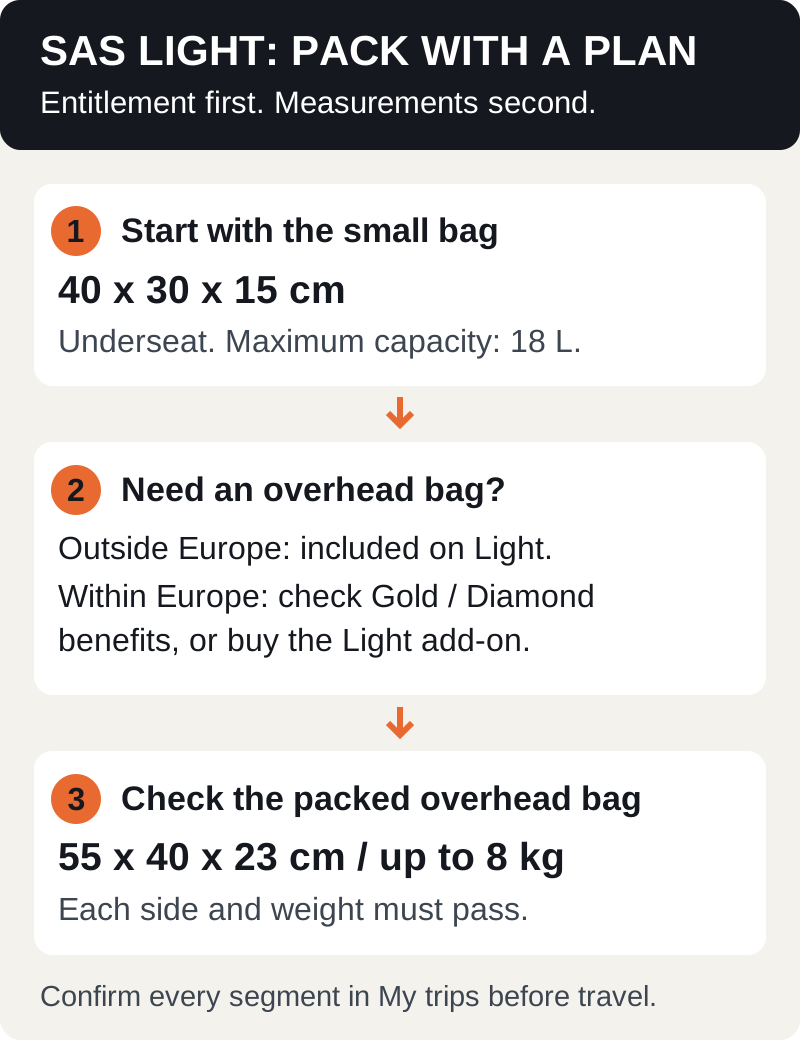
Only Economy Light travelers can buy an additional carry-on through SAS’s published add-on option. The limit is one purchased overhead bag per traveler. Standard, Flex, Premium and Business travelers can’t use this option to add another beyond their included allowance.
A useful price example for a European trip
SAS lists these prices under its Scandinavia to or from Europe carry-on category, checked October 17, 2026. Separately listed southern destinations have their own schedule. These are USD amounts per direction, not checked bag fees.
| Purchase time | Published carry-on fee |
|---|---|
| At least 4 hours before departure | USD 18 |
| Less than 4 hours before departure | USD 40 |
| At airport check-in or the gate | USD 55 |
Separate tables cover domestic Norway, other Scandinavian trips and named southern destinations. Use your own route and currency in My trips. Paying for an overhead bag also doesn’t authorize a bag over the physical limits.
For a hypothetical return journey in this European category, two early purchases total USD 36. Two airport purchases total USD 110. That USD 74 difference is a timing calculation, not a prediction of your booking’s price.
Will a 22 inch suitcase or a 20 liter backpack fit?
A size name isn’t a measurement. Take a hypothetical case with an actual exterior of 22 x 14 x 9 inches. Its longest side is 55.88 cm, which exceeds the SAS carry-on size limit by 0.88 cm.
The other sides don’t cancel that excess. A short width can’t compensate for too much height. For buying decisions, compare actual exterior specifications in our carry-on luggage guide.
Now consider a soft backpack measuring 40 x 30 x 20 cm when packed. Its height and width meet the small bag limits, but its depth is 5 cm too large. Removing enough contents to reach 15 cm may solve that; hoping nobody checks won’t.
Capacity labels can mislead too. The rectangular calculation 40 x 30 x 15 cm equals 18 liters, matching SAS’s stated maximum. Real bags have curved corners, seams and pockets, so a marketed 18 liter bag isn’t automatically compliant.
Our underseat bag guide explains why the exterior matters more than the advertised volume. For SAS, a bulging front pocket can be the difference between the free small bag and the paid overhead category.
A practical measuring routine
- Pack everything, close the case and fill the outside pockets as planned.
- Measure its widest points, including wheels and fixed handles.
- Check each dimension against the correct bag category.
- Weigh the overhead bag with the contents you’ll carry through boarding.
- Repeat after adding purchases, chargers or a coat to the bag.
Leave some packing room rather than treating the sizer as a compression press. A bag that fits only when half empty needs checking again before the return flight.
Checked baggage: pieces, weight and price are separate
The checked baggage rules set a standard total size of 158 cm. Add the three exterior dimensions together. That differs from cabin baggage, where each side has its own maximum.
A hypothetical 75 x 50 x 30 cm checked case totals 155 cm. It passes the standard size calculation, but weight still needs a separate check. A 26 kg case exceeds a 23 kg entitlement even though its measurements fit.
For North America or Asia routes, SAS lists USD 90 for a bag weighing 23.1 to 28 kg. The next band, 28.1 to 32 kg, costs USD 160. These airport excess weight charges apply per bag, per direction, where your allowance is 23 kg.
Don’t apply those surcharges to a Business bag already entitled to 32 kg. And don’t plan a 32 kg bag for Greenland: SAS states a 30 kg maximum there. An extra piece, excess weight and excess size are different problems.
How much does a first checked bag cost on Light?
SAS’s extra checked baggage schedule varies by route and purchase time. For Light travel to or from Asia and North America, the first prepaid bag costs USD 82. That price applies up until 22 hours before departure; later, the published amount is USD 140.
For a hypothetical return with both directions in that category, early first bags total USD 164. Compare that with the actual difference to Standard, which includes a checked piece. Don’t upgrade purely because one fare sounds more generous.
A European journey has different price bands and cutoffs. Use the exact route table, then confirm the total before payment. Check both directions and keep the bag purchase receipt with your booking.
Connections, partner flights and limited cabin space
For a connecting trip, inspect every segment in My trips. SAS’s general baggage FAQ refers to the first airline’s policy. That shortcut shouldn’t replace checking what the operating carrier accepts in its cabin.
An SAS flight number on a partner aircraft doesn’t establish an SAS sized overhead bin. If a segment is operated by Delta, compare the Delta cabin bag rules too. Resolve conflicting allowance entries with the airline before travel.
A further wrinkle is a European connection attached to an intercontinental Light itinerary. Don’t price each sector as a new European ticket without checking the through booking’s baggage display. But don’t extend an included long flight allowance to a separate European booking either.
Keep a screenshot showing the passenger, segment and included bags. If the app and confirmation disagree, ask SAS to reconcile them. The most useful answer is the allowance recorded for that booking.
If the roller is sent to the hold
SAS says it checks cabin bags before departure and charges when an oversized or overweight bag must enter the hold. Have a small essentials pouch ready. Passport, keys, medication and fragile electronics should stay accessible.
Ask where you’ll collect the bag and keep any receipt or baggage tag. An operational request to check a compliant bag is a different situation from exceeding your allowance. Clarify the reason before agreeing to a charge.
Power banks, liquids and family equipment
SAS’s restricted items policy permits a maximum of two power banks, up to 100 Wh each. They belong in the cabin, protected against short circuits. Keep them under the seat or where the crew directs, never in the overhead bin.
Power banks may not be used or charged onboard SAS flights. Remove them before any bag goes into the hold. Our power bank packing guide explains capacity labels and battery protection.
Security screening is another check. Review the liquids packing rules for your departure and connection. An included carry-on allowance doesn’t make a toiletry bottle acceptable at the checkpoint.
Infants and children have different baggage rules
Under the SAS children’s baggage policy, infants under two have no carry-on allowance. They can check one bag up to 23 kg except on Light. A collapsible stroller and child safety seat are also included.
Children aged two through eleven get baggage according to their ticket. They can also check a stroller up to 23 kg and a child safety seat free. Pack protective covers without extra clothing or other items inside.
A compact cabin stroller must fold within 55 x 40 x 23 cm. An umbrella stroller has a separate 20 x 20 x 100 cm allowance. If your fare has no overhead bag, SAS provides free checking rather than promising cabin carriage.
Some airports require stroller checking before security. Check the airport arrangements if you rely on it during a connection. Confirm cabin acceptance before treating it as an extra alongside your roller.
Mobility aids need their own arrangements
Mobility equipment shouldn’t be counted as an ordinary holiday suitcase. SAS’s conditions of carriage address assistance and acceptance requirements. Contact SAS with the device dimensions, weight and battery details before departure.
Ask about each operating aircraft, including connections. A medical need doesn’t make every powered device suitable for every hold or doorway. Keep approval and handling instructions with the booking.
Quick answers before you pack
Does SAS Economy Light include a carry-on?
Economy Light includes one overhead carry-on on flights outside Europe. Within Europe, the standard inclusion is the small underseat bag; an overhead bag can be purchased. Gold or Diamond benefits and your booking’s recorded allowance may change that.
Is the SAS 8 kg limit combined with the personal item?
SAS publishes 8 kg for each permitted overhead carry-on, not a stated combined allowance with the small bag. It doesn’t publish a separate numerical underseat weight limit. The underseat bag must still fit its dimensions and stow safely.
Can I take a 22 inch roller on SAS?
Measure the full packed exterior rather than relying on the 22 inch label. An actual 22 inch side equals 55.88 cm and exceeds the 55 cm limit. A bag advertised as 22 inches may have different published exterior dimensions.
Can I buy a second overhead bag?
The published carry-on add-on is available only on Economy Light, for a maximum of one purchased bag per traveler. Other fares already include their permitted overhead allowance. They can’t use that option to buy another overhead piece.
How strict is SAS about cabin bags?
SAS says it checks cabin bag size and weight before departure. Bags outside the limits can go into the hold for a fee. Another traveler’s experience doesn’t provide an exemption for your bag.
Before leaving, check SAS carry-on size against your packed luggage one last time. Then check the passenger’s actual entitlement and every operating segment. Those are separate checks, and both need to work.