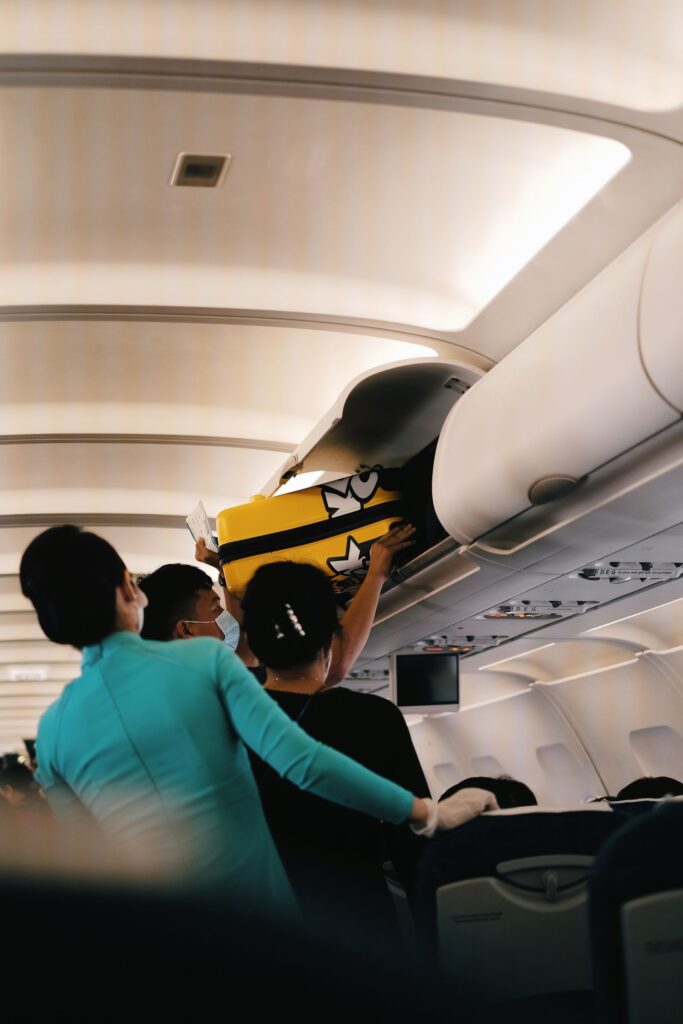
What counts as a carry on comes down to two separate allowances, not one bag. Every US airline lets you bring one carry-on bag for the overhead bin. It also lets you bring one personal item that fits under the seat in front of you.
Get the wrong bag into the wrong slot and you either pay a gate fee or watch it get tagged for the belly of the plane. There is no single federal size for a carry-on. The TSA screens what is inside your bag, not how big the bag itself is.
TSA says plainly that carry-on dimensions vary by airline. What counts as a carry on is really two questions. Does the airline treat this bag as a carry-on or a personal item, and does a specific item get exempted from both allowances entirely.
Carry-on bag versus personal item
A carry-on bag is the larger of your two allowances. It is meant for the overhead bin. Most US carriers cap it around 22 by 14 by 9 inches, including wheels and handles.
A personal item is smaller and lives under the seat ahead of you. Think purse, small backpack, laptop bag, or diaper bag. Most airlines cap it around 18 by 14 by 8 inches, though the exact number shifts by carrier.
Roller bags, duffels, garment bags, and backpacks can all qualify as a carry-on if they fit the airline’s box. A duffel that fits under the seat gets treated as a personal item instead. A garment bag usually gets its own limit, often near 51 inches of folded length, width, and height combined.
The exact numbers live on our carry-on size guide, since they change by carrier.
What kinds of bags actually qualify
- Hardside or soft luggage rollers, as long as they clear the overhead bin dimensions the airline posts.
- Backpacks, which can be either allowance depending on size. A daypack usually counts as the personal item. A larger travel backpack counts as the carry-on.
- Duffel bags, judged purely on measured size, not on the fact that they squish.
- Garment bags, sized by folded length plus width plus height, often near 51 inches total.
- Tote bags and purses, almost always treated as the personal item.
The shape or brand of the bag never matters to the airline. Only the measurement does. A squishy bag still has to fit the actual sizer, not just look small.
If you want one bag that clears both allowances on most carriers, our bag finder tool filters by airline.
Who actually measures your bag, and who does not
Enforcement is the part travelers get wrong. A crowded regional jet with a small overhead bin draws stricter checks than a half full widebody. Agents are trying to protect bin space, not trying to catch you.
Travelers on travel forums describe agents who put nearly every bag through the metal sizer on tight European routes. Other travelers describe a visibly oversized bag that rolled right past the podium on a quiet flight. One traveler noted the same bag sailed through on an outbound leg, then got stopped on the return leg of the same trip.
American Airlines is removing its gate sizers and moving to visual judgment by staff instead. The airline says it will err in the traveler’s favor when a bag is borderline. That is a real shift away from a hard measurement.
Two travelers with the same bag can get two different outcomes on two different days. That is normal, not a sign either agent was wrong.
What does not count against either allowance
Several item categories are exempt from both the carry-on and the personal item count on most US airlines. This is the part of what counts as a carry on that surprises people who assume every bag they touch counts against their total.
| Item | Typically exempt | Note |
|---|---|---|
| Medical or mobility devices | Yes | Wheelchairs, canes, and CPAP machines usually do not count as carry on |
| Diaper bags | Yes, one per child | Named by policy on major US airlines |
| Coats and outerwear | Often, if worn or carried on your arm | Policy varies, gate discretion applies |
| Umbrellas | Usually, if small and carried, not packed loose | Not a listed exemption everywhere |
| Duty free bags | Often exempt if sealed past security | Some airlines still count it, so ask before boarding |
| Child safety seats and strollers | Yes, gate checked separately | Does not use your personal item slot |
American’s published policy names diaper bags, breast pumps, a small soft cooler of breast milk, and medical or mobility devices as exempt from both allowances. That answers a common question: does CPAP count as carry on. Medical devices like a CPAP usually do not count, though you should still confirm with your airline before you fly.
This is airline policy, not a federal rule. See our medical and baby items category for how specific devices and supplies are handled. Our medication rules page covers what travels alongside the device.
Common questions
What is a carry on bag?
It is the larger of your two free cabin allowances, sized for the overhead bin. Most US airlines cap it near 22 by 14 by 9 inches, though budget carriers often run smaller.
What size luggage is considered carry on?
There is no single legal size. Airlines set their own limits, most near 22 by 14 by 9 inches for US carriers, so check your specific airline before you buy a bag.
What is considered a carry on bag versus a personal item?
Size and the under seat rule decide it. If it fits under the seat ahead of you, it usually counts as your personal item. If it needs the overhead bin, it counts as your carry-on.
What are examples of carry on bags?
Roller suitcases, duffel bags, backpacks sized for the overhead bin, and garment bags all qualify. Each has to fit the airline’s stated dimensions.
Does a CPAP count as carry on?
No, on most US airlines a CPAP or other medical device does not count against your carry-on or personal item total. It travels in addition to both, but confirm the policy with your airline ahead of a flight, since this is not a federal requirement.
What does carry on mean?
It means baggage you keep with you in the cabin instead of checking it into the belly of the plane. That is split between one bag for the overhead bin and one smaller personal item under the seat.
The honest bottom line on what counts as a carry on is that the airline sets it, not a single government standard. Enforcement swings with how full the flight is and which gate agent is working it. Check your bag against a size checker before you leave for the airport.
Keep medical devices and diaper bags separate in your head from your two allowances. You will rarely be the one holding up the boarding line. For packing strategy once you know your allowances, see our guide to packing a carry-on, and our carry-on rules hub for other exceptions travelers ask about.
Some links on this page are Amazon affiliate links. If you buy through one, Carry On Sizes may earn a commission at no extra cost to you. It never changes what we recommend. How this works.