Carry-On Rules
How to Measure Carry On Luggage (Wheels and Handles Included)
Here is how to measure carry on luggage correctly: stand the bag up and pack it the way you plan to travel. Run a…
Carry on rules sound like a single rule. They are actually two rules wearing one name. One is a federal security rule that never changes.
The other is a size rule that changes by airline. That split is where most gate confusion starts.
This page maps the whole system. It covers what counts as a carry-on, who decides the size, and when a bag gets pulled at the gate. For the actual dimensions, use the carry-on size guide instead.
Every US airline recognizes two categories. One bag goes in the overhead bin. One smaller item goes under the seat.
The under seat item is usually a purse, a laptop bag, or a small backpack.
Airlines generally do not count a diaper bag, a medical device, or a coat as either one. Gate agents do not always apply that consistently, especially on a crowded flight. The line between a personal item and a full carry-on is where most disputes actually start.
A backpack that passes as a personal item on a wide body jet can get flagged as a carry-on on a small plane. The bin shrinks, but the rule does not.
The can I bring guide covers what is allowed inside either bag. That is a separate question from size.
This is the fact that resolves most carry on rules confusion. The Transportation Security Administration screens every bag for prohibited items at the checkpoint. That screening is the same at every US airport, regardless of airline.
TSA does not measure your bag. Size and weight limits come entirely from the airline you are flying. TSA says so directly, pointing travelers to their carrier for anything about fit.
That is why a bag that is fine on Delta can be denied at a Spirit gate an hour later.
Two different authorities do two different jobs, and one word covers both. Keep that split in mind and most of the rest of this page makes sense on its own.
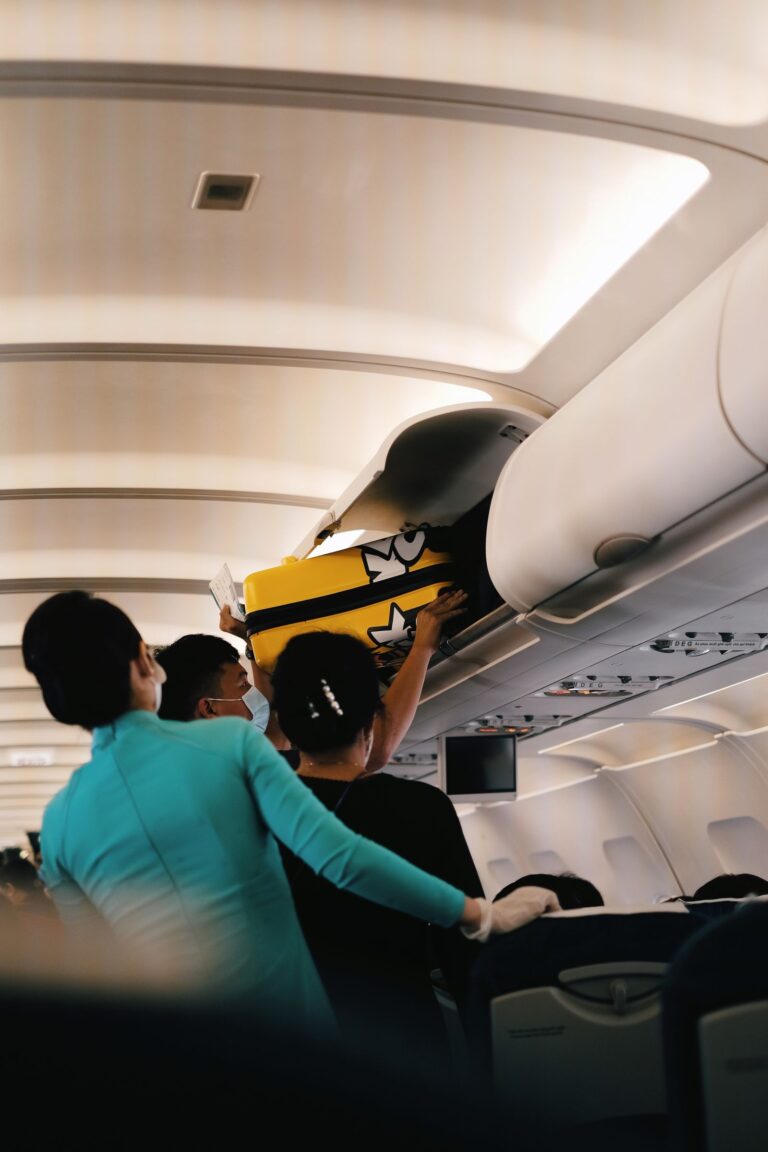
Bin space is finite, and boarding order decides who gets it. The last boarding groups are usually basic economy flyers and late check-ins. They are the ones standing at a full bin near the back of the plane.
Airlines do not save space by row number. A first class ticket does not protect your carry-on if you board last for some unrelated reason. Once the bin is full, agents pull bags from whoever is still walking on, not by any fairness rule.
That randomness is the part travelers find most frustrating about carry on rules in practice. It also explains why the same bag rides on one flight and gets pulled on the next.
Most airlines keep a physical sizer near the boarding door. It is a metal or plastic frame used to test a bag that looks questionable. Some carriers have started dropping these.
American Airlines has reportedly moved away from metal sizers at several airports. That shifts the call to agent judgment alone.
When a bag is judged oversized, or the bin simply runs out, it gets gate checked. It is tagged at the door and stowed below. It usually comes back on the jet bridge at arrival, not at baggage claim.
On most full service US airlines, a forced gate check like this is free.
The community pass on this topic tells a sharper story than any policy page does. Travelers on travel forums describe a gate agent announcing gate checks for a full flight. One passenger ignored it, carried the bag on anyway, and wedged it into a first class bin uncontested.
One frequent flyer on that thread named the real problem. Airlines fear enforcing their own published limits. Strict enforcement risks annoying a customer more than an oversized bag ever does.
A separate travel forum discussion backs this up from another angle. Posters there describe weight limits as checked far more consistently than size. Several say a polite word with the agent at check-in can change the outcome.
The rule on paper and the rule applied at your specific gate are two different things. Which one you get depends on the airline, the airport, and the person at the podium.
Not every ticket includes a free overhead bin bag. Ultra low-cost carriers built their fares around this split. The base fare covers one small personal item under the seat.
A full carry-on bag is a paid add-on you select separately.
That distinction is easy to miss when comparing fares by price alone. Read the fine print in the baggage fees breakdown before you assume a cheap fare includes what a full service fare includes.
Legacy carrier basic economy behaves differently today than it did a few years ago. Most big US network airlines now include a standard carry-on bag even on their cheapest fare class.
Still, check the fare rules for your specific airline before you pack. This detail has changed before and it can change again.
International carry on rules add a layer most domestic travelers never think about. European and Asian budget carriers tend to enforce size and weight with real scales and frames at the gate. Being a few centimeters over can mean a real fee on the spot.
The European carry-on size guide covers how those limits differ from US norms. A bag built to US limits is often too big for a European low-cost gate. That surprises travelers who assumed one carry-on fits every trip.
Security screening also shifts abroad. Liquid rules, laptop removal, and electronics screening vary by country and sometimes by airport. The checkpoint experience covered in the airport security guide is not identical everywhere the way TSA screening is.
| Fare or carrier type | Personal item included | Carry-on bag included | Typical gate enforcement |
|---|---|---|---|
| Full service US airline, standard fare | Yes | Yes | Inconsistent, agent judgment |
| Full service US airline, basic economy | Yes | Usually yes now | Inconsistent |
| US ultra low-cost carrier | Yes | Paid add-on | Stricter, tied to revenue |
| European low-cost carrier | Yes, often smaller | Paid add-on | Strict, scales and frames used |
| Full service international airline | Yes | Yes | Moderate to strict |
Airlines like Spirit built their fare structure around exactly this table. The personal item stays free because it makes the base fare look competitive. The overhead bin bag is where the actual revenue lives.
That is also why their gate agents tend to enforce it more than a legacy carrier does.
If a gate agent says your bag is being checked, ask whether it is free. A forced gate check from a full bin should not cost you anything on a US airline.
Remove anything you need for the flight first. Take out any spare lithium-ion battery or power bank too. Those generally must stay with you in the cabin, not in the belly of the plane.
If you disagree and boarding has not closed, a calm word with the agent sometimes reverses it, based on the traveler accounts above. There is no guarantee, and no airline will confirm that in writing.
No. TSA screens for prohibited and dangerous items only. Size and weight limits come from the airline.
Not when the airline forces the gate check because the bin is full. You should not be charged in that situation on a US carrier. You can be charged if your fare never included a carry-on bag in the first place.
Different aircraft have different bin sizes, and different airlines apply different limits even on the same route. A bag that clears a full size jet's bin can be too big for a smaller regional plane's bin.
Not anymore for most major US airlines, which now include a standard carry-on with basic economy fares. Ultra low-cost carriers are the exception, since their cheapest fares usually include only a personal item.
Often, yes. European and Asian budget carriers routinely measure and weigh bags at the gate. US enforcement leans more on agent judgment and varies flight to flight.
Keep medication, chargers, valuables, and anything from the electronics category in your personal item rather than your carry-on. If the carry-on does get gate checked, you still have what you need for the flight.
Carry on rules are not one rule and never were. A fixed federal security check sits next to airline size limits. Those limits shift by carrier, by aircraft, and sometimes by the mood at the gate.
Check your specific airline’s numbers before every trip with the size checker. Do not assume last trip’s bag still qualifies.
Here is how to measure carry on luggage correctly: stand the bag up and pack it the way you plan to travel. Run a…
A basic economy carry on is not the same thing on every airline. On American, United, and Delta, the cheapest domestic fare gets you…
Most US airlines have no carry on weight limit at all. American Airlines publishes a size limit for its carry-on bag: 22 by 14…
How many carry on bags allowed on a flight comes down to one number almost everywhere. One bag, plus one personal item, per passenger.…
A gate checked bag is not one thing. It is two different situations that share the same words at the boarding door. One is…
The carry on rules for kids are simpler than most parents expect. A child with a paid seat gets the same carry-on allowance as…
Personal item vs carry on comes down to one thing: where the bag has to go. A carry-on rides in the overhead bin. A…
What counts as a carry on comes down to two separate allowances, not one bag. Every US airline lets you bring one carry-on bag…
There is no global carry-on law. The international carry on size that most travelers run into abroad is close to 55 x 40 x…
No, TSA does not require clear carry-on bags. No, the FAA has not set a new universal carry-on size. Most viral posts about new…