Airport Security
What TSA Can Search and Confiscate at the Checkpoint
Can TSA search your phone? No, and that surprises most people standing in line. TSA’s job at the checkpoint is to clear an alarm,…
For twenty years, the instruction at every US checkpoint was the same: shoes off, laptop out, liquids bagged. That rule quietly stopped being universal in July 2025. Airport security still runs on federal rules, but several of them changed in the last year.
Every liquid, gel, or aerosol in your carry-on needs a container of 3.4 ounces or 100 milliliters or less. All of those containers together have to fit in one quart size clear bag. That is one bag per traveler, no exceptions for a nearly empty bottle.
The number that trips people up is the one printed on the bottle. It is not the amount inside it. An 8 ounce lotion bottle fails even when it is almost empty, because the container itself is oversized.
Pack liquids into a small enough container, or check the bag instead. TSA officers are checking the label size, not the liquid level. Medically necessary liquids, including baby formula, are allowed over the limit if you declare them for separate screening.
Everything else over the limit gets left behind or checked at the counter. The 3-1-1 liquids packer tool checks a specific bottle against this rule in a few seconds. It is faster than guessing at the airport.
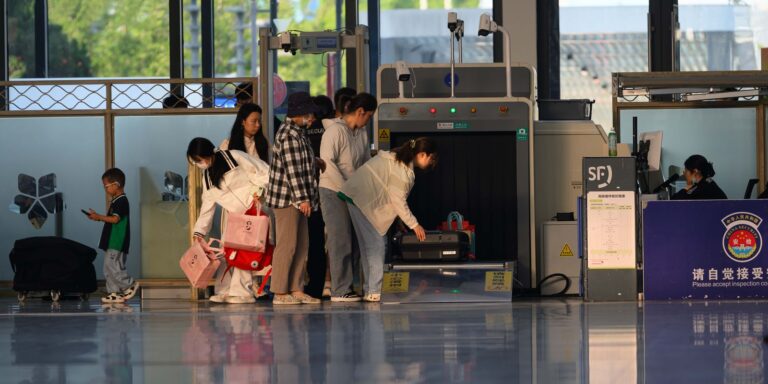
At a standard lane, laptops and other large electronics come out of the bag. They go into their own bin for the X-ray. Your quart bag of liquids comes out too, and food often gets pulled for a closer look.
A TSA PreCheck lane changes this list. Laptops stay in the bag, and the liquids bag stays in the bag as well. Shoes, belts, and light jackets stay on too.
That is the actual value of PreCheck. It removes steps from the process, not the underlying rules about what you can carry. Item level questions belong on the can I bring pages, not here.
In July 2025, the Department of Homeland Security ended the blanket shoe removal rule at standard security lanes. This was not just a PreCheck perk anymore. Officials pointed to better scanner technology as the reason for the change.
The rollout was genuinely messy in its first weeks. Travelers reported keeping their shoes on at one airport, then removing them at another on the same trip. More than a year later the exemption is standard practice almost everywhere.
Officer discretion never went away, though. If your shoes alarm the metal detector, or you wear thick boots, removal is still possible. The same is true if you get pulled for extra screening at any point.
Belts with large metal buckles, and bulky jackets or coats, generally still come off in a standard lane. They are the items most likely to trigger a second look. A carry-on shoe bag is still worth packing for the plane itself.
Watches and jewelry have no blanket removal rule. Heavy metal pieces are a common source of false alarms, and TSA advises skipping them on travel days. See tsa.gov for the identification and screening standards this all sits under.
Since May 7, 2025, TSA has enforced the REAL ID requirement on every domestic flight. Adult travelers need a REAL ID compliant license, a passport, a military ID, or another form from TSA’s accepted list. A plain, non compliant state license no longer works on its own.
A REAL ID card is marked with a star in the corner. Checking your own license takes about five seconds. Losing your ID before a flight is not automatically a disaster, either.
TSA has a process to verify your identity through other information if you show up without acceptable ID. Plenty of travelers still make their flight this way. The failure point is identity, not paperwork: if TSA cannot confirm who you are, you will not be allowed past the checkpoint.
These three get confused constantly, and they are not competing versions of one thing. PreCheck speeds up airport security itself. It lets you skip the shoes, laptop, and liquids shuffle in a dedicated lane.
Global Entry speeds up something different: the customs line when you land back in the United States. CLEAR does not touch security screening at all. It replaces the document check at the front of the line with a biometric scan.
CLEAR gets you to the front faster, then hands you off to the same TSA screening as everyone else. Buying CLEAR without PreCheck still means unpacking your bag at the actual checkpoint.
| Program | What it actually does | Approximate cost | Run by |
|---|---|---|---|
| TSA PreCheck | Expedited airport security lane, keep shoes and liquids packed | 78 to 85 dollars for five years | TSA |
| Global Entry | Expedited US customs on arrival, includes PreCheck | 100 dollars for five years | CBP |
| CLEAR | Faster ID check before the checkpoint, not a screening bypass | About 219 dollars a year | Private company |
Global Entry includes PreCheck as part of the membership. That is why frequent international flyers usually pick it over PreCheck alone. CLEAR stacks on top of either one, but by itself it solves an identity check problem, not an airport security one.
The millimeter wave scanner at the checkpoint does not produce a photo of your body. TSA’s own description says the system detects potential threats automatically. It marks them on a generic outline that looks identical for every passenger.
There is no actual image to look at, because none is generated. False alarms are routine and rarely mean anything. AirTags, hair clips, sweat, and dense seams in clothing regularly light up the same outline as a real threat.
When that happens you get a targeted pat down of the alarmed area. It is done by an officer of the same gender, not a random full search. Plenty of travelers still believe the scanner shows a real body image, years after that older technology was phased out.
The honest answer is that airport security is a federal standard enforced by individual officers. Those two things are not always the same in practice. The shoe policy rollout is the clearest recent example of that gap.
Some checkpoints applied the new policy right away. Others kept the old habit for weeks after the announcement. Staffing, training timing, and individual officer judgment all shape what happens at a given lane on a given day.
The safest approach is to plan for the written rule and treat anything looser as a bonus. Keep your liquids bag accessible even in a PreCheck line. Equipment issues or staffing can bump you to standard screening without warning.
Run a full packing list through the list screener tool before a trip. It catches this kind of gap in advance, not at the checkpoint.
Usually not, since TSA ended the blanket requirement in July 2025. Officers can still ask individual travelers to remove shoes, especially if they alarm the detector or get pulled for extra screening.
Containers of 3.4 ounces or 100 milliliters or less, all fitting in one quart size bag. The limit is based on the container size printed on the bottle, not how much liquid is actually inside it.
No, you still need the quart bag and the size limit still applies. PreCheck just means the bag can stay inside your carry-on instead of coming out for the X-ray.
A valid passport, a military ID, or another form on TSA's accepted list will work in its place. A plain, non compliant state license alone is not enough for a domestic flight anymore.
No, they solve different problems and many travelers carry both. CLEAR speeds up the identity check at the front of the line, and PreCheck speeds up the actual bag and body screening.
No, the current scanners show a generic outline that looks the same for every traveler. Suspicious areas get flagged for a pat down instead. TSA moved away from anything resembling a body image years ago after public objection.
Airport security in 2026 is genuinely less annoying than it was a few years ago. The shoe rule finally caught up with the scanner technology. The core numbers, the 3.4 ounce liquid limit and the one quart bag, have not moved and are not likely to.
Where you still get caught out is inconsistency between checkpoints. Pack for the written rule, and treat anything faster as a pleasant surprise.
Can TSA search your phone? No, and that surprises most people standing in line. TSA’s job at the checkpoint is to clear an alarm,…
TSA PreCheck eligibility comes down to three things. Your citizenship or immigration status, a clean enough criminal record, and a background check that turns…
A lot of travelers assume that if weed is legal where they live, it is legal to fly with. It is not, and that…
Electronics bigger than a cell phone have to come out of your bag at security. That is what electronics have to come out at…
What can airport scanners see is simpler than most travelers assume. The millimeter wave body scanner shows a generic, sexless outline on a screen,…
Airport security with medical devices does not force you to choose between privacy and a flight you might miss. Insulin pumps, CGMs, pacemakers, canes,…
Can you get through TSA without REAL ID? In most cases, yes. Carry a passport, a military ID, or another document from TSA’s approved…
How long does TSA take depends on which line you stand in. With TSA PreCheck, about ten minutes is normal on an ordinary day.…
If you have ever typed can I renew an expired TSA PreCheck into a search bar the night before a flight, the short answer…
Yes, TSA PreCheck comes bundled inside Global Entry. Anyone who already holds Global Entry already has PreCheck. There is no extra cost and no…