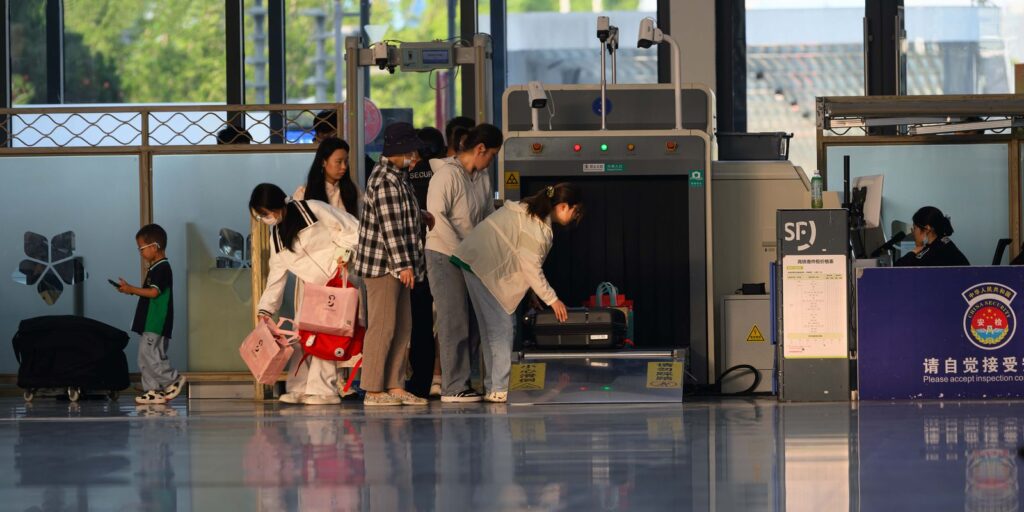
Can TSA search your phone? No, and that surprises most people standing in line. TSA’s job at the checkpoint is to clear an alarm, not to read your messages or photos.
A different federal agency really can look through your phone, but only in a specific scenario. That agency is Customs and Border Protection, and it applies at international arrival. This page separates the two clearly, then walks through what TSA can open, remove, or hold onto in a normal bag.
For the rest of the checkpoint process beyond searches, the airport security hub covers what to expect start to finish.
What TSA actually screens for
TSA officers are screening for threats to the aircraft: weapons, explosives, and items that could be turned into either. They are not reviewing the content of your files or your browsing history. TSA describes its own process as clearing the alarm, not the individual.
Screening stops once the machine’s concern is resolved. That framing is spelled out on the agency’s own FAQ page, and it is the clearest evidence that can tsa search your phone has always been meant as a no.
A laptop or tablet or other electronic device gets pulled from your bag for its own X-ray tray. Dense electronics are hard to read through a stack of clothes, which is the actual reason, not curiosity about the device. Occasionally an officer swabs a device for explosive trace, a chemical test on the case rather than a look at what is stored inside.
Can TSA take my phone
An officer can ask you to hand over your phone briefly for the X-ray tray or a swab test. They may also ask you to turn it on to prove it works. Neither answers can tsa take my phone the way most people mean it, which is opening it up and reading what is on it.
If your phone alarms and cannot be cleared by those steps, additional screening of your person and bag continues. The officer is still not opening your apps at that point. Frequent flyer forum threads about TSA and cell phones mostly describe the tray and swab routine, and travelers who assumed otherwise usually got a plain explanation once they asked.
Does TSA search checked luggage
Yes, and this is where TSA has its broadest hands on authority. Checked bags run through explosive detection systems. Any bag that alarms can be opened by a TSA officer while you are already at the gate or boarded.
Understanding how checked bags are screened helps you avoid a surprise. It is also why a checked bag needs a TSA recognized lock, since the wrong lock gets cut instead of picked. A written notice goes inside the bag when it has been opened, so you learn it happened even without being there.
The full set of rules for what can travel in the hold live on the site’s TSA rules for checked bags page. Those rules differ from carry-on rules in real ways. Batteries are the clearest example, since power packs must fly in the cabin instead.
Can TSA go through your bag at the checkpoint
Yes, for a carry-on that alarms or that catches the X-ray operator’s eye. An officer can unzip it and remove items by hand. You are normally present, and you can ask what is being checked and why.
This differs from a pat down, which searches your person rather than your bag. It also differs from screening a single item, like a laptop pulled aside for a swab. All three can happen in one stop when a bag alarms.
Can TSA confiscate items, and what that word really means
What most travelers call confiscation is technically a voluntary surrender. You are usually offered a choice: give up the item, step out of line to mail it home, or put it in a checked bag if the rule allows it there. Declining every option generally means you do not fly with the bag as packed.
Once you hand an item over, federal law generally blocks TSA from returning it, according to the agency’s own guidance. That rule is the source of every online story about a lost corkscrew or an oversized sunscreen that never came back. Weapons found in a carry-on are a separate category and go straight to local law enforcement.
Some airports run donation bins for surrendered items, and a few run surplus auctions. That is where frequent flyer forum threads about confiscated goods being resold come from. It is a downstream disposal process, not a way to get your own item back.
What to do instead of losing the item
- Check the item before you pack, using a tool like Can I Bring for a quick verdict on anything you are unsure about.
- Run your full packing list through the list screener tool before you leave, so nothing prohibited gets a surprise at the belt.
- Pack anything genuinely barred from the cabin into a checked bag instead, when the rule allows it there.
- Carry a spare envelope for a valuable item you would rather mail home than surrender.
TSA vs CBP device searches at the border
This is the split that causes the most confusion. The answer to can tsa search your phone is genuinely different from the answer for CBP. TSA screens for threats on domestic and outbound flights and does not review device contents.
CBP is a separate agency that inspects people and goods entering the United States. It operates under its own long standing border search authority. CBP’s own materials cite the Trade Facilitation and Trade Enforcement Act of 2015 as part of the legal basis for examining devices at ports of entry.
CBP has reported that these searches touch a very small share of arriving international travelers. That authority applies at your arrival into the country, not at the TSA checkpoint you pass through on a normal US departure.
| Question | TSA at a US departure checkpoint | CBP at international arrival |
|---|---|---|
| Reads phone content | No | Can, under border search authority |
| Can ask for a passcode | No | Can ask, and can hold a device if you decline |
| Opens carry-on bags | Yes, for alarms or flagged items | Yes, as part of a customs inspection |
| Applies on a normal domestic flight | Yes | No, arrival from abroad only |
If a border device search worries you more than a routine flight, back up sensitive data before the trip. Think about what you actually need on the device you are carrying. The CBP scenario is real, unlike a checkpoint phone search, which mostly is not.
Common questions
Can TSA read my texts or look at my photos?
No. TSA screens for threats to the aircraft. Its stated process is clearing an alarm, not reviewing what is stored on a device.
Does TSA ever ask for a phone password?
Not as part of standard checkpoint screening. If an officer needs your phone briefly, it is for the X-ray tray or a swab test.
What happens if my checked bag alarms?
It can be opened without you present. A written notice is left inside letting you know it happened.
Can I get a confiscated item back later?
Usually no. Handing over a prohibited item is treated as a surrender, and TSA is generally barred from returning it.
Is a pat down the same as a bag search?
No. A pat down checks your person and a bag search checks your carry-on. Both can happen in the same stop.
Why can CBP search my phone but TSA cannot?
They are different agencies with different jobs. TSA screens for aviation threats, while CBP enforces customs law at the border under its own search authority.
The bottom line
Can tsa search your phone at a normal checkpoint? No. TSA can open your bags, pull out your laptop, and hold onto an item you hand over.
That deeper search power belongs to CBP, and only when you are arriving in the country from abroad. Know which items are genuinely against the rules before you pack, and confiscation stops being something to fear.
Some links on this page are Amazon affiliate links. If you buy through one, Carry On Sizes may earn a commission at no extra cost to you. It never changes what we recommend. How this works.