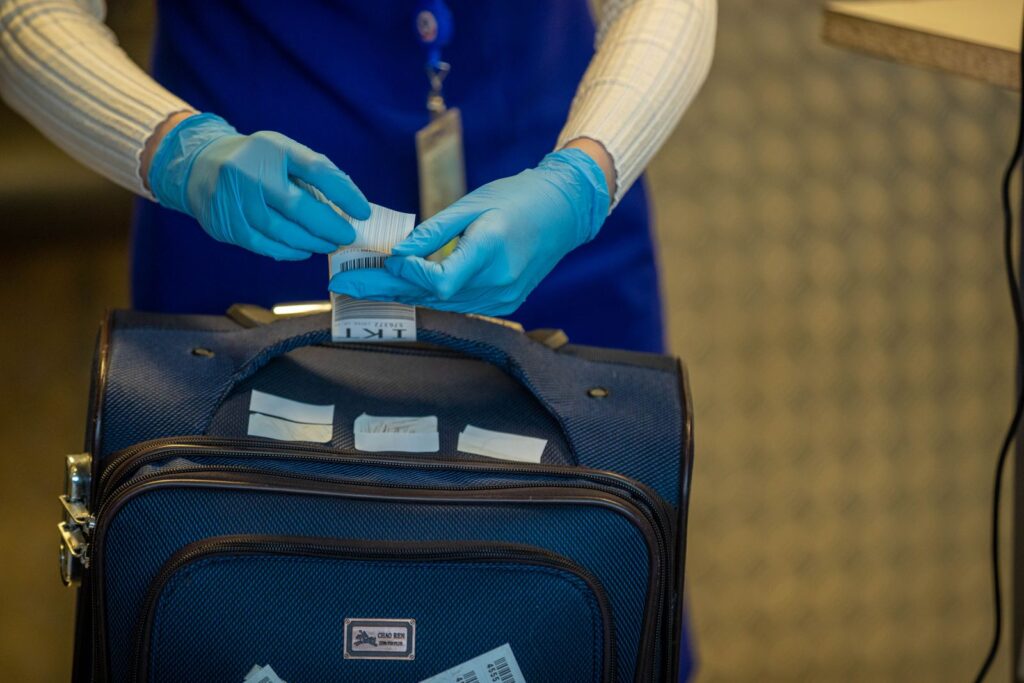
Most of what people call tsa rules for checked bags are not TSA rules at all. TSA screens the bag for security threats and stops there. The size limit, the weight limit and the fee are the airline’s rules.
The strict limits on batteries, aerosols and flammable liquids come from the FAA, not TSA. That is the core of tsa rules for checked bags: screening only, nothing about size, weight or fees.
That split matters at the airport. A bag can clear TSA screening without any issue and still get bounced at check-in for being two pounds over.
It can also get flagged later for a power bank packed in the wrong place. Knowing who owns which rule tells you where to actually look for the answer.
Who Owns Which Rule
TSA’s job is security screening. Officers are checking for weapons, explosives and other threats. TSA’s own FAQ page punts on suitcase size and fees, pointing you to your airline instead.
The FAA sets the hazardous materials limits. Those rules keep the plane safe in flight, and they apply the same way on every carrier. Airlines set the commercial terms instead: dimensions, weight caps, piece counts and fees, and those vary by carrier.
So one suitcase can pass tsa rules for checked bags cleanly. The same bag can break an FAA hazmat rule because of what is packed inside it. It can still get charged an oversize fee by the airline on top of that.
What TSA Actually Does to a Checked Bag
After you hand your bag over at check-in, it goes through a CT scanner. The scanner images the contents and flags anything that looks like a prohibited item. Most bags pass through without ever being physically opened.
A flagged bag gets pulled for a closer look. Sometimes that means a swab test for explosive residue. Sometimes it means a full hand search.
If TSA opens your bag, officers leave a printed notice of baggage inspection card inside. The card tells you the bag was searched and who searched it. That is normal, and it does not mean anything was wrong with the bag.
TSA Approved Locks and What They Actually Protect
A TSA approved lock is built so screening officers can open it with a standard master key. They can search the bag and relock it without cutting anything. That is the whole point of the design.
If your lock is not approved and needs a hand search, officers can cut it off. Airline ground staff handling a flagged bag will often do the same thing.
Travelers on travel forums report mixed outcomes even for approved locks. Some get opened cleanly and relocked. Others get cut off anyway, often at smaller stations without enough staff to find the right key.
Several frequent flyers on those forums said a lock stops a curious stranger, not a determined one. Nothing valuable should go in a checked bag regardless of the lock on it.
A TSA approved lock is still worth using because it keeps the bag from popping open in transit. It is not the security feature the label implies.
What TSA Can Open, Remove and Keep
TSA can open a checked bag without you present and without a warrant. Checked baggage screening is a condition of flying, so consent is built into buying the ticket. If officers find a prohibited item, they can remove it, and in most cases it is not returned.
This is where the FAA hazmat list matters more than anything TSA publishes about checked bag contents. The items most often pulled from checked bags are what the FAA bans, not what TSA personally objects to. Spare lithium batteries and power banks are the clearest example.
Loose lithium batteries and power banks under 160 watt hours must travel in the cabin with you. They cannot go in the checked bag at all, according to FAA guidance. A bag pulled for a battery this way will most likely lose the battery rather than the whole bag.
The FAA Rules That Actually Catch People
Aerosols, flammable liquids and other dangerous goods follow FAA limits, not TSA or the airline. Most personal care aerosols are allowed in checked bags in limited quantities. Full size fuel, certain camping items and anything that can spark or overheat get treated far more strictly.
Damaged or recalled batteries are not allowed in checked bags or carry-ons at all. Same for battery powered devices that could generate heat or spark. This is a hard FAA line, not a TSA judgment call, and it applies to every US carrier.
If you are unsure, treat any battery, flame source or pressurized can as an FAA question first. Ask about the airline’s fee schedule second. Running your packing list through a list screener before you pack catches most of these early.
What Falls to the Airline Instead
Size, weight, count and price are entirely the airline’s call. ‘TSA approved’ printed on a suitcase label has nothing to do with any of that. A bag can meet every TSA and FAA rule and still get an overweight fee at the counter.
Weight limits, dimension limits and free bag counts differ by carrier, route and even fare class. ‘TSA approved’ on a lock only means the design is recognized. It says nothing about whether the airline will accept the bag without a fee.
Check the current baggage fee page for your specific carrier before you get to the counter. Screening rules for tsa check in baggage and the airline’s rules for accepting that bag are two separate things. They just happen to play out at the same desk.
Packing So the Rule Never Becomes a Problem
Most checked bag trouble is avoidable with a quick check before you zip the bag closed. Pull spare batteries and power banks into your carry-on. They have to fly with you in the cabin either way.
Keep flammables and pressurized canisters out of the checked bag unless you have confirmed a specific exception. A TSA approved lock is fine to use, but pack as if the bag might get opened.
A quick pass through general packing guidance before a trip catches most of this. The tsa rules for packing that cause trouble are almost always about batteries and pressurized items, not clothes.
Common questions
Does TSA set the checked bag weight limit?
No. TSA does not set weight or size limits for checked bags. Those numbers come from your airline and appear on its own baggage page.
Will TSA tell me if it opened my checked bag?
If your bag is hand searched, TSA leaves a printed notice of baggage inspection card inside. Not every screened bag gets opened, since most clear the CT scanner without a physical search.
Can I put a power bank in my checked bag?
No, not a standard power bank or a spare lithium battery. FAA rules require those to fly in the cabin with you. That is a common surprise covered in checked baggage electronics rules.
Is a TSA approved lock actually more secure?
It saves officers from cutting the lock during a hand search, which is its main benefit. It does not make the bag meaningfully harder to break into. Both frequent flyers and TSA screening staff have described using master keys on the spot.
What happens if TSA finds a prohibited item in my checked bag?
Officers can remove it, and in most cases it is not returned to you. This happens separately from anything the airline does about size, weight or fees for the same bag.
Do checked bag rules change for international flights?
FAA hazmat limits generally apply the same way. Airline size, weight and fee rules can differ sharply on international routes and codeshare partners. Check the specific checked baggage terms for your route rather than assuming your usual domestic allowance carries over.
The bottom line on tsa rules for checked bags is that TSA is only one of three authorities involved. It is usually the smallest one for anything other than security.
Get the FAA hazmat questions right before you pack. Confirm the airline’s size and fee terms before you check in. Treat the lock and the notice card as normal parts of airport security, not a judgment on your bag.
Some links on this page are Amazon affiliate links. If you buy through one, Carry On Sizes may earn a commission at no extra cost to you. It never changes what we recommend. How this works.