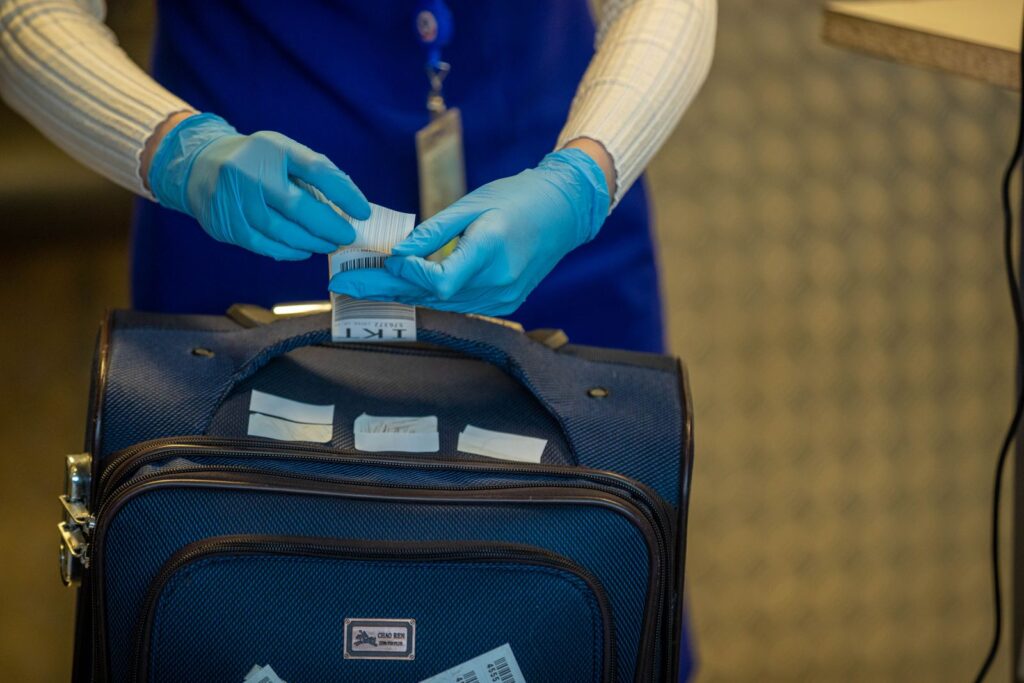
Checked baggage on connecting flights usually rides straight to your final destination without you touching it again. That is true when you booked one ticket and the airlines involved have a deal to hand bags off to each other. It stops being true once separate tickets, a missing baggage agreement, or a customs stop enters the picture.
The short version: one ticket, one bag tag, no touching your bag until the last airport. Two tickets, or a customs border in the middle, changes that. You may need to collect the bag yourself and check it in again.
When your bag is checked through to the final destination
At check-in, the agent scans your full itinerary. They print a bag tag for the last airport on it, not just the next one. That only works when every carrier on the route has agreed to accept and forward each other’s bags.
Airlines in the same alliance, such as Star Alliance or Oneworld, almost always have that deal in place. Two airlines with no agreement may only check your bag as far as the connection point, even on the same route.
The rule of thumb: if the trip is on one confirmation number, ask the agent to confirm the bag is tagged for your final stop. If they cannot see your onward flight, the bag is not through to your destination.
Separate tickets and checked bags
Booking two separate tickets is common for cheap fares. It also breaks the automatic transfer most travelers assume will happen. Our guide on when to check your bag covers the broader decision if you are still weighing carry-on against checked.
DOT notes that bags may only be checked to an intermediate stop, and not your real destination, in two cases. One is two airlines with no interline agreement, and the other is a customs stop before your final airport. See DOT’s fly rights guidance for the full rule.
Separate tickets almost always fall into the first case, since there is no contract linking the two bookings.
Plan on claiming the bag at the connection airport. Check it in again there, as if starting a new trip, and build real time for that step.
How to read your bag tag
Your baggage claim receipt lists a routing code with airport codes for every leg. A tag reading JFK to LHR to CDG means the system meant to send that bag all the way to Paris. Our what is checked baggage guide explains the tag system in more depth.
A tag that stops at LHR means the system only checked it that far. That is your signal to collect it at the connection, even if your boarding pass shows a later destination.
If you are unsure, just ask. Confirm with the agent whether the bag is tagged for your final airport or only for the connection.
Arriving in the US from abroad: claim it, clear customs, recheck it
This is the one case that catches even experienced flyers, no matter how the ticket was booked. If your first stop back in the United States is not your final destination, you still collect your checked bag there.
You clear Customs and Border Protection at that first US airport. You present the bag for inspection if asked, then recheck it at a connections desk before your next gate.
This happens even when the airline checked the bag through from your origin city on a single ticket. The inspection has to happen at the first point of entry, not your final stop.
Build real time for this step. An hour is tight once you add the customs line, the walk to baggage claim, the wait for the bag, and rechecking it before security again.
The general arrival process is outlined on cbp.gov, worth a read before a short connection.
Long layovers and overnight stops
A long layover, or a forced overnight from a delay, changes the calculation again. Most airlines will still hold a bag checked through in the system rather than hand it over, but policy varies by carrier.
If the airline caused the overnight stay, ask at the transfer desk whether staff can pull your bag. Some carriers will retrieve it, some will not. It depends on where the bag physically sits at that moment.
If you planned the stopover yourself and plan to leave the airport, treat it like any other stop. The bag may already be tagged only that far. Confirm this at booking, not at the carousel.
What actually goes wrong with checked baggage on connecting flights
Traveler reports describe one failure more than any other: staff giving confident but wrong answers about a transfer. One well documented account involved a passenger connecting from a US carrier onto a partner airline in Europe.
The first agent said nothing further was needed. Gate staff later said otherwise, and required the original baggage receipt to complete the transfer by hand.
The traveler’s own conclusion was blunt: trusting that first answer would likely have meant a missed bag. Do not treat a through ticket as proof the bag will follow. Ask directly, and keep your claim receipt on you until the bag reappears.
What to do if a bag does not make the connection
Report a missing bag right away at the arrivals baggage desk, before you leave the airport. DOT guidance notes that on a route with two carriers, the final carrier normally handles your claim. That is true even if the first airline caused the problem.
Get a written report with a file reference number before you leave. Our guide to reporting a lost bag covers what that report needs and how tracking works after.
For the wider picture on delays and compensation, see our lost, delayed, and damaged baggage hub. If you are still deciding when to check a bag at all, our checked baggage hub covers the rest.
A tight connection with a customs stop is where plans for checked baggage on connecting flights go wrong first. Run the itinerary through the trip planner tool before you book. See if the layover leaves room for baggage claim and recheck.
Common questions
Do I have to pick up my checked bag on a layover?
Not on a normal domestic connection with one ticket and one airline group. You do have to pick it up if you are entering the United States from abroad at that airport, or if your ticket is not checked through.
How does checked baggage work with connecting flights on one ticket?
Checked baggage on connecting flights booked as one ticket with an interline agreement gets one bag tag to your final stop. You do not touch the bag again, aside from a required customs stop.
What happens to checked bags with separate tickets?
Separate tickets almost always mean separate check-in. Plan to collect your bag at the connection airport and check it in again for the next flight.
Why do I have to recheck my bag after landing in the US from an international flight?
Customs and Border Protection requires inspection at the first US airport you land in, even when your bag was checked through at origin. You claim it, clear customs, then recheck it for the next flight.
What is an interline agreement?
It is a deal between two airlines to accept and forward each other’s tickets and bags. Without one, a single ticket can still fail to carry your baggage past the connection point.
How much connection time should I plan for an international arrival into the US?
Check your specific airport and airline before booking a short connection. Two hours or more gives realistic room for the customs line, baggage claim, and recheck before your next flight.
Some links on this page are Amazon affiliate links. If you buy through one, Carry On Sizes may earn a commission at no extra cost to you. It never changes what we recommend. How this works.