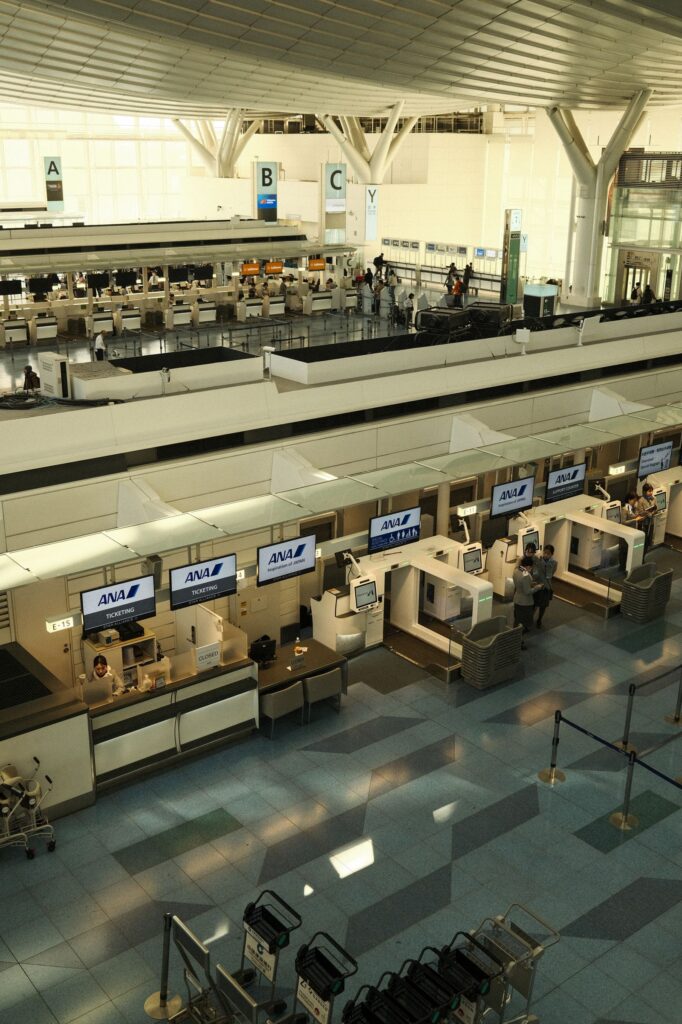
What is checked baggage? It is the suitcase or bag you hand over at the airline counter or a self-service bag drop. An agent or a machine tags it, and you do not see it again until the carousel.
Once the tag goes on, the bag rides in the cargo hold for the whole flight. You never touch it, and it never enters the cabin. If you searched what is a check in baggage, this is the same question, just worded differently.
Checked luggage, hold baggage, and hold luggage all describe this same bag. The word changes depending on where you learned English, not what the bag actually does.
So what is checked baggage at its simplest? One bag, one tag, one handoff at the counter.
The moment a bag becomes checked baggage
A bag becomes checked baggage the moment an agent or a kiosk accepts it and prints a tag. Before that moment it is just your suitcase on a cart. After that moment the airline is responsible for it, and you cannot open it again until you claim it.
That handoff is the whole line between checked and not checked. A bag waiting in line with you is not checked yet. The same bag is checked the second the tag goes on and it disappears behind the counter.
Check-in baggage, hold baggage, hold luggage, checked luggage: one bag, many names
What is checked baggage called somewhere else? In the United Kingdom and Ireland it is usually hold baggage or hold luggage, named for the cargo hold. In India, the Middle East, and many places where English is a second language, it is often called check-in baggage instead.
That name comes from the desk where you hand the bag over.
The checked luggage meaning does not shift between these terms. Only the label changes, never the process or the rule.
| Term | Where you will hear it most | What it means |
|---|---|---|
| Checked baggage | United States, Canada | A bag checked at the counter and flown in the cargo hold |
| Checked luggage | United States | Same bag as checked baggage, just a different noun |
| Hold baggage | United Kingdom, Ireland | Same bag, named for the cargo hold it rides in |
| Hold luggage | UK, Australia, much of Europe | Same as hold baggage |
| Check-in baggage | India, the Middle East, and many places where English is a second language | Same bag, named for the check-in desk |
None of these words describes a different service. A gate agent or an airline site might use a term you have not heard. It is still the same suitcase.
Checked baggage vs carry-on, personal item, and a bag checked at the gate
Carry-on baggage stays with you in the cabin, usually in the overhead bin. A personal item is smaller, the bag that fits under the seat in front of you. Checked baggage is neither: it never enters the cabin, full stop.
A bag checked at the gate sits in between the two. It starts the trip as a carry-on. Then it gets tagged and sent into the hold at the jet bridge.
That usually happens because the overhead bins filled up or the aircraft is too small for the bag.
Full carry-on rules explain how airlines decide which bags get pulled at the door.
Travelers on frequent flyer forums have compared notes for years on where a bag checked at the gate actually ends up. On some regional jets it comes back at the bottom of the jet bridge. On larger aircraft it goes to the normal carousel instead, and that mismatch is what catches people off guard.
What happens to your bag between the counter and the carousel
After check-in, your bag is screened, usually by a CT or X-ray machine. The TSA can open a bag by hand if the scan flags something. It does not need you present to do that.
From there the bag is sorted by flight and loaded onto a cart or container for the ramp. On a connection, it moves from one plane to the next during your layover, without you touching it. General screening steps are covered on the site’s airport security page.
The baggage tag and the claim stub
Two pieces of paper matter here, and they are not the same thing. The baggage tag is the barcoded strip looped onto the handle. It tells every scanner along the route where the bag belongs.
The claim stub is the small tear off piece you keep, usually stuck to your boarding pass or receipt. The stub matters most on the day something goes wrong.
If your bag does not show up, give the agent the number on your stub. That number is what the airline uses to trace the bag and match it back to you.
Losing the stub does not mean you lose the bag. It just slows down proving the bag is yours. The site’s guide to a bag that goes missing covers what to do next.
Where your allowance comes from
How many bags you can check for free is not one blanket airline rule. It comes from the fare you bought: the cabin and the ticket type. Frequent flyer status or the route can matter too.
Two people on the same flight and the same airline can have different allowances. The reason is simply different fares.
That is why an airline’s baggage page always asks for a route and a fare first. The site’s baggage fees page covers how those charges stack up.
The baggage cost calculator tool will estimate yours once you enter your fare.
Terms that sit next to checked baggage and confuse people
A handful of related words get used loosely, and mixing them up leads to surprise charges. Excess baggage means an extra bag beyond what your fare includes. Overweight means a bag within its piece count but over the scale limit.
Oversize means something different: its combined length, width, and height goes past the limit, even if the scale is fine.
Interline baggage is a bag transferred between two different airlines on one itinerary. It only works when the airlines have an agreement to hand it off. A bag tagged all the way to your final stop is sometimes called checked through.
You never touch that bag at a connection. It waits for you at your final stop instead.
None of these words changes what is checked baggage at its core. They describe things that can happen to the bag along the way, not a different kind of bag.
Common questions
What does checked baggage mean in simple terms?
It means the bag you hand over at the counter or bag drop. That bag travels in the cargo hold instead of the cabin. You get it back at baggage claim after landing.
Is hold luggage the same as checked baggage?
Yes. Hold luggage and hold baggage are British and Irish terms. Americans usually say checked baggage or checked luggage instead.
What is the difference between checked baggage and a personal item?
A personal item stays with you in the cabin, under the seat in front of you. Checked baggage goes into the cargo hold, and you do not see it again until you land.
Does checked baggage get screened the same way as carry-on baggage?
Yes, every checked bag is screened before it is loaded, usually by a CT or X-ray scanner. Screeners can still open a bag by hand if the scan needs a closer look.
What happens if I lose my claim stub?
You can still report a missing bag without it, but tracing and proving ownership takes longer. Keep the stub, usually attached to your boarding pass, until your bag is back in your hands.
Why do two passengers on the same flight pay different checked bag fees?
The free allowance and any fee are tied to the fare each person bought. There is no single airline wide rule. Fare class, route, and frequent flyer status can all change the number.
Some links on this page are Amazon affiliate links. If you buy through one, Carry On Sizes may earn a commission at no extra cost to you. It never changes what we recommend. How this works.