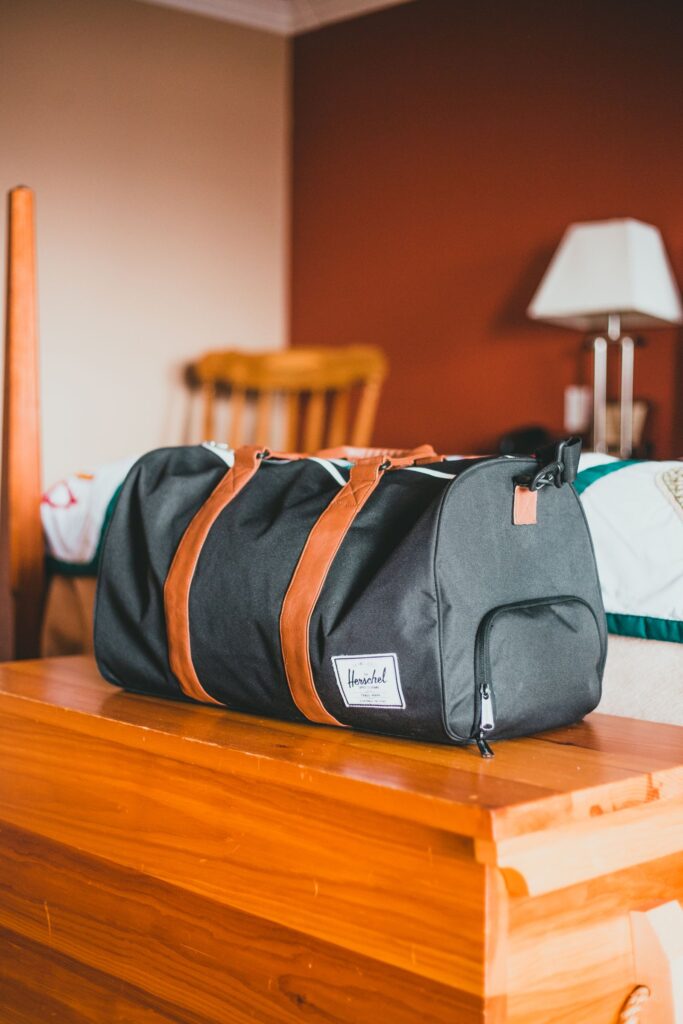
Fifty one pounds costs 100 dollars on American and Delta. A ten dollar luggage scale is the only way to know you crossed that line before the counter does. Both airlines charge 100 dollars for a domestic bag between 51 and 70 pounds, and 200 dollars from 71 to 100 pounds.
A luggage scale that hooks onto a handle and lifts the bag costs a fraction of that fee. It takes about ten seconds to use. The catch is that the reading has to be honest.
A bathroom scale rounds. A hanging spring scale drifts. A bag packed to 49.8 pounds at home can read 51 pounds at the airport once a strap tightens or a phone charger gets added.
This guide covers what to buy, how airline counter scales are calibrated, and where the real margin for error sits.
Why a one pound margin matters
Airline counter scales are commercial platform scales. They are built for trade and read close to the nearest tenth of a pound.
A home scale off by even a pound can put a bag on the wrong side of a fee tier. The gap between 49 pounds at home and 51 at the counter is not a packing mistake. It is rounding error plus whatever got added last.
Airlines do not split the difference. A bag at 50.4 pounds pays nothing. A bag at 50.6 pounds pays the same 100 dollars as a bag at 70.
That cliff is why a cheap luggage scale earns its keep on almost every checked trip.
Hanging scale versus bathroom scale
A dedicated hanging luggage scale, like the Etekcity digital luggage scale, hooks onto the handle and lifts a few inches. The display locks once the bag stops swinging. Reviewers commonly mention that lock feature as the difference between a real number and a guess.
A bathroom scale asks you to weigh yourself, then weigh yourself holding the bag, then subtract. Every step adds error. A bathroom scale is built to read body weight, not to isolate five or ten pounds on top of it.
The hanging design also weighs a bag you cannot easily lift twice. That matters most right before you close a checked bag for good.
How airline counter scales are calibrated
Most US airports use commercial digital platform scales built for trade. It is the same class of scale used at truck stops and shipping counters, checked periodically against certified weights.
That accuracy is why the gate agent’s number is the one that counts. A home scale only needs to get you safely under the fee line, not match the airport scale exactly.
Aim to read at least two or three pounds under the limit at home, not right at it. That buffer covers the drift a cheap scale picks up over months of use.
What to look for in a luggage scale
A digital hook scale under 15 dollars, like the Etekcity model, reads in pounds and kilograms. It holds the number once the bag stops swinging. It runs on a coin cell battery that lasts years between checked trips.
Reviewers, tens of thousands of them, commonly mention it holding steady within a fraction of a pound of the airport scale. That is the only test that actually matters.
A Komelon locking tape measure solves the other half of the problem. A bag over the weight limit is a fee, but a bag over the size box can be denied at the gate. This tape measure locks at length, so it does not retract while you are still measuring wheels and handle.
That is the only honest read on whether a case still fits the 22 by 14 by 9 inch US carry-on box. Our guide to measuring carry-on luggage covers the full method.
| Product | What it is for | What reviews say | Best for |
|---|---|---|---|
| Etekcity digital luggage scale | Hanging hook scale, lbs and kg | Holds a locked reading near the airport scale | Anyone who checks a bag more than once a year |
| Komelon locking tape measure | 16 ft locking tape measure | Locks at length instead of snapping back | Checking a bag against a size box, wheels included |
If a bag is already over
Weighing at home is the cheap fix, but a scale is rarely available at the airport itself. A fee at the counter is not negotiable once a bag is on the belt.
If one bag reads over and a second bag has spare room, our bag rebalancing tool works out exactly how much to shift between them. It also shows what the fee would have been, a number worth seeing once and never again.
The full breakdown of US and international checked weight tiers is in our checked baggage weight limit guide. The 50 pound line is a US domestic default, not a universal rule.
Cabin bag weight abroad
US carriers rarely weigh a carry-on at the gate. Airlines outside the US often do, and a cabin bag over their limit gets checked or charged on the spot.
Ryanair, easyJet, and most European low-cost carriers cap a cabin bag around 22 to 26 pounds. That limit catches travelers who packed to the US size box and never checked the weight. Our guide to European carry-on size and weight covers the carriers that enforce it hardest.
A ten dollar scale used on a backpack or a soft bag before an international trip catches this early. It takes less time than repacking at the check-in desk.
The bottom line
A luggage scale is one of the cheapest things a traveler can own relative to what it protects against. A single overweight fee on American or Delta is 100 dollars, ten times the price of a hanging scale.
Buy a locking hook scale. Weigh with a few pounds of buffer. Pair it with a locking tape measure so size and weight are both checked before you leave for the airport.
Skip it only if you never check a bag and never fly a foreign low cost carrier that weighs the cabin bag. A scale earns nothing sitting in a drawer.
Some links on this page are Amazon affiliate links. If you buy through one, Carry On Sizes may earn a commission at no extra cost to you. It never changes what we recommend. How this works.