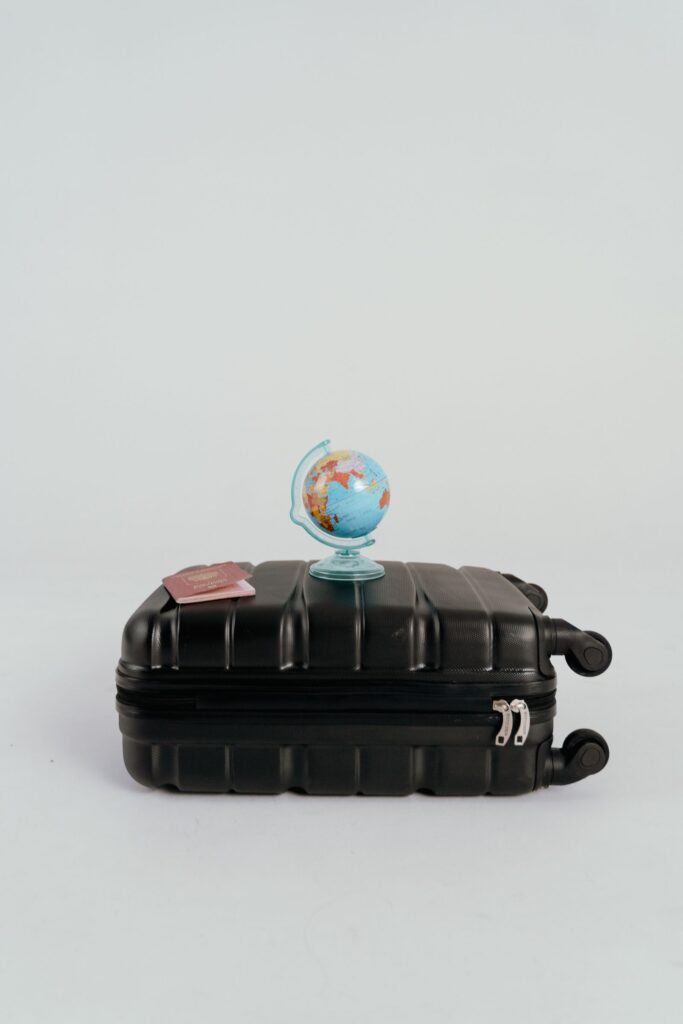
A large suitcase only works if it clears two numbers: 62 linear inches and 50 lb. Miss either one at the counter and the airline charges a fee before the bag ever reaches the belt.
Shopping by inches on the box is only half the job. A large suitcase that measures fine empty can still fail the weight cap once it is packed.
The size cap: 62 linear inches
Most US airlines cap checked bags at 62 linear inches. That means length plus width plus depth added together, not any single side.
A few carriers such as Allegiant and Japan Airlines allow up to 80 linear inches. Check your airline’s checked baggage size rules before buying at the top of a size class.
Go over 62 and most airlines charge an oversize fee on top of the normal checked bag fee. Use a tape measure, not the box label, since manufacturer dimensions are often rounded.
The weight cap: 50 lb (23 kg)
The weight cap matters more than the size cap for most travelers. It is the one that packing habits blow through first.
Most full service US airlines allow 50 lb per checked bag. Budget carriers like Frontier and Spirit cap at 40 lb. Check the weight limit for your airline first.
- 1 to 20 lb over: roughly 100 dollars at most carriers.
- 21 to 50 lb over: roughly 200 dollars, and some airlines refuse the bag past 70 lb.
- Weigh at home with a scale like the Etekcity digital luggage scale. Airport scales only tell you after the packing is done.
Carry-on, medium, or large: what each size class actually holds
Suitcase sizing is not standardized by law, so brands round differently. The industry generally sorts into three bands. The table below is the practical version for a large suitcase buyer trying to skip a size that will not do the job.
| Size class | Typical exterior height | Rough capacity | Airline consequence |
|---|---|---|---|
| Carry-on | 20 to 22 inches | 35 to 45 liters | Fits most US overhead bins. Still weight capped on some airlines. |
| Medium checked | 24 to 25 inches | 60 to 75 liters | Usually well under 62 linear inches. The weight cap fills up first. |
| Large checked | 28 to 30 inches | 85 to 110 liters | Close to the linear inch limit on some models. Almost always the weight cap bites first. |
A 30 inch case is the one to measure with wheels and handle extended before buying. A few models edge past 62 linear inches once you add those.
Large suitcase options that stay inside both limits
The Samsonite Omni PC 24 inch is the medium option here. It sits at roughly 62 linear inches total, so it clears every checked limit with margin.
Step up to the Samsonite Omni PC 28 inch. The size box is no longer the constraint here, the 50 lb weight cap is.
Weight matters most in the large class. An empty case that is already heavy leaves less of the 50 lb allowance for clothes.
The Travelpro Maxlite 5 29 inch spinner is built around that math. According to Travelpro, it is one of the lighter 29 inch cases sold, so more of the 23 kg cap goes to what you pack rather than the shell.
The Travelpro Maxlite 5 25 inch expandable spinner covers the medium class the same way, with a light shell that leaves room under the cap. The Delsey Paris Helium Aero 24 inch checked spinner adds a built in combination lock at that same medium size.
Budget buyers checking one big bag for a family trip tend to land on the American Tourister Stratum 2.0 28 inch, a lighter shell at a lower price than premium hardsides. The Amazon Basics 30 inch hardside checked luggage costs even less.
Note that some airlines charge an oversize fee right at 30 inches, so measure the total before checking it. At the top end, the Briggs & Riley Baseline 29 inch large checked spinner carries a damage guarantee for as long as you own it.
Reviewers cite that guarantee as the reason it tends to be the last large suitcase most owners ever buy.
| Product | Size class | What reviews say | Best for |
|---|---|---|---|
| Samsonite Omni PC 24 inch | Medium | High review volume, consistent shell quality | One person, a week away |
| Samsonite Omni PC 28 inch | Large | Same shell as the 24 inch, sized up | Long trips, weight capped by packing habits |
| Travelpro Maxlite 5 25 inch spinner | Medium | Reviewers cite the low empty weight | Leaving room under the weight cap |
| Travelpro Maxlite 5 29 inch spinner | Large | One of the lighter 29 inch cases sold | Maximizing packed weight under 50 lb |
| Delsey Helium Aero 24 inch checked spinner | Medium | Built in lock noted often in reviews | Solo travelers wanting one locked bag |
| American Tourister Stratum 2.0 28 inch | Large | Budget pick from the Samsonite family | Families checking one large bag |
| Amazon Basics 30 inch hardside checked luggage | Large | Low price, some oversize risk at 30 inches | Occasional travelers on a tight budget |
| Briggs & Riley Baseline 29 inch large checked spinner | Large | Lifetime guarantee cited repeatedly | Buyers who want one large suitcase for good |
Hardside or softside at large sizes
A hardside shell resists crushing better on a loaded belt. That matters more as a case gets bigger, since heavier bags stack on top of it.
A softside case gives a little on impact instead of cracking. Most softside large cases also add an expansion zip for the trip home.
That expansion zip is worth watching closely. Expanding a large suitcase by an inch or two can push it past 62 linear inches, even when the case measures fine closed.
Check the expanded dimension too if your airline enforces the size limit strictly. Wheels matter more on a large suitcase than a carry-on, since you rarely lift an 85 to 110 liter case by the handle.
Spinner wheels that roll upright rather than drag save the shoulder on a long terminal walk.
International large suitcase limits
The 62 linear inch and 50 lb figures above describe US domestic norms. Many international carriers use different numbers entirely.
Some European and Asian airlines cap checked bags closer to 23 kg per bag as the standard economy allowance. A second bag or extra kilos are usually priced separately rather than folded into one 50 lb bag.
Business and first class tickets often raise the weight allowance rather than the size limit. A large suitcase can still fail the linear inch check even on a ticket with a generous weight cap.
Always confirm the international checked baggage allowance for your specific route. Do this before packing to the top of a case.
How to check your own case before you fly
Add the length, width and depth with the wheels and handle extended. That is how a gate agent measures a disputed bag.
A self locking tape measure gives an honest number in under a minute. Then weigh the case packed, not empty.
If the case is close to 50 lb, moving one item into a second, smaller bag is cheaper than the fee. See our guide on organizing what you pack for ways to free up weight without leaving clothes behind, and try our size checker tool if the numbers are close.
The bottom line
Buy by the two numbers that decide whether a large suitcase actually works. Those are 62 linear inches and 50 lb, not the size class name on the listing.
A 28 to 30 inch case almost never fails on size. It fails on weight, so a lighter shell buys back real packing capacity.
Skip the largest size class entirely if you check one bag per trip and rarely fill it. A 24 or 25 inch medium case clears both limits with more margin and often costs less to check.
Some links on this page are Amazon affiliate links. If you buy through one, Carry On Sizes may earn a commission at no extra cost to you. It never changes what we recommend. How this works.