Packing cubes and compression bags get recommended interchangeably, which is how people buy the wrong one. They solve different problems.
Cubes organise. Compression bags reduce volume. Choosing between packing cubes vs compression bags starts with knowing which of those you actually need.
Packing cubes vs compression bags: what each actually does
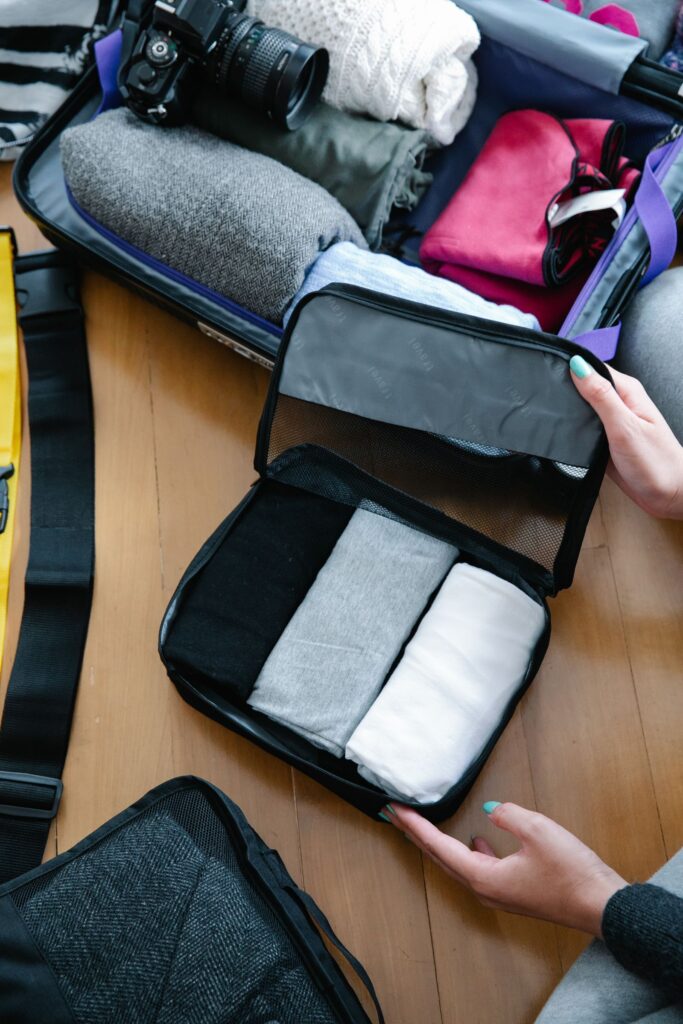
A packing cube is a fabric box. It keeps categories separate and stops your bag becoming a single churned mass.
Most cubes compress a little, since zipping fabric around clothing squeezes some air out. That is a side effect, not the purpose.
A compression bag actively expels air, either through a one way valve you roll or a second zip that pulls the bag tighter.
The volume saving is real and can reach a third on bulky soft items.
The rule nobody mentions
Neither removes a single gram of weight.
That sounds obvious and it catches people constantly. Compression solves a space problem, and airlines increasingly enforce a weight problem.
On a European carrier with an 8 kg cabin limit, compressing more clothing in makes you more likely to fail, not less. Those weight limits are where the trouble starts.
Straight comparison
| Packing cubes | Compression bags | |
|---|---|---|
| Main benefit | Organisation | Volume reduction |
| Space saved | Slight | Up to about a third |
| Weight saved | None | None |
| Best for | Finding things, separating clean and dirty | Bulky soft items, coats, knitwear |
| Useless for | Fitting in more | Shoes, books, anything rigid |
| Downside | Adds a little bulk of its own | Creates dense, wrinkled bricks |
The wrinkle problem
Compression bags crush clothing and hold it crushed for the whole trip. Anything you want to wear straight off the plane comes out creased.
Cubes are gentler because they hold shape rather than squeezing it out.
If your trip involves anything smarter than jeans, that difference matters more than the volume saving.
When compression wins the packing cubes vs compression bags question
Winter travel is the clear case. Coats, fleeces and knitwear are almost entirely air, so squeezing it out transforms what fits.
The return leg is the other one. Compressing dirty laundry frees room for whatever you bought.
Outside those cases the saving is smaller than the marketing suggests.
The middle option
Compression cubes exist and are the sensible default for most travelers. They are packing cubes with a second zip that squeezes the contents.
You get organisation plus a modest volume saving, without the full crushing of a valve bag.
For a week in one bag, a set of compression cubes handles almost everything. Our seven day method assumes roughly that setup.
The bottom line
In packing cubes vs compression bags, cubes suit most trips and compression suits bulky winter clothing and the journey home.
Neither creates allowance. If your airline weighs the cabin bag, compressing more in is actively counterproductive.
Check what your bag and your airline allow with the size checker, and see our packing guides for the rest.
Some links on this page are Amazon affiliate links. If you buy through one, Carry On Sizes may earn a commission at no extra cost to you. It never changes what we recommend. How this works.