The number one mistake on any packing list for Europe is not the clothes. It is the bag. A suitcase sized for a US flight can get charged at a European gate.
Europe runs on cobblestones, church dress codes, and budget airlines with their own small cabin bag rules. A list built for a Florida beach trip does not survive contact with any of that. This packing list for Europe covers the bag, the clothes, and the small stuff people actually forget or regret.
Two weeks is the trip length most people plan around. A 2 week trip and a 5 day one pack almost the same once you accept one laundry stop. Below is a capsule wardrobe, the key documents, and the carry-on catches unique to Europe.
The bag: why Europe punishes a normal carry-on
Full service airlines allow something close to the standard European carry-on size, roughly 55x40x20 centimeters. Budget carriers do not play by that number. This is where an essential packing list for Europe has to start with the airline, not the wardrobe.
Ryanair includes only a small personal item free. It is capped at 40x30x20 centimeters and must fit under the seat. A larger cabin bag, up to 55x40x20 centimeters and 10 kilograms, only comes with a paid Priority fare.
EasyJet works the same way, with one free under seat bag capped at 45x36x20 centimeters. Any larger bag for the overhead bin needs an upgrade. It costs far more at the airport than online.
Travelers on frequent flyer forums and travel forums tell the same story every summer. They flew to Europe with a normal roller bag, then got stopped at a Ryanair or EasyJet gate. The bag was fine on the flight over but too big for the short hop within Europe.
Gate agents at these carriers check bags hard. Oversized bags are a real revenue line, not an occasional courtesy. Pack for your smallest planned flight, not your biggest one.
The 2 week capsule wardrobe
Plan on one laundry stop, either a hotel sink or a self-service laundromat, around day seven. That turns a packing list for 2 weeks in Europe into roughly a 7 day wardrobe worn twice.
- 4 to 5 tops that mix and match, in a quick dry fabric a sink wash can dry overnight.
- 2 bottoms: one pair of pants or a skirt, one pair of jeans or trousers for cooler evenings.
- 1 lightweight sweater or cardigan, useful for churches, air conditioned trains, and evening chill even in summer.
- 1 packable rain shell. Afternoon showers show up without much warning across most of Western and Central Europe.
- 1 outfit that clears a dress code: covered shoulders and knees for churches, plus something a bit nicer for dinner.
- Underwear and socks for 7 days, not 14.
- Sleepwear and one swimsuit if a coastal or lake stop is on the itinerary.
For a euro summer packing list, swap the sweater for a light layer and keep the rain shell anyway. June and September afternoons can still turn cool. A single hot week does not mean the whole trip stays hot.
Shoes: the part people get wrong
Europe means walking. Old city centers mean cobblestones, uneven pavers, and stairs with no elevator in sight. This is where a packing list for Europe earns its keep over a generic one.
- One broken in pair of walking shoes with real tread, not brand new sneakers that blister by day three.
- One pair of shoes that can pass a nicer dinner or a church without looking like hiking gear.
- Sandals only if the trip includes beach or lake time, and only as a third pair, not a first.
Forum regulars are blunt about this. Heels and cobblestones do not mix. One pair trying to handle both sightseeing and dinner usually fails at one job.
Dress codes: churches and nicer dinners
Major cathedrals across Italy, Spain, and much of Catholic Europe enforce covered shoulders and knees. Some turn away visitors in shorts or tank tops at the door. Pack one lightweight scarf or wrap for quick coverage, instead of a whole spare outfit.
Most European restaurants are more casual than their reputation suggests. Still, a step above shorts and a T-shirt is the safe default past a quick lunch.
Documents and money
- A passport with at least six months of validity left, plus a photo of the ID page stored apart from the physical passport.
- A printed and a digital copy of hotel confirmations, rail passes, and any museum reservations with a timed entry.
- Two payment cards from different networks, since not every vendor takes every card, plus a little local currency for cash only stalls.
- A plug adapter rated for the country on the itinerary. Continental Europe mostly uses Type C or Type E, but the UK and Ireland use Type G. Check each country rather than assume one adapter covers the trip.
Toiletries and the liquids catch
Standard security liquid rules apply on any flight within or into Europe. Containers must be 3.4 ounces or 100 milliliters or less, all fitting in one quart size bag. Full size sunscreen, shampoo, or a favorite perfume are what people pack out of habit and then get pulled aside for.
Check the rule for packing perfume in a carry-on if a specific bottle matters to you. Use a bag size checker if you are unsure your suitcase clears a specific airline’s limit.
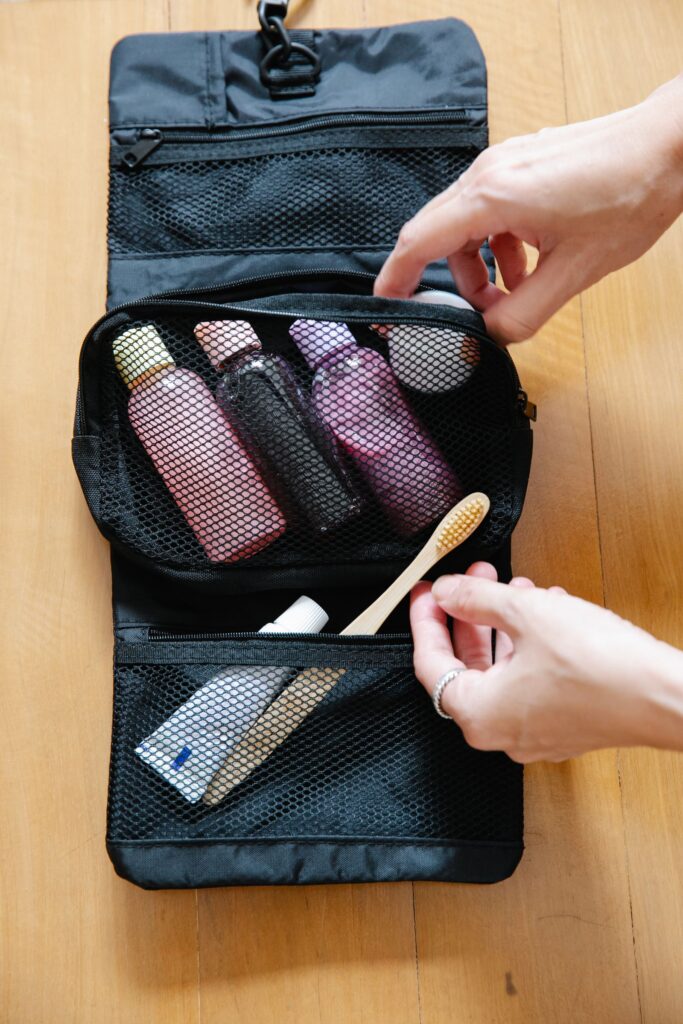
- Travel size toiletries in the liquids bag: sunscreen, toothpaste, any liquid or gel medication.
- Solid stick deodorant. Several travelers mention it is hard to find in European pharmacies, since gel and roll on formats dominate there.
- A basic first aid kit: bandages, one pain reliever, any prescription medication in its original labeled container.
- A universal sink stopper and a small packet of travel detergent, if the laundry plan is a hotel sink rather than a laundromat.
Gear specific to a Europe trip
- A daypack or crossbody bag for sightseeing. Small enough to carry all day, secure enough to deter pickpockets in crowded stations.
- A portable charger, since a full day of walking and navigating drains a phone fast. Check the power bank carry-on limit first, since these must travel in carry-on luggage, never checked.
- Packing cubes, which several forum posters warn can backfire. They organize a bag well, but they also make it easy to overpack because everything fits so neatly.
- A reusable water bottle. Tap water is drinkable across nearly all of Western and Central Europe, and refilling beats buying bottled water at every stop.
Common questions
What is the best packing list for 2 weeks in Europe?
A capsule wardrobe of about 7 days worn twice, built around one laundry stop, covers a 2 week trip without a heavier bag than a 1 week trip needs.
How do I pack light for Europe without missing anything?
Pick a wardrobe that mixes and matches, choose quick dry fabrics, and accept one laundry stop instead of packing enough clothes to avoid it entirely.
Do I need different clothes for a euro summer packing list versus spring or fall?
Summer needs lighter fabrics and less layering. The rain shell and one warm layer still belong in the bag, since evenings and sudden weather shifts do not fully respect the calendar.
Will my carry-on that worked on my flight to Europe work on flights within Europe?
Not necessarily. Many US and full service carriers allow a larger cabin bag than Ryanair, EasyJet, and other European low cost carriers permit. Check the specific airline for every leg of a multi flight itinerary.
What is the single most forgotten item on a europe trip packing checklist?
Forum threads point to small personal items more than clothing. A hairbrush, a spare pair of glasses, solid deodorant, and the right plug adapter for the country on the itinerary top the list.
Do European churches really enforce dress codes?
Yes. Many major cathedrals turn away visitors with bare shoulders or shorts above the knee. A lightweight scarf or wrap packed for quick coverage solves this without a dedicated outfit.
Start with the smallest bag rule on your itinerary, not the largest, and build the wardrobe around one laundry stop. Use a trip planning tool to map out flights and laundry days before packing. Check the full packing category for more on how to pack a carry-on efficiently.
Some links on this page are Amazon affiliate links. If you buy through one, Carry On Sizes may earn a commission at no extra cost to you. It never changes what we recommend. How this works.