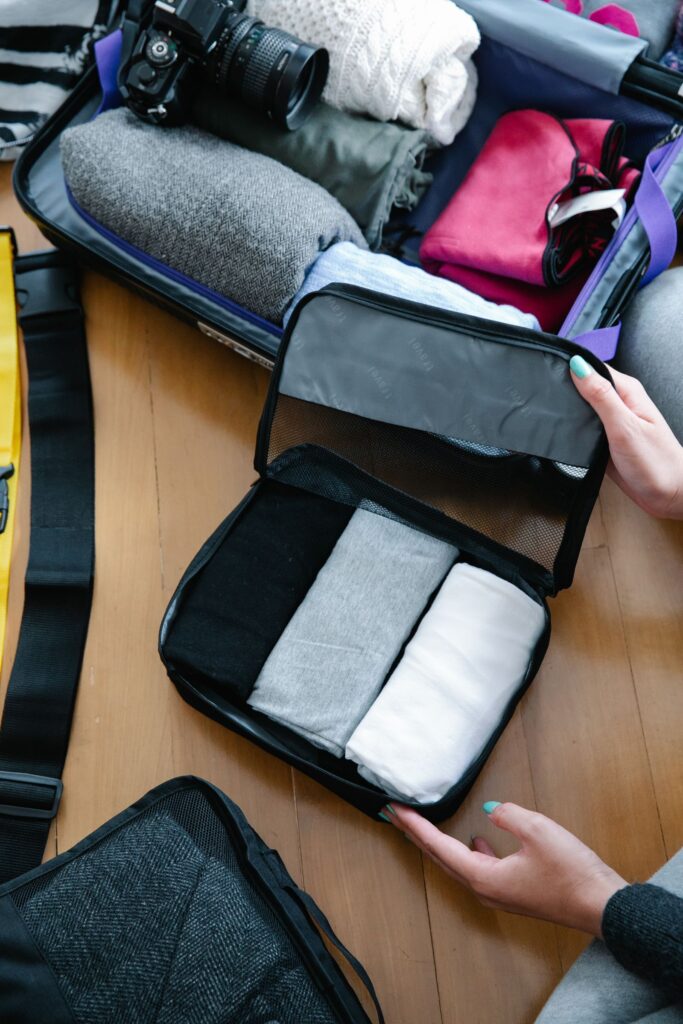
A good family vacation packing list is organized by person and by bag, not just by category. The rule that saves a trip is simple. Every adult carry-on carries one full change of clothes for every child, not just the child’s own bag.
The kid’s own backpack is the one most likely to get soaked, gate checked by accident, or left on the plane. It should never be the only place a backup outfit lives.
Building the family vacation packing list by bag
Split the children across the adults traveling. Give each adult a full spare outfit for their assigned kid, sealed in a gallon bag.
- One full outfit per child, including socks, in each adult’s bag.
- A spare shirt for the adult too. Kids do not aim.
- Any prescription medication for that child. Never checked.
- A printed copy of the itinerary and hotel address, in case a phone dies.
This is the most repeated advice from parents who have flown carry-on only with a toddler on a long trip. Pack the child’s essentials in an adult bag, because a checked bag can go missing. A child’s medicine should never have been in it.
The diaper bag: what actually goes in it
The diaper bag usually counts as the personal item for the traveling parent. Most airlines allow it on top of a carry-on, without counting it toward the standard bag limit. Pack it to survive a full delayed day, not just the flight.
- Diapers at double the flight time. A three hour flight can turn into an eight hour day.
- Wipes in a resealable pack, plus a folded changing pad.
- Two extra outfits for the baby, on top of the one in the adult carry-on.
- Formula, breast milk, or baby food for the flight, plus a buffer.
- A small first aid kit with infant fever reducer, dosed by weight.
Check quantity and container rules for baby food and formula on the medical and baby items page before you pack bottles.
Formula, breast milk, and baby food through security
This is the part parents get wrong most, so it is worth stating plainly. It was verified directly against TSA guidance this month.
Formula, breast milk, and juice in quantities greater than 3.4 ounces are allowed in carry-on baggage. They do not need to fit inside the standard quart size liquids bag. Baby food that is canned, jarred, or otherwise packaged gets the same treatment.
Tell the officer you are carrying these items before the bin goes through the X-ray. Take them out of your bag for separate screening.
Ice packs, freezer packs, and frozen gel packs used to keep formula or breast milk cold are allowed too, even partially frozen, according to TSA’s official screening guidance. Breast pump equipment passes through screening whether or not it currently holds milk.
The exemption covers the liquid itself, not a free pass on screening. An officer can still test the container or ask you to open it. Build in an extra five minutes for that step so you are not sprinting to the gate.
Snacks and entertainment for the flight
Pack more snacks than you think you need. Delays eat into whatever meal you planned around. Solid snacks like crackers, dry cereal, and sandwiches pass through security without the liquid limits that apply to purees and yogurt.
- A mix of salty and sweet snacks the child already likes, not a new food to try mid flight.
- A refillable water bottle, empty through security and filled after.
- A tablet loaded with downloaded shows. Inflight Wi-Fi is not guaranteed.
- Headphones sized for a child’s head, plus a splitter if two kids share a screen.
- One new small toy, saved for the moment the flight gets long.
Check what is allowed in carry-on snacks on the snack rules page if you are packing anything pureed, gel based, or liquid.
Medication and first aid for the whole family
Every medication anyone in the family takes daily should ride in a carry-on, never a checked bag. Keep it in its original labeled container.
Add a compact first aid kit that covers the injuries a family trip actually produces. Think scraped knees, sunburn, motion sickness, and a fever that shows up at 2 a.m. in an unfamiliar hotel.
- Prescription medications for every family member, with a few extra days of buffer.
- Children’s and adult pain and fever reducers, dosed correctly for each traveler.
- Bandages, antiseptic wipes, and motion sickness remedies.
- Any allergy medication or epinephrine, kept on the person, not in an overhead bin.
Liquid and gel medications for kids are not subject to the standard carry-on limit either. Confirm quantities and documentation on the medication rules page before the trip, especially for anything unusual like an EpiPen or insulin.
Documents for minors
Every child needs their own identification for the flight. International travel adds a wrinkle many parents miss until they reach the counter.
A valid passport is required for a child of any age on an international trip, including infants. A one way trip with only one parent can trigger a request for a notarized consent letter from the other parent.
- A valid passport or state ID for each child, matching the name on the ticket.
- A copy of the child’s birth certificate for domestic trips, as a backup.
- A notarized travel consent letter if one parent is traveling alone with the kids internationally.
- Insurance cards and a list of any allergies or conditions, in case of an urgent care visit.
Strollers and car seats at the gate
Strollers and car seats do not count against a family’s carry-on or checked bag allowance on nearly every US airline. Both can be checked planeside at the gate instead of at the ticket counter.
This move saves a family from wrestling a stroller through the terminal for no reason. Check it at the jet bridge door right before boarding, and it comes back at the same door when you land, not on the baggage belt.
Bring a padded travel bag for a car seat if the airline gate checks it loose, since ramp crews are not gentle with it. A lightweight umbrella stroller survives gate checking better than a heavy travel system. A stroller bag also keeps the frame and wheels from catching on loading equipment.
What families actually forget
Parents who have done long carry-on only trips with young kids repeat the same regret. They put a child’s medicine or a spare set of diapers in a bag that later got checked, then had nothing when the child needed it mid flight. The fix is the rule at the top of this family vacation packing list: an adult carries the backup for every child, every time.
The second most common regret is packing too many toys and not enough snacks. A hungry toddler is a harder problem than a bored one. Pack food first, entertainment second.
Common questions
How much formula or breast milk can I bring on a plane?
More than 3.4 ounces is fine. TSA allows formula, breast milk, and juice for a child in reasonable quantities for the trip, separate from the standard liquids limit, as long as you declare it for screening.
Do strollers and car seats count as checked bags?
No. Most US airlines let you bring a stroller and a car seat on top of your regular baggage allowance. Both can usually be checked at the gate instead of at check-in.
Does my baby need a passport for an international flight?
Yes. Every traveler, including an infant, needs their own valid passport for international travel. Airlines will not board a baby without one.
Should I pack snacks in a carry-on or a diaper bag?
Either works, but split them across both. If one bag gets left at security or gate checked by mistake, the other still has food for the flight.
What happens if my child’s medication needs ice or a cold pack?
Ice packs and gel packs used to cool formula, breast milk, or medication are allowed through security. They can even be partially frozen and do not need to be melted.
Can I bring baby food through security?
Yes. Canned, jarred, and pouch baby food is allowed in carry-on baggage above the standard liquid limit, the same way formula and breast milk are.
Run your full family vacation packing list through the trip planner tool before you leave. Check the rest of the packing hub for how to fit all of this into a single carry-on if that is the goal.
Some links on this page are Amazon affiliate links. If you buy through one, Carry On Sizes may earn a commission at no extra cost to you. It never changes what we recommend. How this works.