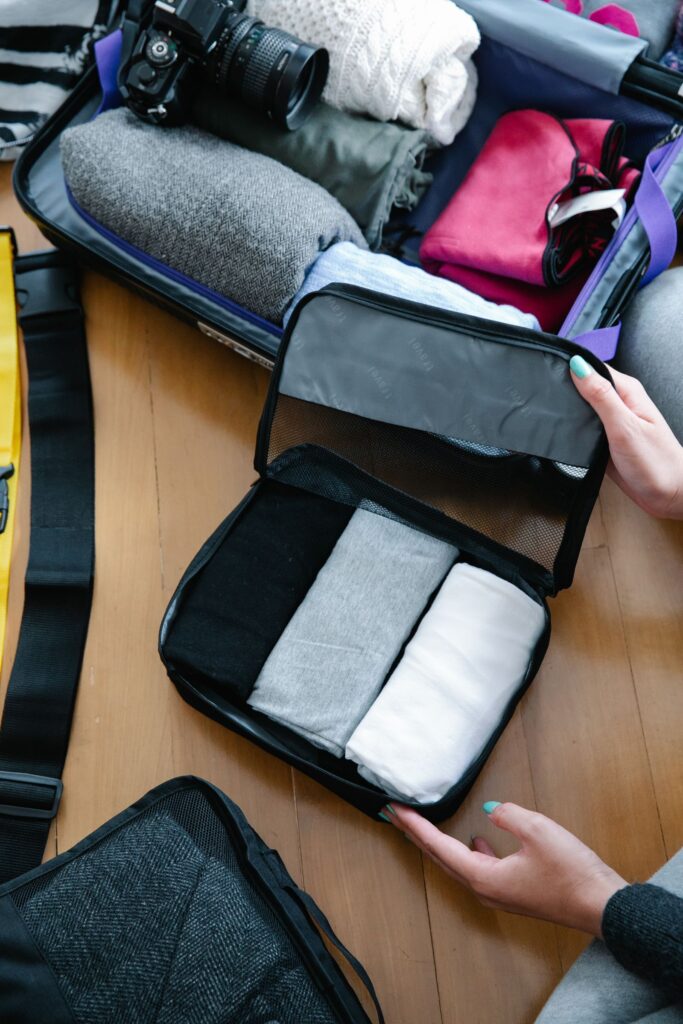
The mistake that ruins a ski trip is packing boots in the checked bag. A ski trip packing list has to treat boots like a passport.
Carry them on and never let them out of your sight. A delayed bag means a week in rented, badly fitting loaners.
Everything else on a ski trip packing checklist is layers, gear, and two airline rules worth getting right the first time. This list covers what to wear, what to bring versus rent, and what genuinely cannot fly.
Clothing by layer
A ski trip packing list works best sorted by layer, not by garment type. That is how you actually get dressed at 7 a.m. in a cold rental condo.
- Two or three wicking base layer tops and bottoms. Cotton stays wet all day once you sweat into it.
- A fleece or light down mid layer for the lift line and lunch. Pack it small so it fits under a shell.
- A waterproof, breathable shell jacket and pants. A shell that is not truly waterproof gets soaked by 11 a.m. on a wet snow day.
- Wool or synthetic ski socks, one pair per day. Cotton socks bunch and cause blisters inside ski boots.
- A neck gaiter or balaclava for wind and lift line cold.
- Waterproof gloves or mittens, plus a thin liner pair for warmer afternoons.
- A warm hat, and a thin headband that fits under a helmet.
- One warm outfit and real shoes for apres ski. Boots are not for the bar.
Gear: rent it or fly with it
The rent versus bring decision on a ski trip packing checklist usually comes down to trip length. Renting skips baggage fees and the risk of a delayed ski bag, and most resort shops carry recent gear.
Bringing your own skis or snowboard makes more sense on a longer trip, or for a setup you already know fits you. On most US carriers a ski bag and a boot bag count together as one checked item, not two.
That combined item still has to clear the airline’s normal checked bag size limits. See the general checked baggage size rules before you buy a bag that will not clear them.
Ski travelers on flying forums report a catch worth knowing. Some gate agents expect a snowboard bag to hold only the board.
They will reweigh a bag stuffed with a helmet or extra layers as an oversized general bag instead of sporting equipment. Pack the ski or board bag lean, and put the overflow in a duffel.
Check your own carrier before you fly. Fees, size caps, and what counts as a boot bag genuinely vary between airlines.
Records for Delta and United are a good place to start. The baggage cost tool estimates what a checked ski bag adds on top of your fare.
What cannot fly, no matter how you pack it
A ski trip packing list has to flag two items that trip up first time backcountry travelers. Avalanche airbag canisters and fuel hand warmers are the ones that actually get stopped.
Both sit inside the wider set of sports and outdoor gear that gets stopped at the checkpoint most often. The sports and outdoor gear category covers the rest of that list, from ice axes to hunting gear.
Avalanche airbag packs inflate with a compressed gas canister, and that canister counts as hazardous material. Backcountry travelers report the same workaround again and again. Fly with the canister empty or removed, then buy or exchange a full one near the resort.
Carry the manufacturer’s printed shipping guidance too, in case a checkpoint officer has never seen the pack before. Rules for gas cartridges vary by carrier and by whether the canister is CO2 or compressed air, so confirm with your airline first.
Fuel hand warmers, the kind that burn lighter fluid or camping fuel, get treated like any other fuel container. They have to be completely empty and free of residue to fly at all, in a carry-on or a checked bag.
The small pouches most skiers actually use are different. They heat up once you open the packet, they hold no fuel, and they are not treated as hazardous material.
What must be carry-on
Ski boots top this list for the reason above. They are expensive, and they take weeks to break in. A lost bag with your boots inside means renting for the whole trip.
Goggles are the second item. They crush and scratch easily once a checked bag gets stacked under other luggage.
Medication, chargers, and one warm layer belong in the carry-on too. That way a checked ski bag landing a day late does not ruin your first morning on the mountain.
Toiletries and documents
- Sunscreen and lip balm with SPF. Altitude and snow glare burn skin faster than most people expect.
- A travel size sunscreen that fits the cabin liquid limit, so you are not buying it at resort prices. Check the liquids and gels rules for the exact size cutoff.
- Air activated hand and foot warmers, packed loose in either bag.
- Travel insurance details, and proof of any avalanche course or rescue coverage if your resort requires it.
- A printed lift ticket or rental confirmation. Mountain wifi is unreliable at the ticket window.
Common questions
Does a ski bag count as a carry-on or a checked bag?
A full length ski or snowboard bag is too long for carry-on sizing on every US carrier. It travels checked, while boots, goggles, and one layer ride with you instead.
Do I need a separate boot bag?
Most carriers let a ski bag and a boot bag count as one checked item together. Some crews expect the boot bag to hold only boots and accessories, so check your airline’s page before assuming.
Can I bring an avalanche airbag on a plane?
The pack itself flies fine, but the compressed gas canister that inflates it is regulated. Most backcountry travelers fly with the canister empty and refill it at the destination. Confirm your carrier’s cartridge rule before departure.
Are hand warmers allowed on a plane?
The common air activated hand warmer packets are fine in carry-on and checked bags. Fuel warmers that burn lighter fluid are not, unless they are completely empty and free of fuel residue.
Should I rent skis or bring my own?
For a short trip or a first visit to a resort, renting skips baggage fees and the risk of a delayed ski bag. For a longer trip, bringing your own is usually worth the checked bag fee.
What do people forget on a ski trip packing checklist?
Lip balm with sunscreen and a spare pair of ski socks top the list. Travelers most often say they wished they had packed both. Both are cheap insurance against a ruined first day.
The honest bottom line: a ski trip packing list is a boots and layers problem wrapped around one baggage rule. Carry on the boots, pack the shell layers, and confirm the ski bag and boot bag policy on your airline’s own page. Leave the fuel warmers at home.
For the general method behind this list, see how to pack a carry-on. Then run your full bag through the list screener before the airport.
Some links on this page are Amazon affiliate links. If you buy through one, Carry On Sizes may earn a commission at no extra cost to you. It never changes what we recommend. How this works.