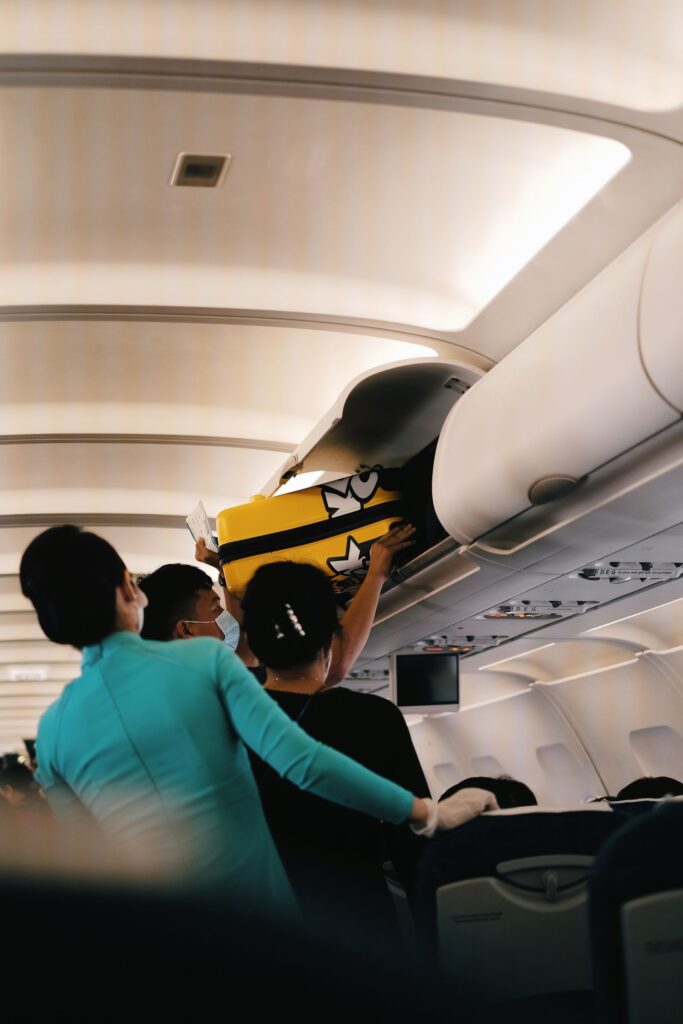
A travel backpack under about 40 liters is the size that clears most airline carry-on boxes. One under 20 to 25 liters is the size that slides under the seat as a personal item. Liters alone do not guarantee a fit.
A tall, boxy 40 liter pack can still fail a strict sizer. A wide 45 liter pack that compresses down can pass with room to spare.
Picking a travel backpack starts with the box, not the label. Match the liters and the shape to the airline rule first. Judge the harness, the opening and the pockets second.
This guide treats the carry-on box as the rule and the backpack as the variable. That is the opposite of how most gear sites frame it. A good travel backpack should state, in its own specs, what it shrinks to.
Match liters to the box, not the other way around
The common US domestic carry-on box is about 22 by 14 by 9 inches. Most airlines that enforce it treat 40 liters as the rough ceiling for a soft pack that still has to compress into that shape.
European low cost carriers often use a smaller box, close to 55 by 40 by 20 centimeters. That is nearer 35 liters in practice.
A personal item that has to go under the seat is a different problem again. It is usually 18 by 14 by 8 inches or tighter. That points to a pack in the 18 to 25 liter range, not a full size travel backpack.
Check the exact box for your route before you buy. The gap between a US carrier and a European one is real. It changes which travel backpack actually fits.
The site’s size checker covers the numbers for a specific airline. So does the European carry-on size guide for anyone flying a budget carrier abroad.
A travel backpack with a compression strap or a removable frame sheet earns its keep here. It lets one bag serve a strict US gate and a stricter European one on the same trip.
What actually matters once the liters check out
A full clamshell opening unzips flat like a suitcase. It beats a bag you load from the top. That matters most when you are living out of it in a hotel room or a hostel bunk.
A harness that tucks away behind a zippered panel matters just as much.
Airline staff and gate agents size a pack by what they can see. A hanging strap invites a second look, even on a pack that would otherwise clear the box.
Weight matters on its own, separate from liters. That shows up most on airlines that weigh the cabin bag rather than just measure it.
A laptop compartment that a traveler can reach without opening the main body saves time at a security line. According to the FAA, laptops and their batteries belong in the cabin, not a checked bag. A dedicated sleeve near the back panel is not a minor feature for anyone traveling with a computer.
Travel backpack comparison
| Product | Class | What reviews say | Best for |
|---|---|---|---|
| Osprey Farpoint 40 | 40L, full clamshell, stowaway harness | Praised as the standard single bag pack for a long trip | General travel, first travel backpack |
| Peak Design Travel Backpack 45L | 45L that compresses toward 35L | Reviewers like the clip in cubes, note the price | Camera gear and travelers who want one system |
| Cotopaxi Allpa 35L | 35L clamshell | Reviewers praise the pocket layout and the harness | Fits a personal item box unstuffed |
| Cabin Max Metz 40L | Built to the 55 x 40 x 20 cm box | Bought specifically to beat European budget carrier limits | Ryanair and easyJet style paid cabin bag rules |
| The North Face Base Camp Voyager 32L | 32L, tough fabric | Rated as a personal item half full and a carry-on stuffed | Rougher trips, outdoor use between flights |
| 5.11 Tactical Rush 24 2.0 | 37L | Owners call it heavy for its size but say the fabric lasts for years | Buyers who want one pack to outlast a decade |
| Nomatic Travel Pack 20L | 20L, laptop focused | Reviewers use it as a work bag that also travels | Personal item only, one laptop and a day’s kit |
| Matein travel laptop backpack | 17 inch class | The best selling laptop backpack on Amazon by review count | Budget personal item or carry-on on relaxed airlines |
Fabric weight and zip quality decide how a travel backpack looks after a few years, not just after one trip. A thin shell shows abrasion fast at a baggage carousel or a bus rack. A heavier ripstop or ballistic weave adds ounces but survives rougher handling.
Reviewers tend to agree on where a bag fails first. It is almost always a zip pull or a wheel, not the main fabric panel.
A travel backpack skips wheels entirely, so that failure point disappears. What is left to watch is the zip itself and the stitching around the handle, since those carry the load every time the bag gets picked up rather than rolled.
By use case
For a single bag trip of a week or two, the Osprey Farpoint 40 is the pack most owners settle on. The clamshell opening and the stowaway harness cover both the packing and the gate.
For a European budget carrier with a paid cabin bag rule, the Cabin Max Metz 40L is built to that exact box. That matters more than raw liters on those airlines. Pair either pack with the site’s packing cubes versus compression bags comparison to squeeze a week into the smaller box.
For a camera or a laptop that needs its own compartment, the Peak Design Travel Backpack 45L compresses from 45 liters down toward 35. It takes the brand’s own camera cubes.
The The North Face Base Camp Voyager 32L is a rougher, cheaper alternative for the same job.
For a work trip where the pack never leaves the personal item lane, two packs fit that smaller box well. The Nomatic Travel Pack 20L is built around one laptop and a day’s kit.
The Matein travel laptop backpack does the same job at a fraction of the price.
Neither is meant to hold a week of clothes. Plan a second checked bag on a longer trip if you pick one of these.
Owners of the 5.11 Tactical Rush 24 2.0 report heavier fabric than most travel backpacks its size. That extra weight shows on the scale, and less wear shows up after repeated trips.
A daily pack pressed into travel duty also works. The Herschel Classic backpack, the Timbuk2 Authority laptop backpack deluxe and the JanSport Big Student backpack all fit fine as a personal item and sometimes a carry-on.
None of these three were built with an airline box in mind the way a dedicated travel backpack is. They are a fine second bag for a light trip, not the main pack for a long one.
Confirm the exact box before you fly a route you have not flown before. The guide to measuring carry-on luggage walks through measuring a soft pack the way a gate agent does, straps included. The bag finder tool narrows the list further by trip length and airline.
The bottom line
Buy a travel backpack sized to the box you actually fly, not the biggest number on a listing. The Osprey Farpoint 40 is the safe general pick. The Cabin Max Metz 40L is the one to buy for European budget carriers specifically.
The Nomatic Travel Pack 20L and the Matein travel laptop backpack cover the personal item only case well. Skip a 45 liter or larger pack if every leg of your trip runs through a strict personal item lane with no bag to check.
You will spend more time repacking at the gate than the extra liters are worth. For general background on the category, see the site’s main luggage section. The checked baggage weight limit page is worth a look if your trip needs a second bag beyond the pack.
Some links on this page are Amazon affiliate links. If you buy through one, Carry On Sizes may earn a commission at no extra cost to you. It never changes what we recommend. How this works.