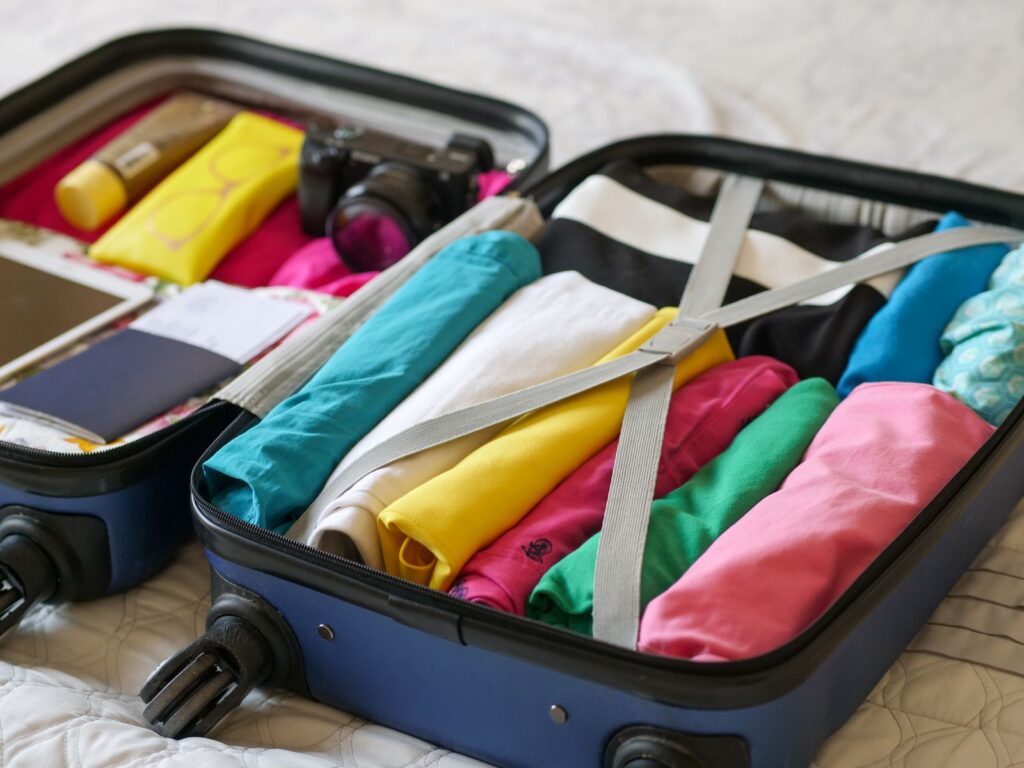
Rolling beats folding, or so the internet insists. The honest answer for how to pack a suitcase is that neither method wins alone. The right technique depends on the fabric, the trip length, and whether you own an iron at your destination.
What follows is the combination experienced packers settle on. They stop chasing the newest hack. They start paying attention to what actually survives a flight.
How to pack a suitcase: rolling versus folding
Rolling wins for casual, knit fabrics: T-shirts, athletic wear, jeans, and underwear. These fabrics resist creasing under pressure. A tight roll saves space and lets you see every item at a glance.
Folding wins for structured fabrics: dress shirts, blazers, anything with a stiff collar or a lining. A rolled dress shirt develops a crease across the chest that a roll cannot undo. The inside of a curve is shorter than the outside, and that is what forces the crease.
Most travelers packing a suitcase for a mixed trip end up doing both. They roll the soft stuff. They fold the structured stuff, then layer them in that order.
The bundle wrapping method for dress clothes
Bundle wrapping is the method serious business travelers keep coming back to for suits and dresses. You build a soft core, usually a sweater or a stack of underwear. Then you wrap each garment around it in sequence, largest first.
The result is one dense bundle instead of a stack of separate folds. It resists wrinkles well. It also takes longer to build and longer to unpack, so it earns its place mainly on trips where a wrinkled jacket actually matters.
For a weekend in jeans and T-shirts, bundle wrapping is overkill. For a wedding or a client meeting, it is the method that keeps a suit presentable straight off the hanger.
The 54321 packing method
The 54321 method is a rough ratio, not a law. One common version is 5 tops, 4 bottoms, 3 pairs of shoes, 2 dressy outfits, and 1 jacket, scaled up or down for trip length.
Its value is simple. The numbers force a decision about what actually earns a spot in the bag, before you start overpacking.
Travelers who use it for real trips usually adjust the shoe count down. Three pairs is heavy, and most trips only need two: one worn on the plane, one packed. Treat 54321 as a starting checklist you edit, not a rule you follow exactly when you pack a suitcase for a specific trip.
Folding dress shirts and polo shirts so they survive a flight
Knowing how to pack a suitcase without wrecking a dress shirt starts with the fold, not the fabric. Button it, lay it face down, and fold the sleeves back along the shoulder seam. Fold the body into thirds from the bottom.
Stack the folded shirt near the top of the bag, under the lightest layer only. That keeps anything heavy from pressing a crease into the collar.
A polo shirt tolerates more handling. Fold it in half lengthwise with the collar folded flat, then fold it into thirds. Because knit fabric resists creasing, a polo can also be rolled if space matters more than shirt count.
Either way, keep dress shirts away from anything with a buckle, a zipper, or a hard edge. That contact is what actually causes the crease people blame on folding.
Weight distribution: what goes where
Heavy items belong at the wheel end of the suitcase, which sits at the bottom when the bag stands upright. Shoes, toiletry bottles, and anything electronic go there first. This keeps the bag balanced when rolled and protects softer items above from getting crushed.
Shoes travel best in a bag or a shower cap, toes pointed toward the hinge. Use the inside of each shoe for socks or a phone charger. Toiletries in a hard case go flat against a side wall, not loose in the main compartment, and anything from the liquids and gels category should sit upright to limit leaks.
Clothes go on top. Rolled items fill gaps first, then folded items go last so they stay flat under the lid.
Filling dead space and staying under the weight limit
Rolled socks and underwear are the best dead space fillers. They tuck into the gaps around shoes and along the edges where a folded item would not fit. A packing cube helps too, and the tradeoff against compression bags is covered in our guide to packing cubes versus compression bags.
Compression squeezes more clothing in by volume. That is exactly the wrong goal on a weight limited flight, since the bag gets smaller, not lighter. Check the actual number on our checked baggage weight limit page before compression tempts you into an overweight fee.
When you pack a suitcase and it comes out heavier than expected, do not repack from scratch. Our rebalance tool shows what to shift between a carry-on and a checked bag so neither one crosses a limit.
Common questions
Is rolling or folding better when you pack a suitcase?
Rolling suits knit and casual fabrics. Folding suits structured fabrics like dress shirts. Most people who know how to pack a suitcase well use both methods in the same bag.
Does bundle wrapping really prevent wrinkles?
It reduces creasing a lot, since fabric bends over a soft core instead of a sharp fold line. It does not remove wrinkles entirely, especially on stiff jackets.
What is the 54321 packing method exactly?
It is a loose ratio of clothing categories: roughly 5 tops, 4 bottoms, 3 shoes, 2 dressy pieces, and 1 jacket. Treat it as a starting checklist, not a fixed rule.
Where should shoes go in a suitcase?
At the wheel end, inside a bag to protect other items, with the toes facing the hinge. That keeps them from digging into clothing packed above.
How do I know if my suitcase is over the weight limit before the airport?
Weigh yourself holding the bag, then subtract your own weight, or use a small luggage scale. Compare the number against your airline’s posted limit rather than guessing.
Should I pack a carry-on differently than a checked bag?
Yes, mainly because a carry-on has liquid limits a checked bag does not. Our guide to packing a carry-on and the broader packing section cover the differences in full.
Some links on this page are Amazon affiliate links. If you buy through one, Carry On Sizes may earn a commission at no extra cost to you. It never changes what we recommend. How this works.