A good travel packing list is not a pile of everything you own. It is a short set of categories plus a wear count formula for clothing. It also draws a clear line between what rides in the carry-on and what goes in the checked bag.
This page is that travel packing list. It covers documents and money, carry-on essentials, clothing scaled to your trip length, toiletries that survive the checkpoint, electronics, health items, and the extras people forget until they land.
Use the table below to scale clothing by trip length. Then read the category sections for what belongs in each bag and why. If you already own a bag and just need to know if it fits the airline’s carry-on rule, run it through the list screener before you start folding.
The clothing formula: how many of each you actually need
Most overpacking comes from one bad habit. People pack one outfit per day instead of planning around laundry.
A better rule is simple. Wear pants two to three times each, wear tops once with a laundry break around day five, and bring only one heavy jacket no matter how long the trip runs.
| Item | Weekend (2-3 days) | 5 days | 1 week | 2 weeks |
|---|---|---|---|---|
| Tops | 3 | 5 | 6-7 | 8-10 |
| Bottoms (pants, skirts, shorts) | 2 | 2-3 | 3 | 4-5 |
| Underwear | 3 | 5 | 7 | 10-12 |
| Socks | 3 | 5 | 7 | 10-12 |
| Sleepwear | 1 | 1-2 | 2 | 2 |
| Layers or jacket | 1 | 1 | 1-2 | 1-2 |
| Shoes (pairs, including worn) | 2 | 2 | 2-3 | 3 |
Past two weeks the count barely climbs. A two week trip and a five week trip pack almost the same clothing volume. Both plan on doing laundry at least once.
That single fact separates a trip packing checklist that fits a carry-on from one that forces you to check a bag.
Documents and money
- Passport or REAL ID, plus a photo of it stored separately from the original.
- Boarding pass, printed or on your phone. Save a screenshot in case the app fails.
- Hotel and rental confirmations, downloaded for offline access.
- A primary card, a backup card, and a small amount of local cash.
- Travel insurance details, printed or saved to your phone, if you bought a policy.
All of this belongs in the carry-on, never the checked bag. A checked bag can sit at the airport for days, and a passport inside it turns a delay into a real problem.
Carry-on essentials: what stays with you
The carry-on is not just for clothes you might need first. It holds anything you cannot afford to lose, anything fragile, and anything the airline restricts in the hold.
- Medication, in original packaging, enough for the whole trip plus a few extra days.
- Chargers, cables, and spare lithium batteries or power banks. These are never allowed in checked bags.
- One change of clothes and a toothbrush, in case your checked bag does not arrive with you.
- Valuables: laptop, camera, jewelry, anything you would hate to see go missing.
- A refillable water bottle, empty until you clear the checkpoint.
For the full logic on what earns a spot in that one small bag, see how to pack a carry-on.
What goes in the checked bag instead
A checked bag should hold the bulk items the carry-on cannot fit. Think full size toiletries, a second pair of shoes, bulky layers, and anything sharp or oversized.
Scissors, full size tools, and most sporting gear travel better checked. The size limits there are more forgiving than carry-on rules allow.
The tradeoff is real: a checked bag can be delayed, damaged, or lost. Nothing irreplaceable belongs in it.
Trying to decide whether to check a bag or pack everything in carry-ons? The trip planner will run the numbers against your airline’s actual allowance.
Toiletries and the 3-1-1 catch
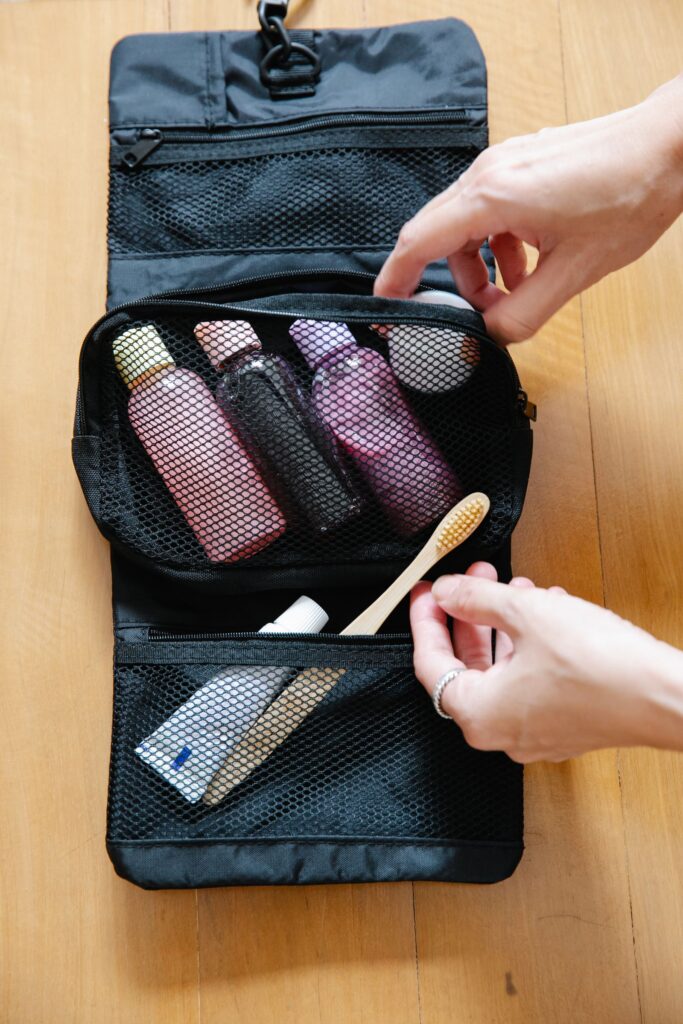
Every liquid, gel, aerosol, cream, or paste in your carry-on has to follow the same rule. Each container tops out at 3.4 ounces or 100 milliliters, all containers fit in one quart size bag, and each traveler gets one bag.
This is confirmed on tsa.gov. It is also the single most common reason a bag gets pulled for a second look.
- Travel size shampoo, conditioner, and body wash, decanted if the store size runs larger.
- Toothpaste under 3.4 ounces, and a toothbrush.
- Sunscreen, which counts as a gel and must fit the quart bag limit too. Check the liquids and gels category for sizing on specific brands.
- Deodorant, exempt in solid form but restricted as a gel or spray.
- Contact lens solution and a spare pair of glasses.
Medication is the real exception to this travel packing list rule. TSA allows liquid medication over 3.4 ounces, but you have to declare it at the checkpoint.
It does not need to sit in the quart bag either. Check the medication page before your trip if you carry anything liquid, injectable, or refrigerated.
Electronics
- Phone and charger, plus a car charger or plug adapter for driving or international trips.
- Laptop or tablet. Most US checkpoints want it out of the bag unless you have TSA PreCheck.
- Headphones, and a backup pair if you rely on them for flights.
- A portable battery pack. It must ride in the carry-on, never the checked bag, under FAA rules on lithium batteries.
- Camera gear, memory cards, and a lens cloth if photography is part of the trip.
Health and comfort
- Prescription medication in its original labeled container. Bring a printed prescription for controlled substances or anything you might need to explain abroad.
- Pain relievers, antacids, and motion sickness tablets. Pharmacies are not always open or nearby.
- A compact first aid kit: bandages, antiseptic wipes, and any allergy medication you take regularly.
- A neck pillow and eye mask for long flights.
- Hand sanitizer, under the same liquid limit as everything else in the quart bag.
Extras people forget
Community packing threads on travel forums turn up the same misses again and again. Rain jackets get left behind for trips that turn out wet.
Hairbrushes get skipped because travelers assume they are easy to replace abroad, then find out they are not. Belts get left in a drawer because they seemed minor.
Underwear and prescription glasses show up on the forgotten list often enough that experienced posters now pack them first, not last.
- A collapsible tote or day bag for museum days, groceries, or a side trip.
- A universal power adapter for international outlets.
- A reusable bag for wet swimsuits or shoes on the way home.
- A luggage tag with current contact information, in case a bag gets separated from you.
- Snacks for the flight. Check the snack page if you are unsure what counts as a liquid.
Common questions
How far in advance should I start a printable packing checklist?
Start it about a week out. Finalize it the night before against the actual weather forecast, since a list made too early misses last minute changes.
What is a reasonable one week and two week packing list difference?
Clothing volume barely changes past one week, since a two week trip plans on doing laundry once. The real difference is toiletry sizes and whether you bring a second pair of shoes.
Can I fit a 5 day trip packing list into a carry-on only?
Yes, for most travelers. Five days fits the wear count formula comfortably into one carry-on and one personal item, even without a laundry break.
Do I need a separate weekend trip packing list from a longer one?
Not really, just a shorter version of the same categories. Documents, essentials, toiletries, and electronics barely shrink even for a two day trip.
What should never go in a checked bag?
Medication, valuables, chargers, spare batteries, and one change of clothes. Anything you cannot replace on short notice stays with you.
Are packing cubes worth it for a trip packing checklist this detailed?
Most travelers say cubes help enforce the wear count discipline. A full cube is a visual signal to stop adding items. Compare the tradeoffs on packing cubes versus compression bags.
The bottom line
A travel packing list works when it scales with trip length instead of guessing. Use the wear count table, keep documents and valuables in the carry-on, and keep bulk items in the checked bag.
Watch the 3-1-1 rule for anything liquid. For more on packing strategy across trip types, browse the full packing hub.
Some links on this page are Amazon affiliate links. If you buy through one, Carry On Sizes may earn a commission at no extra cost to you. It never changes what we recommend. How this works.