Packing
How to Pack a Suitcase: Methods That Actually Work
Rolling beats folding, or so the internet insists. The honest answer for how to pack a suitcase is that neither method wins alone. The…
Good packing tips solve a problem most travelers misdiagnose. The stress at the bag drop is rarely about how you fold a shirt. It is almost always about a rule you packed against instead of for.
Think of the 3.4 ounce liquid limit, the airline weight cutoff, the battery that has to stay in the cabin. Get those things right. The rolling versus folding debate barely matters after that.
Two separate limits control what you can bring. They are not the same limit.
The Transportation Security Administration decides what can pass through the checkpoint at all. That call rests on TSA’s own liquids rule and its list of sharp and hazardous items.
Your airline separately decides how much your bag can weigh and measure. That number varies by carrier and by cabin.
Packing tips that ignore this split tend to be useless. A trick for shaving two pounds off a checked bag does nothing for a carry-on stopped at the gate. Sort your packing by which authority you are packing for, then worry about technique.
Ask ten frequent travelers how to pack and you get ten confident, contradictory answers. The honest read is that it depends on the fabric and the goal. No single method is secretly correct.
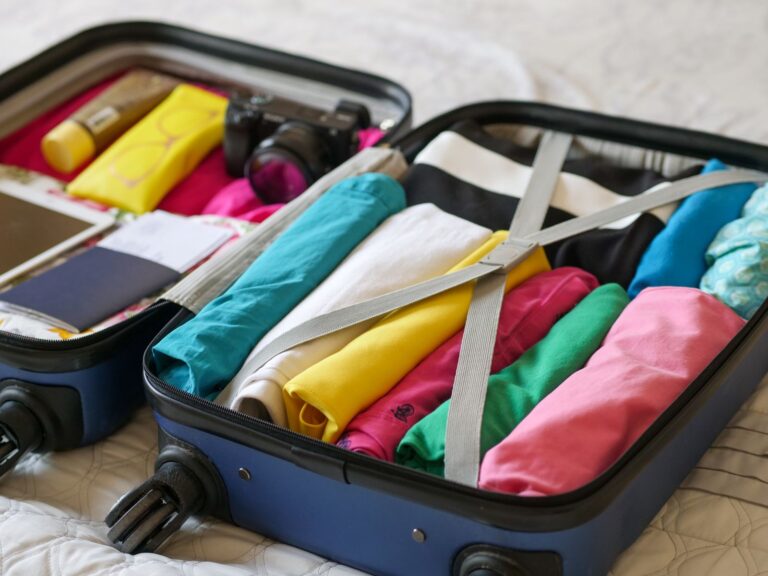
Travelers on a well known trip planning forum split cleanly along fabric lines. Rolling suits knits and lighter items, a distinction worth applying when you pack a carry-on for a full week.
Woven fabrics like dress pants tend to crease along a roll. The inside of a curve is shorter than the outside, and that is what causes the crease.
Folding wins on structured clothing for exactly that reason. A third camp bundles clothes around a central core.
Several forum posters describe this method as producing close to zero wrinkles. It is fiddlier to repack each day, though.
None of the three methods changes how much your bag weighs. They only change how the same volume of clothing sits inside a fixed space.
The most common packing tips myth is that cubes create extra room in a suitcase. They do not. Travelers on packing forums argue about this constantly.
A cube holds a fixed volume of fabric in a fixed shape. Compressing that fabric inside the cube does not remove air that a careful hand could not have removed anyway.
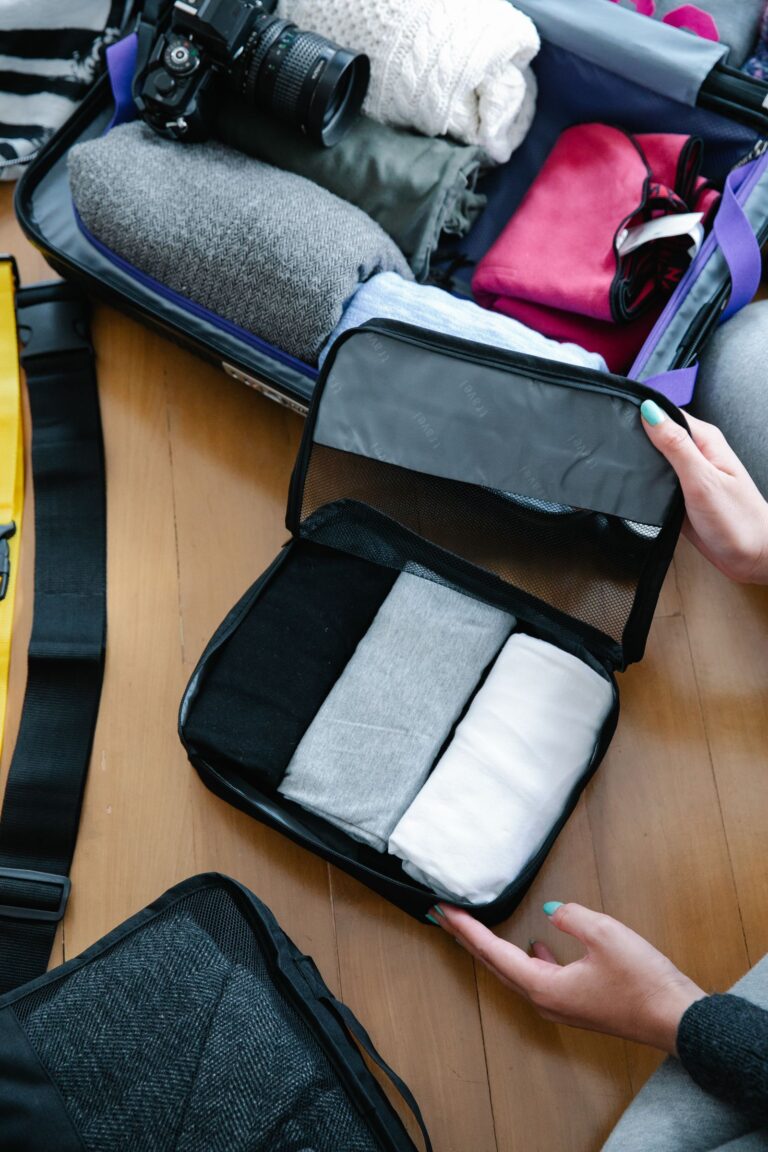
What cubes genuinely do is organizational. They turn a suitcase into labeled drawers. They keep one destination’s outfit separate from another’s, and they stop a repacked bag from becoming a loose pile by day three.
Compression cubes with a zip or roll seal can squeeze out trapped air and shrink soft items somewhat. That effect is real but modest, and it is the compression doing the work, not the cube shape itself. See our comparison of packing cubes and compression bags for where each earns its keep.
For a carry-on, you almost always hit the size limit before the weight limit. Most carry-on allowances top out around 15 to 22 pounds where an airline states a weight at all. A bag stuffed full of clothing rarely gets there.
What stops a carry-on is its outer dimensions against a sizer. That is a volume problem, not a weight problem.
Checked baggage flips that. Airlines often allow a checked bag to be as large as it can zip closed. They still cap it at 50 pounds on a standard fare, with a steep fee once you cross that line.
Pack a carry-on by shape and a checked bag by scale. Weigh the checked one at home before you leave, because the airport scale is the one that counts.
| Bag type | Limit that bites first | What to check at home |
|---|---|---|
| Carry-on | Size against the sizer | Length, width, and depth including wheels and handles |
| Personal item | Size, loosely enforced | Fits under the seat with room for your feet |
| Checked bag, standard fare | Weight, usually 50 pounds | Weigh it on a home scale before leaving |
| Checked bag, second or third piece | Weight and a fee per bag | Whether the airline even allows a third bag |
A handful of items belong in your carry-on or personal item regardless of packing style. Losing access to a checked bag for a day means losing access to these things entirely.
Medication and the documents that support it come first. Your travel documents, your phone charger, and one change of clothes count as trip insurance rather than luggage.
Lithium batteries belong here too, and this is not a suggestion. The Federal Aviation Administration is explicit on this point. Spare lithium batteries and portable power banks must stay with the passenger in the cabin, not in a checked bag, and power banks above 160 watt hours are barred from the aircraft entirely.
Pack your electronics case last, on top. That way it is easy to pull out at the checkpoint and easy to remember at boarding.
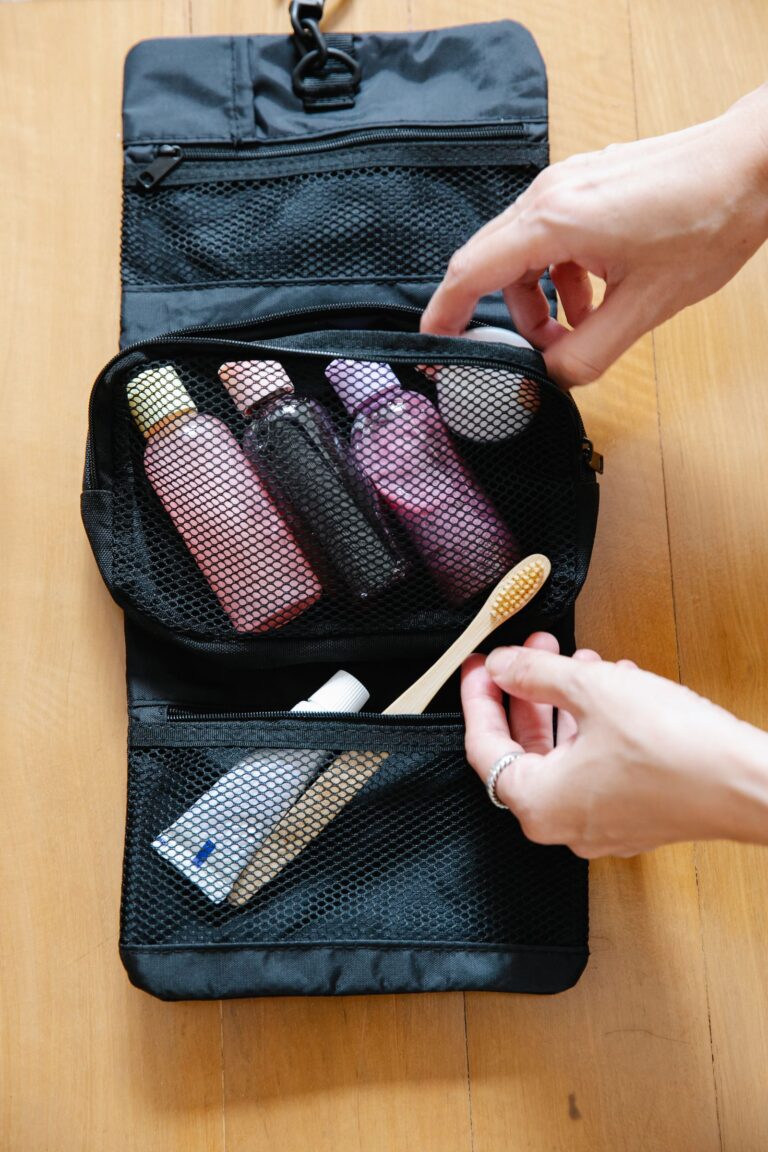
The fastest way to apply packing tips that actually work is to sort by destination inside the bag, not by outfit. Liquids over 3.4 ounces go straight into checked luggage. Anything under that size gets swapped into travel size for the quart bag.
Anything sharp goes into the checked bag or gets left home, from full size scissors to a pocketknife you forgot about. TSA treats most bladed items as checkpoint failures rather than gray areas.
Batteries go into the cabin as covered above. Your one backup outfit rides with you too, rather than in the hold. Run your full carry-on list against a rule set before you zip it closed.
A packing list screener catches the item you packed on autopilot faster than rereading your own list will. For the liquids bag itself, a dedicated 3-1-1 liquids packer tells you what still fits. Check it before you reach the line.
The written rule and the checkpoint experience are not always the same thing. Travelers who fly often notice it.
Forum reports on liquid checks describe US checkpoints as notably relaxed about the quart bag in recent years. Several posters say agents rarely ask travelers to pull it out at all.
International hubs run differently. London Heathrow gets repeatedly described as strict and consistent about the 100 milliliter limit, with no shortcuts even for connecting passengers.
That gap cuts the other way too. Bangkok travelers reported liquids confiscated for lacking a visible 100 milliliter marking on the bottle, a stricter reading than most US agents apply. Pack to the written rule everywhere, since a lenient checkpoint on the way out tells you nothing about the one you meet on the way home.
An overweight checked bag at the counter is one of the few packing problems you can solve on the spot. Move the densest items, shoes, books, a toiletry kit, into your carry-on or personal item, since neither typically gets weighed the way a checked bag does.
Wearing a jacket or an extra layer instead of packing it works for the same reason. Multiple travelers report doing exactly this to dodge a fee.
If the shift still leaves you over, our weight rebalancer works out the fastest split between your bags before you reach the counter. Check your airline’s cutoff and fee schedule on the airline pages ahead of time, since a fee that is 75 dollars on one carrier can be double that on another for the same extra pound.
Not by themselves. A cube organizes and shapes what you pack, but the fabric inside still takes up the same volume, unless the cube also compresses.
Neither wins outright. Rolling suits knits and casual fabrics, folding suits structured items like suits and dress pants, and most experienced packers mix both in one bag.
Spare lithium batteries and portable power banks stay out, along with medication, essential documents, and anything you cannot afford to lose for a day if the bag is delayed.
Almost always the size limit. Most carry-on weight allowances sit high enough that a full bag of clothing rarely reaches them, while the outer dimensions get checked at nearly every gate.
Shift the heaviest items into your carry-on or personal item, wear a spare layer instead of packing it, or split the load into a second bag if that fee beats the overweight charge.
Enforcement varies by airport. Many US checkpoints have relaxed how often they ask travelers to display it, but that is not a rule change, and stricter airports still enforce it fully.
Packing tips that focus only on folding technique miss where the real friction happens. Sort what you pack by the authority that governs it: TSA for what can pass the checkpoint, your airline for what your bag can weigh and measure, and the FAA for anything with a battery in it.
Do that first, and rolling versus folding becomes a comfort preference instead of a source of stress.
Rolling beats folding, or so the internet insists. The honest answer for how to pack a suitcase is that neither method wins alone. The…
A good travel packing list is not a pile of everything you own. It is a short set of categories plus a wear count…
Packing cubes and compression bags get recommended interchangeably, which is how people buy the wrong one. They solve different problems. Cubes organise. Compression bags…
Seven days in a carry-on is not a packing problem. It is a laundry problem, and once you see it that way the whole…